

Bond Yields Stabilize, Markets Show Mixed Moves
Tuesday, September 29, 2026
BOND YIELDS STABILIZE, MARKETS SHOW MIXED MOVES
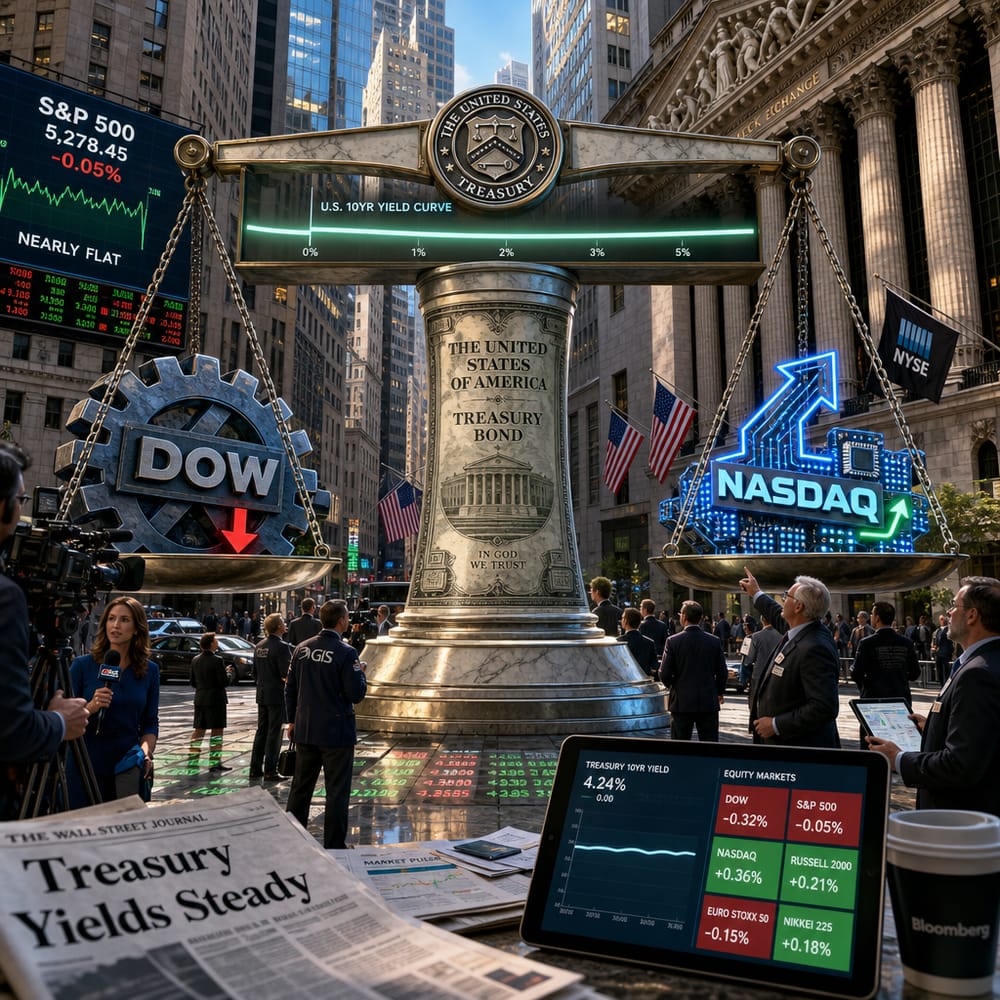
If you’ve been tossing and turning in your sleep, worried that bond yields are playing hopscotch with your portfolio, today might just bring a sigh of relief. U.S. equity markets have finally caught a break, holding steady as oil prices simmered down and Treasury yields hit the pause button on their recent skyward climb. The Dow took a little nap, dipping slightly, while your tech-centric Nasdaq pal showed a modest uptick. So, what gives in the land of stocks and bonds, and why should you care?
First things first, let’s talk about these bond yields. They've been on a roller coaster faster than a caffeine-powered squirrel, recently scaling to heights unseen since the early 2000s. But today, they’ve decided to chill out a bit, providing a momentary oasis for equity markets. Why does this matter? Well, high bond yields typically mean higher borrowing costs, not just for the government but for businesses and consumers too. When yields stabilize, it’s like hitting the snooze button on a financial alarm.
Now, you may be wondering, how long will this serenade of stability last? Ah, if only we had a crystal ball. The truth is, bond yields are at the mercy of numerous factors, like inflation rates and Fed decisions. Both have been as unpredictable as a weather app before a storm. With this respite, investors and analysts alike are waiting to see if this will be a lasting trend or just a fleeting lull.
In the meantime, let’s take a closer look at the sectors benefiting from the current market conditions. Spoiler alert: Tech is having a moment. Thanks to these stable yields, large-cap tech stocks have been the Nasdaq’s MVPs, providing a buffer against any potential market skids. The big hitters—think Apple, Microsoft, and their Silicon Valley buddies—are influential enough to lift the Nasdaq even when the Dow is lagging. Why? Because lower bond yields reduce pressure on their valuations, allowing investors to focus on the growth potential of these tech titans.
But it’s not just the techies feeling the love. Certain consumer staples and utilities, often deemed as defensive sectors, have also been basking in the glow. These sectors tend to attract investors when economic uncertainty shadows the horizon because they offer stability and steady dividends. So, with consumer confidence taking a dip lower than a limbo stick at a block party, some folks are seeking solace in these tried-and-true sectors.
As we navigate this economic landscape, investor sentiment plays a starring role. The bond market’s stability could shift focus from doom and gloom to cautious optimism. Sure, consumer sentiment has been on a downward slide, hitting lows that haven’t been seen in years. People are pinching pennies and raising an eyebrow at job prospects. But if yields stay stable, it might just bolster confidence, encouraging more retail investors to dip their toes—or whole feet—back into the market.
Let’s not forget the wild card in this mix: the unpredictability of oil prices. They’ve been roller-coastering too, and any sudden spike could send shockwaves through the markets, undoing this serene bond yield moment. With global tensions and supply issues lurking like a cheeky cat ready to knock over a glass, investors are advised to keep a close watch.
So, where does this leave us? In a classic game of wait and see. The stabilization of bond yields is a breath of fresh air, but keeping your eyes peeled for any sudden shifts—whether from the Fed, geopolitical tensions, or economic data—is wise. The markets may be calm now, but like a cat before the pounce, readiness is key.
In the world of investing, the only constant is change. Today’s stable yields and mixed market moves are a reminder that while we may not control the market's whims, we can certainly stay informed and adapt. After all, in the market jungle, it’s the prepared, and not necessarily the swift, who survive.
This article is for informational purposes only and is not investment advice. Always do your own research or consult a licensed financial professional before making investment decisions.
© Copyright 2024. All Rights Reserved.
© Copyright 2024. All Rights Reserved.