

Bond Yields Rebound Despite Treasury’s Intervention
Sunday, August 23, 2026
Bond Yields Rebound Despite Treasury’s Intervention
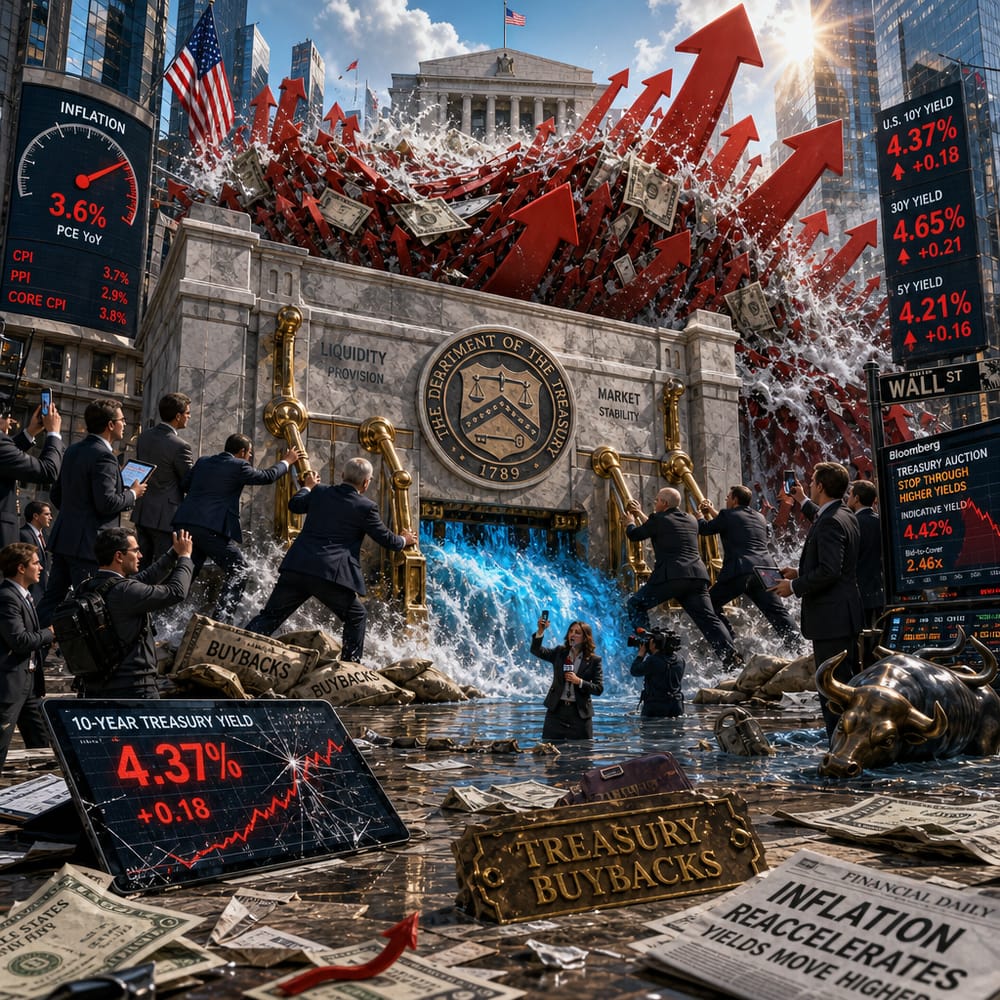
You know what's worse than waking up to discover your favorite show's been canceled? Finding out that bond yields are on the rise despite the Treasury's best efforts to push them down. It's like trying to push a boulder uphill while wearing roller skates — ambitious but borderline impossible. So, why are bond yields laughing in the face of Treasury's grand buyback schemes?
Before your eyes glaze over, let's break it down to the basics. The U.S. Treasury, in an effort to keep the bond market stable, decided to ramp up its buyback operations. The idea is simple: buy back older bonds to tweak interest rates and inject some pep into the market. But here's the kicker — despite this financial magic trick, bond yields have bounced back like a rubber ball.
Why, you ask? It's because investors are more skeptical than a cat near a cucumber. The market's skittishness is rooted in concerns about two heavyweight topics: debt growth and inflation. The national debt's been climbing faster than your daily step count on a New Year's resolution. As of last Tuesday, the U.S. national debt hit a staggering $40 trillion — that's a number with 12 zeros, folks. And with inflation still lurking around like a bad smell, investors aren’t exactly throwing cash into bonds with wild abandon.
But why, exactly, do bond yields rise when the Treasury is buying back bonds? Well, let's use a slightly absurd analogy. Imagine you're at a crowded concert. The Treasury buying bonds is like a famous DJ suddenly announcing they're going to play everyone's favorite track. Normally, people would stick around for the chance to enjoy the music. But if the DJ’s last gigs have been disappointing (cue bad inflation and debt growth vibes), you might decide to head to the bar instead. Investors are doing the same — they're expecting better returns elsewhere because they're not convinced the bond market is the place to be.
Now, what does this mean for the Treasury's future strategies? They might have to get creative. More buybacks or even more aggressive interest rate cuts could be on the table, but these strategies come with their own set of risks. Think of it like trying to perfect a triple axel on ice — high rewards but also the potential for a spectacular fall.
The broader concern here is this: how long can the Treasury keep playing this game before the financial equivalent of muscle fatigue kicks in? And what happens if inflation doesn't play ball and keeps rising, making everything from groceries to goldfish even pricier? That's a bit like gambling on a horse race where the horses are wearing blindfolds.
The key takeaway for you, dear reader, is to keep one eye on the Treasury and the other on inflation figures. You might not be able to control the markets, but you can sure stay informed and make smarter decisions with your portfolio. Whether you're dabbling in bonds or sticking to stocks, understanding these economic dynamics can help you avoid financial potholes.
In short, the world of bonds is a bit of a rollercoaster right now, and like any good ride, it's best enjoyed with a safety bar in place — in this case, that bar is a solid understanding of the underlying factors at play. The Treasury might be juggling buybacks, but the market has a mind of its own, driven by fears of inflation and ballooning debt. Keep your wits about you, and as always, invest wisely.
This article is for informational purposes only and is not investment advice. Always do your own research or consult a licensed financial professional before making investment decisions.
© Copyright 2024. All Rights Reserved.
© Copyright 2024. All Rights Reserved.