

Bond Yields Hit Multi-Year Highs Amid Fed Hike Expectations
Monday, September 28, 2026
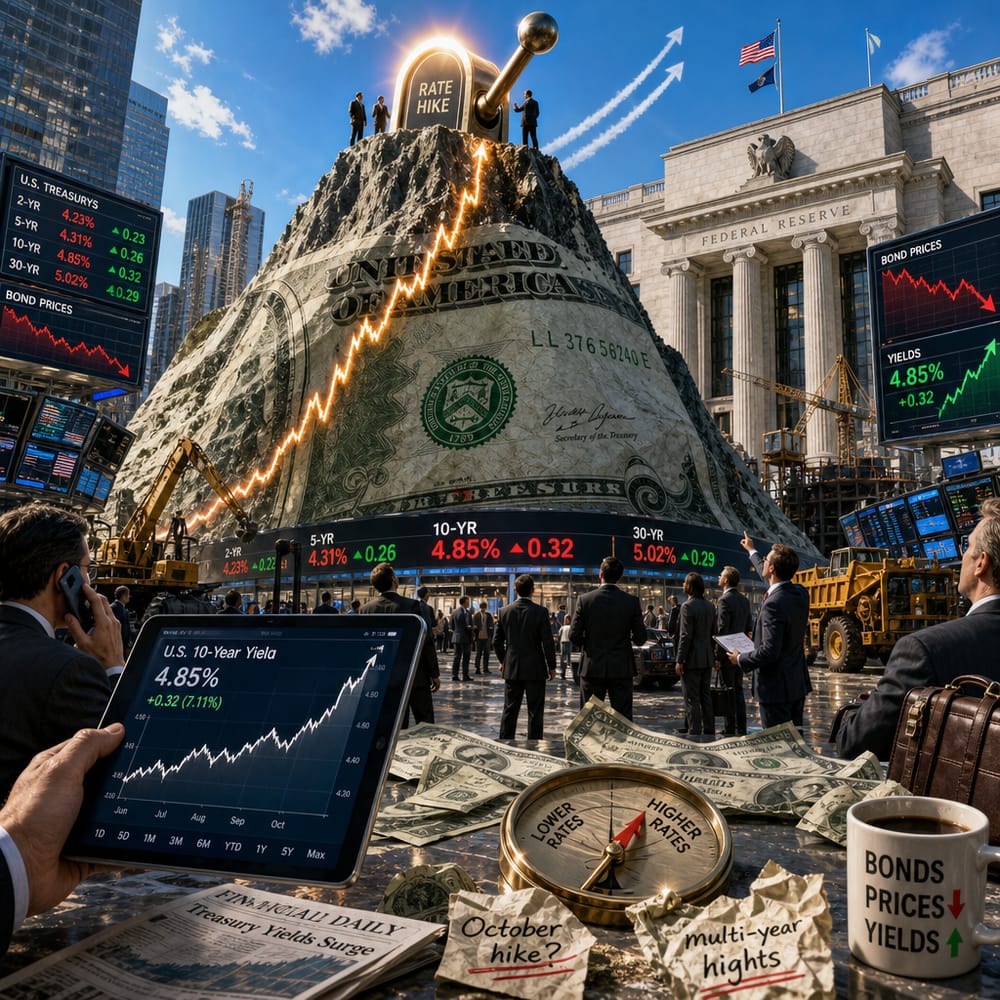
BONDS AND BALLOONS: WHY RISING YIELDS COULD BURST SOME BUBBLES
Picture this: the market's like a massive party, everyone's dancing, the drinks are flowing, and it seems like the fun might never end. But then, just like a surprise visit from your in-laws, bond yields crash the scene, threatening to bring the festivities to a screeching halt. If you haven’t been paying attention, U.S. Treasury yields are now partying like it’s 2007, hitting multi-decade highs. And just like any party crasher, they might make a mess before they leave.
So what gives? Why are yields soaring? Well, let's back it up a bit. The U.S. economy has been flexing its muscles with strong equipment spending, signaling that perhaps the Federal Reserve might hit us with another rate hike soon. And when the Fed speaks, markets listen. Expectations of a rate hike can send bond yields up, and that’s exactly what’s happening. Rising bond yields are like the water bill that shows up after a long, luxurious shower: they remind us that there’s a price to pay.
Rising bond yields aren't just a number to glance at on the financial news ticker. They can ripple through the economy, affecting just about everything from your mortgage rate to how companies value their stocks. Higher yields mean higher borrowing costs, and that's no small potatoes. For businesses already operating on thin margins, like farming in the heart of the U.S., each percentage point can feel like a punch to the gut. So, while bond yields might seem like a snooze-fest topic, they’re shaping the financial landscape beneath our feet.
Wondering how a Fed rate hike could add fuel to the fire? Imagine the Fed as the babysitter at the party, ready to turn off the music and send everyone home. Investors might start recalibrating their expectations, and the stock market could see some serious mood swings. Tech stocks, which have been the life of the party for a while now, especially in AI and innovation sectors, might feel the pinch first. When borrowing costs rise, those high-flying valuations suddenly look a lot less attractive.
But not all sectors will take the news lying down. Financials, like banks, might actually smile at these rising yields. Why? Because higher interest rates mean they can charge more for loans, potentially boosting their profits. So while some corners of the market might be biting their nails, others are rubbing their hands together.
Investors need to keep their heads on a swivel. With rising bond yields, the old calculus of risk and reward is shifting. Bonds, those dusty old books in the back of the library, suddenly look a bit more like bestsellers. If equities feel like too much of a roller coaster, bonds may offer a steadier ride, especially if Fed Chair Jerome Powell decides to play the hawk and keep interest rates elevated.
But let’s not get too cozy with bonds just yet. The economy is a complex web, and pulling at one strand can tug on others in surprising ways. If yields rise too fast, it could slam the brakes on economic growth, as companies and consumers alike tighten their belts. That could lead to a slowdown, or even the "R" word—recession. So while higher bond yields might sound appealing to savers, they could be a harbinger of stormy weather ahead.
So, what's an everyday investor to do? For one, it's time to review that portfolio. If you’ve been riding the tech wave, it might be wise to consider some rebalancing. Diversification, that old chestnut, is your friend here. Balancing equities with some fixed income assets could help cushion any turbulent landings.
In the end, rising bond yields remind us of the interconnectedness of our financial world. They’re the wake-up call that the era of ultra-low rates might be winding down. Investors who keep their eyes open and their wits about them can navigate this shifting landscape with skill. After all, in the wild world of finance, it pays to stay sharp, and maybe, just maybe, know when to call it a night at the party.
This article is for informational purposes only and is not investment advice. Always do your own research or consult a licensed financial professional before making investment decisions.
© Copyright 2024. All Rights Reserved.
© Copyright 2024. All Rights Reserved.