

Bond Yields and Treasury Intervention: Markets Test the Fed-Treasury Balance
Thursday, August 27, 2026
BOND YIELDS AND TREASURY INTERVENTION: MARKETS TEST THE FED-TREASURY BALANCE
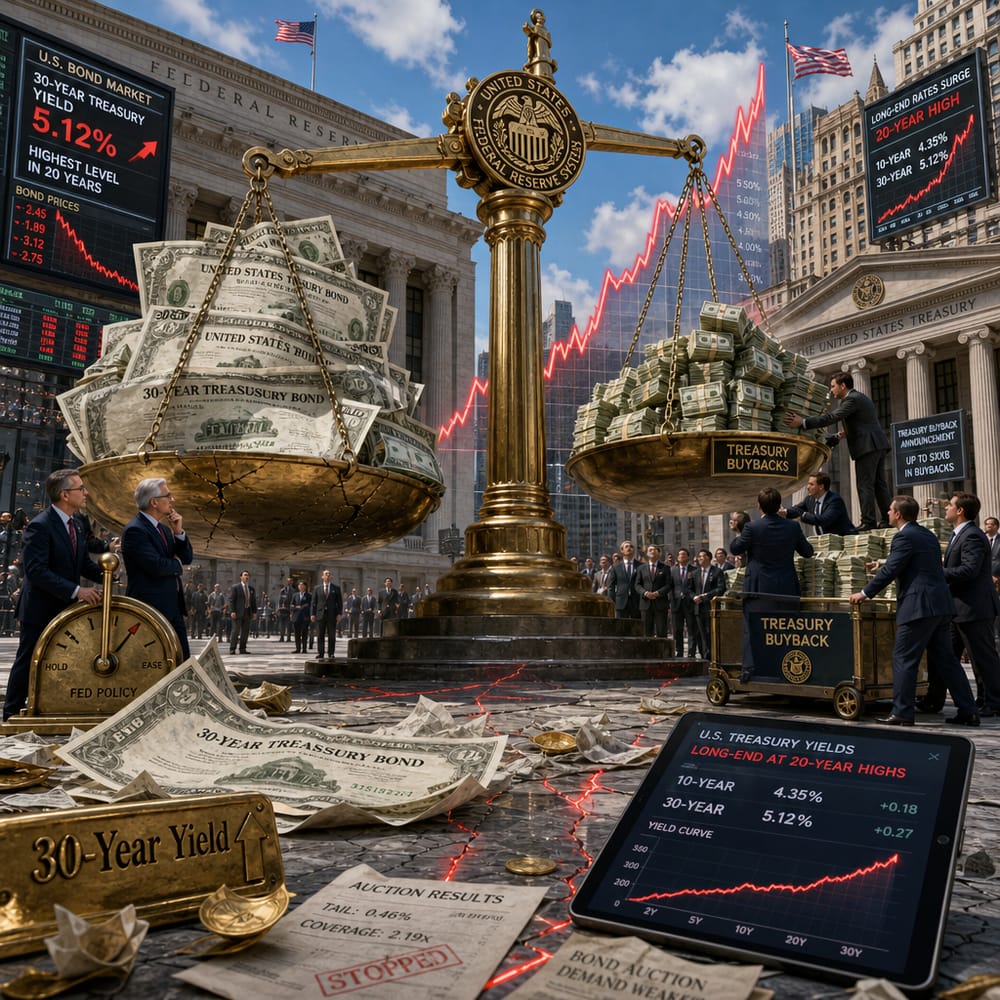
Buckle up, folks. The bond market is throwing a wild party, and, surprisingly, neither the Federal Reserve nor the U.S. Treasury seems to have a firm grip on the playlist. Long-term Treasury yields have shot up to levels unseen in two decades, even as the Treasury ramps up its buyback operations. So why aren’t the soothing strains of Treasury intervention bringing peace to this market mosh pit?
Let’s dive into the action. Picture this: the Treasury is out there waving its wand, buying back bonds like they’re going out of style, hoping to tame those unruly yields. Yet, the yields laugh in the face of intervention, climbing higher and higher. The 10-year Treasury yield is chilling near 4.67%, while the 30-year is lounging at 5.19%. So, what gives?
The crux of the matter is market skepticism. Investors are looking at the Federal Reserve with a raised eyebrow, questioning whether it can really navigate this inflation rollercoaster without a definitive road map. The Fed has been playing it cool, avoiding any clear forward guidance, and that nonchalance has left investors jittery, leading them to demand higher yields as compensation for the perceived risks.
Now, why should you care about these arcane financial shenanigans? Because bond yields are like the pulse of the financial market. They influence everything from mortgage rates to the cost of government borrowing. When yields rise, it typically signals that investors expect higher inflation, or they’re worried about the government's ability to handle its debt.
The Treasury's buyback operations are part of a strategy to keep liquidity flowing and the cost of borrowing reasonable. But the market is saying "not so fast." These escalating yields reflect a tug-of-war between the Treasury's attempts to calm the waters and the market’s anxiety about inflation and fiscal policy.
So, what does this mean for the Federal Reserve's future actions? Well, it’s a bit of a high-stakes chess match. If inflation concerns persist and yields continue to rise, the Fed might be forced to step in more aggressively—maybe even rethink its interest rate policies or ramp up its bond-buying program. The Fed has to be nimble, balancing its dual mandate of promoting maximum employment and stabilizing prices without spooking the markets further or stifling economic growth.
In the meantime, the Treasury's moves are like a lighthouse in a storm, guiding but not entirely in control. As yields rise, the cost for Uncle Sam to finance his debt increases, too, potentially squeezing fiscal policy or forcing cuts elsewhere. It’s like trying to keep the family budget in check while the cost of everything from groceries to your kid’s college tuition is on the rise.
For retail investors, this is a moment to watch closely. Rising yields can mean different things for your portfolio. Bonds become more attractive as an investment, offering higher returns. But if you're looking at stocks, particularly in sectors sensitive to interest rates like housing or utilities, this could spell more volatility.
In the mix of this financial tempest, tech stocks have been having a heyday, with Nvidia leading the charge after a dazzling earnings report. While tech's rally adds a silver lining to the investor's sky, it's a reminder of the market's fickle nature—where today’s darlings can become tomorrow's headaches.
So, what’s the takeaway from this swirling market dance? Keep an eye on the Fed and the Treasury’s next moves. They’re bound to make headlines and could shape the market landscape for months to come. Stay savvy, and don’t be afraid to adjust your strategies as the Fed-Treasury tango continues to unfold.
This article is for informational purposes only and is not investment advice. Always do your own research or consult a licensed financial professional before making investment decisions.
© Copyright 2024. All Rights Reserved.
© Copyright 2024. All Rights Reserved.