

Bond Yield Surge Reclaims 5% Threshold
Thursday, October 01, 2026
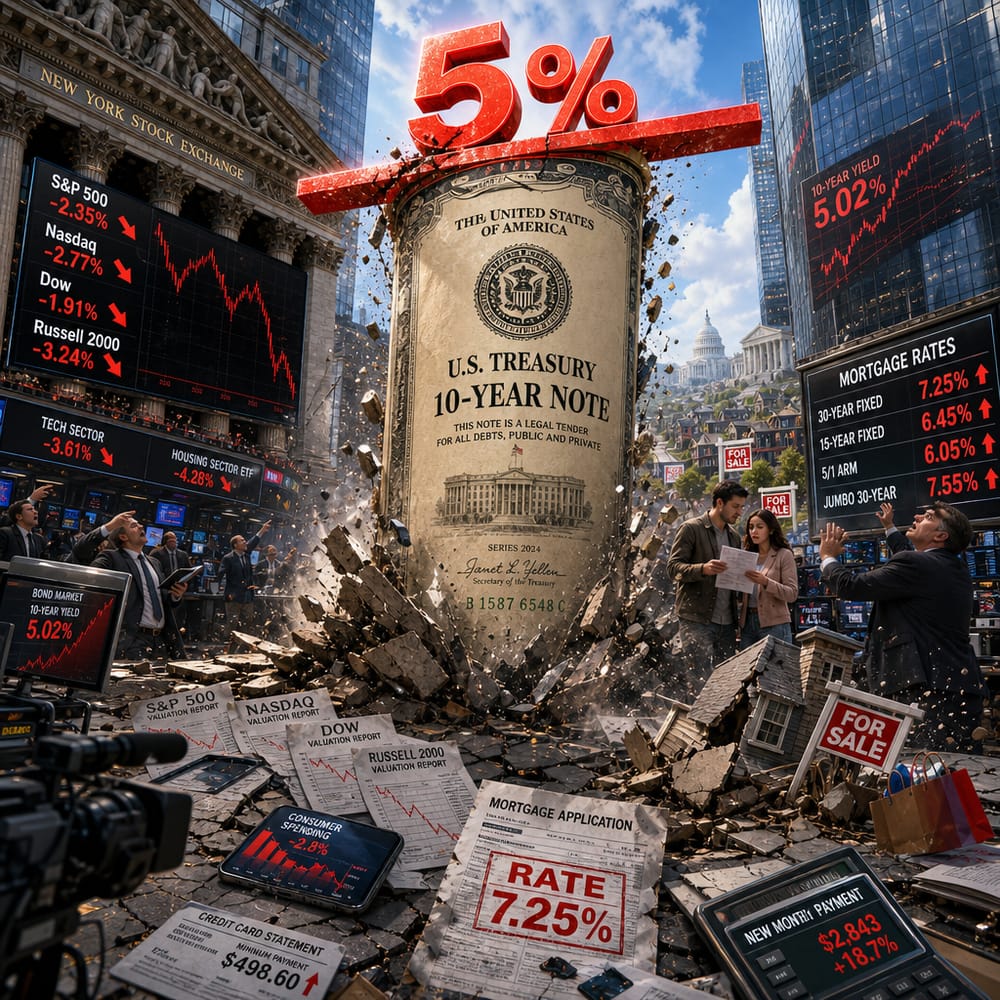
BOND YIELD SURGE RECLAIMS 5% THRESHOLD
Well folks, it’s official: the 10-year U.S. Treasury yield has swaggered across the 5% line, and it’s not just making a cameo appearance. This little interest rate number might seem like the Wall Street equivalent of watching paint dry, but trust me—this is the drama you didn’t know you needed. Like a surprise villain in a rom-com, it’s shaking things up, especially if you’re holding stocks, eyeing a mortgage, or frankly, just trying to keep up with the Joneses.
WHY YIELDS MATTER
First, a quick primer for those whose eyes glaze over at finance lingo. When we talk about bond yields, we’re essentially talking about the interest rate the government pays to borrow money. Investors buy Treasury bonds because they’re seen as safe bets. But when yields go up, the price of those bonds goes down, making them less attractive. Higher yields basically mean the government is shelling out more to borrow cash, and that can ripple through the entire economy like a caffeine jolt in a midday meeting.
So what gives? Well, elevated yields tighten financial conditions. Translation: it gets pricier for everyone else to borrow money, too. This includes businesses looking to expand and consumers hoping to score a loan. And, oh boy, does it hit the housing market hard.
THE HOUSING MARKET SHAKEDOWN
Let’s talk mortgages, shall we? With the 10-year yield in orbit, mortgage rates are tagging along for the ride. Picture this: the 30-year mortgage is now lurching towards a whopping 7.5%. For context, that’s like paying filet mignon prices when you’re craving a burger. Higher mortgage rates mean fewer people can afford to buy homes, and those who already own one feel shackled to their current low-rate mortgages. Fewer movers mean fewer homes sold, leading to a log jam in the housing market that’s been sluggish for what feels like forever.
So, what's a potential homeowner to do? Buy a tent and head for the hills? Not quite. But expect the slowdown to ripple through homebuilders and related stocks. Companies like Lennar and D.R. Horton are already feeling the squeeze as buyers defer their dreams of picket fences and perennials. The housing market, friend, just got a whole lot more complicated.
EYES ON EQUITIES
And it's not just future homeowners feeling the pinch. Higher yields have a way of poking holes in the stock market’s boat. The Dow, the S&P 500, the Nasdaq—they’ve all been riding the volatility waves lately. The tech sector, already on edge with AI investments and semiconductor swings, is particularly vulnerable. Those tech stocks that soared high on the promise of growth (and a lot of cheap money) are facing a rude awakening. Investors may start to favor the predictable returns of bonds over the high-stakes roller coaster of tech stocks.
Yet, here we are seeing some sectors put on their hard hats and roll with the punches. The energy sector, buoyed by robust oil prices, is playing defensive lineman against the yield surge, while some consumer staples are finding solace in their safe-haven status. But the big question is: how much of this bond yield boogie is already priced into the market? Investors are squinting at their portfolios, wondering if they missed the memo or if more plot twists are ahead.
GROWTH OR INFLATION?
So, is this yield surge signaling optimism about economic growth? Or is it a harbinger of inflation, the financial equivalent of an ominous soundtrack? Fed officials, like Neel Kashkari, have been vocal about inflation still being “too high.” While some economic data came in softer than expected, the vibes are still anything but chill. Inflation, even at a reduced rate, continues to spook the markets.
It’s a classic catch-22. Higher yields might indicate a belief in growth, but they also keep the inflation specter firmly in view. The economy, after all, is running hot, fueled by robust employment figures and hefty corporate spending, especially in that AI gold rush.
THE BILLION-DOLLAR QUESTION
Here’s the kicker: will these elevated yields mean more rate hikes down the line? The markets are practically side-eyeing the Fed, waiting for its next chess move. Traders are bracing for jobs reports, oil price shifts, and any shred of data that might give them a hint. It's a waiting game, and everyone’s playing.
As we buckle up for whatever the market throws next, one thing is crystal clear: the bond market saga is far from over. So whether you’re a seasoned investor or someone who only tunes in when their 401(k) takes a hit, know this—those tiny decimal points in the bond market are not just numbers; they’re a harbinger of where we’re headed next. Grab your popcorn, folks; this financial epic is just getting started.
This article is for informational purposes only and is not investment advice. Always do your own research or consult a licensed financial professional before making investment decisions.
© Copyright 2024. All Rights Reserved.
© Copyright 2024. All Rights Reserved.