

Bond Rout Intensifies: 10-Year Treasury Yield Hits 24-Year High
Thursday, October 01, 2026
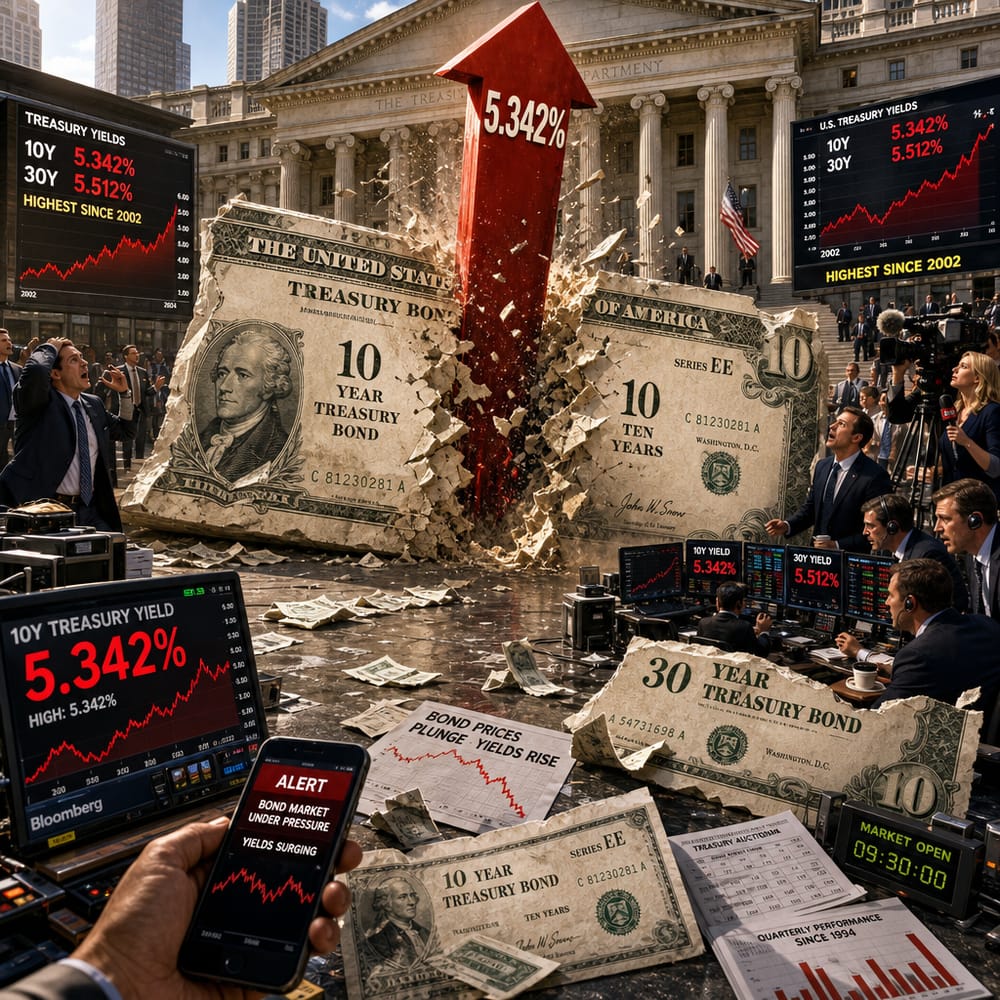
Once upon a time, the 10-year Treasury yield was as calm as a Sunday morning. But now? It’s standing tall at 5.342%, the highest peak in 24 years. If yields had muscles, they'd be flexing like they're shooting for a bodybuilding contest. Buckle up, because this isn't just a number on a page—it’s a seismic shift that could shake up your mortgage rates, stock market plays, and even ruffle the feathers of the Federal Reserve.
Why all the fuss about some number buried deep in the bond market jungle? Well, the 10-year Treasury yield is more influential than you might think. It acts like a keystone species in an economic ecosystem, influencing everything from the interest rates you pay on mortgages to the value of your stock investments. When yields rise, borrowing costs often follow. That’s bad news if you're planning to cozy up with a new mortgage. Higher Treasury yields typically mean mortgage rates are heading up as well, making that dream home a little more of a financial stretch.
Now let's talk stocks. Rising Treasury yields can be kryptonite to stock market valuations. Why? When safe, government-backed bonds offer better returns, the appeal of riskier stocks can wane. Investors may start thinking twice about betting on high-flying tech stocks when they can get a decent return on something as solid as Uncle Sam's debt. The stock market's been riding a high for a while, but with Treasuries offering juicier returns, this could change. Investors might start ditching stocks in favor of bonds, potentially pricking the stock bubble.
And then there’s the Fed—the wizard behind the curtain pulling economic strings. With Treasury yields soaring, the pressure on the Federal Reserve is dialed up. The Fed's been hinting at interest rate hikes to keep inflation in check, but the bond market might be jumping the gun. If yields continue to rise, the Fed might be forced into a juggling act, balancing the need to keep inflation low without stifling the economy. They could either speed up their rate hikes or pump the brakes to avoid throwing the economy into a spin.
So, what's triggered this bond market bonanza? It's not just a local drama; this is a global sell-off. Investors are dumping bonds globally, partly due to fears about inflation and partly due to central banks around the world signaling a move away from ultra-loose monetary policies. It's like everyone's trying to get out of the bond market party at once, and we’re seeing the ripple effects right here at home.
Now, let’s take a stroll down Wall Street and see how this could trickle into different sectors. Need a car or thinking about renovating your home? Rising yields mean higher rates for auto loans and home equity lines of credit. It's like watching your favorite cereal get more expensive overnight. Consumer spending could take a hit as folks rethink big-ticket purchases, which, in turn, could slow down economic growth.
For companies, borrowing costs are rising too. Corporations that thrived on cheap debt might find themselves tightening their belts. This could lead to a slowdown in business investment and hiring, as companies seek to shore up their balance sheets against higher interest payments.
Of course, in the grand chess game of economic policy, the smart money's watching the Fed's every move. If yields continue their moonshot, expect the Fed to take center stage, potentially wielding rate hikes like a hammer. And while this might help cool inflation, it risks slowing the economy more than intended. A misstep could mean trouble, but that's the tightrope the Fed has to walk.
In the end, the rise in Treasury yields is more than just numbers on a spreadsheet. It's a potent cocktail that could leave investors, homeowners, and policymakers with more than just a morning headache. Whether it's your mortgage rate, stock portfolio, or the broader economy, the echoes of this bond market turmoil are bound to be felt far and wide. So, keep your eyes peeled and your financial game tight—because the only certainty right now is change.
This article is for informational purposes only and is not investment advice. Always do your own research or consult a licensed financial professional before making investment decisions.
© Copyright 2024. All Rights Reserved.
© Copyright 2024. All Rights Reserved.