

Bond Markets Signal Stress
Monday, August 17, 2026
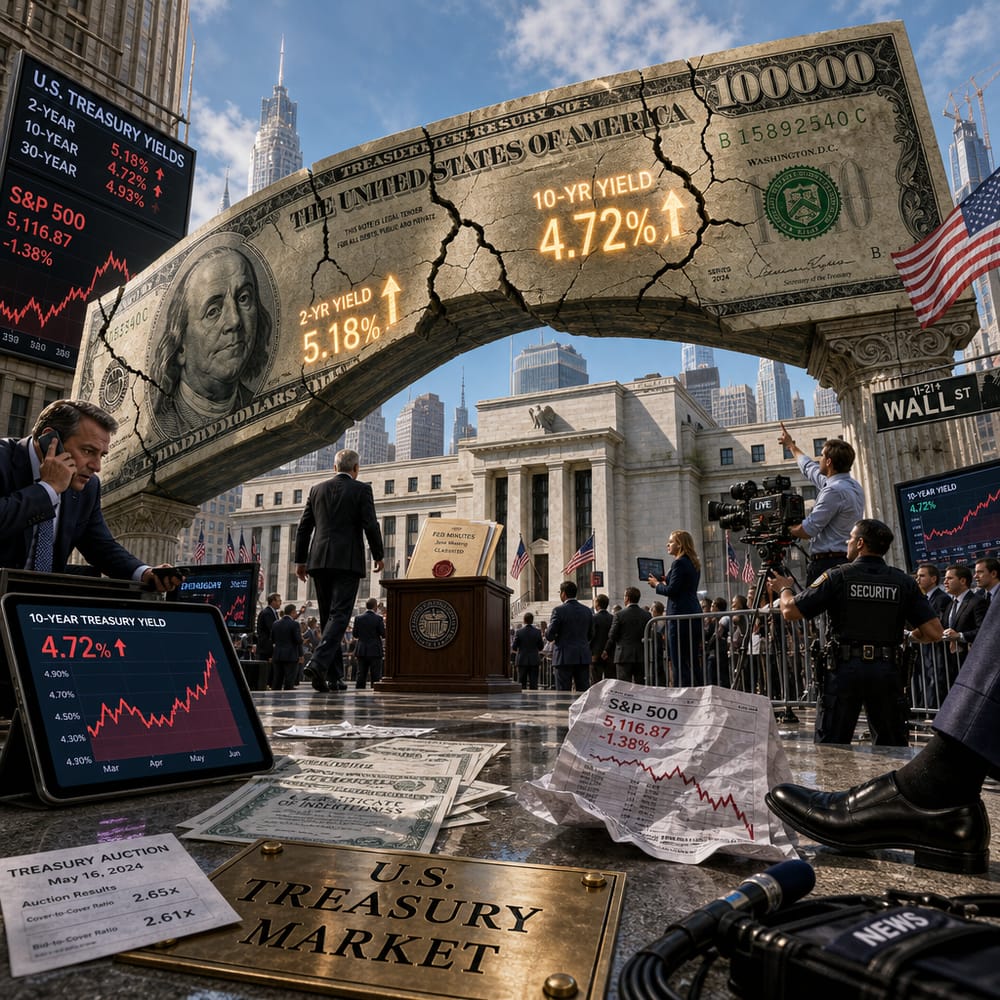
THE BOND MARKET: WHERE THE REAL DRAMA UNFOLDS
If you thought the stock market was where all the excitement happens, grab your popcorn and take a seat, because the bond market is putting on quite the show. Treasury yields are rising like bread in a hot oven, setting off alarms and raising eyebrows ahead of the Federal Reserve's much-anticipated minutes release. But why should you care? Because what happens in the bond market doesn't stay in the bond market. It can send ripples—and sometimes tsunamis—across the entire financial landscape, including the stocks parked in your retirement accounts.
So, what's the deal with these yields? Think of U.S. Treasury yields as the heartbeat of the financial world. When they rise, it signals that investors are betting on higher interest rates in the future. And let me tell you, this latest uptick has market gurus pacing the floor.
Now, why is this causing such a stir? Rising yields can be a double-edged sword. On one hand, they could indicate economic strength, with investors demanding more return on their money because they expect growth and inflation. On the other hand, they can put pressure on equities—as stocks compete with bonds for investor affection, higher yields make boring old bonds look pretty attractive versus riskier stocks.
Rising yields are like that friend who gets all the attention at the party, leaving stocks to awkwardly hover near the punch bowl. It makes equities less desirable, especially those expensive tech stocks that thrive on low-interest environments. Remember, when bond yields go up, borrowing costs follow suit. Companies that rely on cheap credit to fund growth projects suddenly have to rethink those grand plans, and that can ding stock prices.
But hold on, the fireworks haven't even started yet. The real anticipation is building around the Federal Reserve's minutes set to drop like the latest album from your favorite rapper. It's a bit like waiting for a plot twist in a thriller—you think you know what's coming, but then again, maybe you don't.
Investors will be dissecting every word, every comma of the Fed's minutes looking for clues about the future path of monetary policy. Are interest rates going up, staying put, or going down? This is the question that keeps market watchers up at night. And the bond market's recent movements suggest that traders are gearing up for some kind of revelation—whether it aligns with their expectations or throws a wrench into the mix.
If the Fed hints at more rate hikes, yields could climb even higher, increasing the pressure on stocks. Conversely, if the minutes suggest that interest rates might stabilize, we could see yields relaxing and stocks catching a breather. It's a delicate dance, and the Fed is the DJ spinning the records.
So, what should you do, dear investor? Keep your eyes peeled on those bond yields and Fed minutes. They could shift the tide in equity markets faster than you can say "inflation-adjusted returns." Rising yields don't automatically mean doom and gloom for stocks, but they signal that it might be time to rebalance or rethink strategies.
Diversification is your friend in times like these. Consider spreading your risk across sectors that benefit from higher rates, like financials, or assets that thrive in volatile environments, like gold (which recently got a thumbs-up from veteran strategist Jeff Currie).
And remember, the bond market is not just there for the suits and calculators. It’s like the backstage crew making sure the entire economic production runs smoothly. So next time you hear about Treasury yields making headlines, know that the plot is thickening, and your portfolio might need a little script revision to keep up with the drama.
This article is for informational purposes only and is not investment advice. Always do your own research or consult a licensed financial professional before making investment decisions.
© Copyright 2024. All Rights Reserved.
© Copyright 2024. All Rights Reserved.