

Bond Market Volatility Triggers Equity Sell-Off
Sunday, August 23, 2026
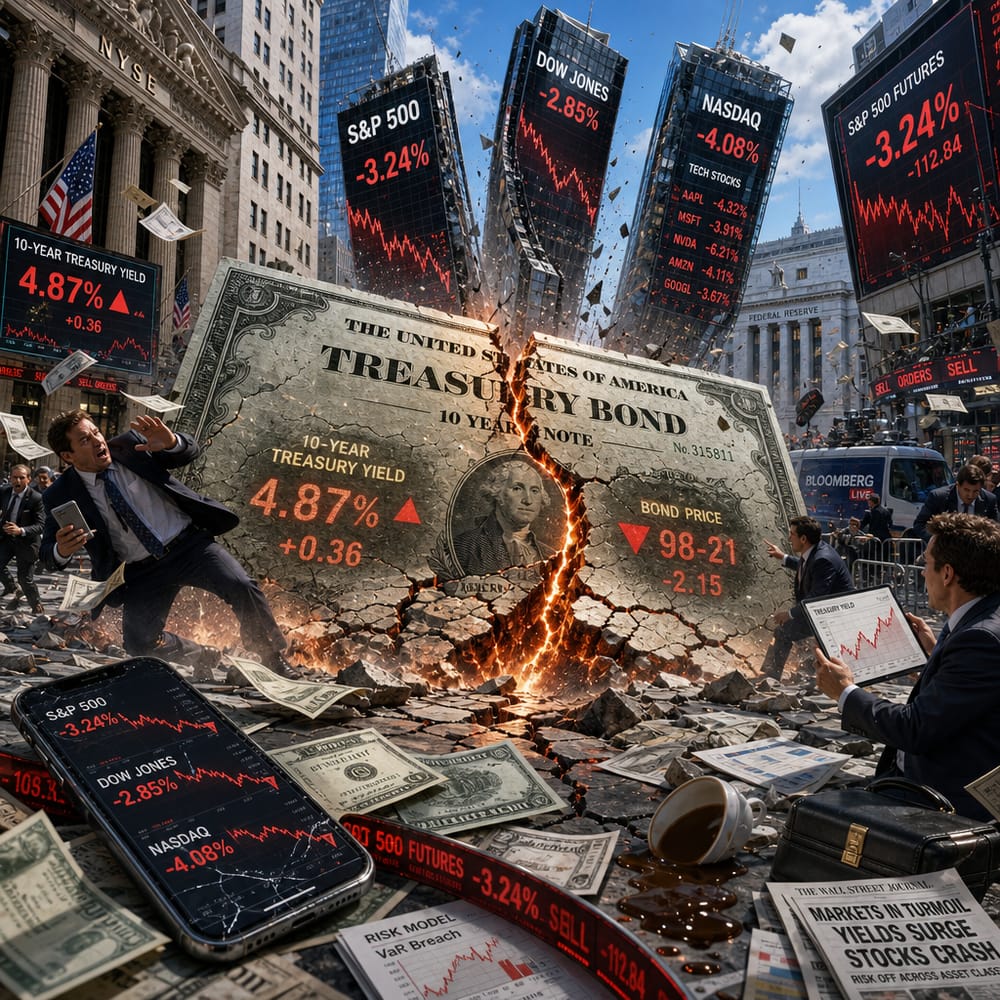
TITLE: Bond Market Volatility Triggers Equity Sell-Off
If you thought the stock market was all that's exciting, think again. Wall Street just got spooked, and it's not because of a Halloween costume. Instead, Treasury yields are playing the role of the bogeyman, sending shivers down the spines of investors and triggering a significant sell-off in U.S. stock indexes. The S&P 500, Dow Jones, and Nasdaq didn't see it coming, but here we are — watching the ticker of red numbers like a horror movie we can't look away from.
So, what's got the bond market acting like a caffeinated squirrel? Well, let's dive into the nitty-gritty.
WHAT'S UP WITH TREASURY YIELDS?
Treasury yields are essentially the interest rates the government pays investors to borrow their money. When these yields spike, it usually means investors are demanding higher returns for lending Uncle Sam their hard-earned cash. Recently, yields have been climbing faster than a squirrel up a tree, thanks to a cocktail of concerns: the Federal Reserve's hints at future interest rate hikes, worries about inflation sticking around like a bad dinner guest, and rising oil prices that make everything just a little bit more expensive.
Investors watch these yields like hawks because they impact borrowing costs across the board. And when borrowing money becomes expensive, well, let's just say that businesses and consumers aren't thrilled about it.
HOW ARE INVESTORS REACTING?
With Treasury yields climbing, investors are rethinking their portfolios faster than you can say "diversification." In times of bond market turmoil, equities — or stocks for the layperson — can suddenly seem like less of a haven and more of a risk. It's kind of like double-dipping your chip; risky, yet tempting.
Many investors have decided to sprint for safety, reallocating assets from stocks to bonds. Why, you ask? Because when yields rise, bonds become more attractive. Think of it as choosing a quiet night in with a good book over a wild party. Sure, the latter's tempting, but sometimes you just don't want the headache.
THE IMPACT ON VARIOUS SECTORS
Not all stock market sectors are created equal, and rising yields don't treat them the same way either. Technology stocks, for instance, have been feeling the squeeze. Companies like Apple and Google, which rely on cheap borrowing to fuel growth, find themselves in a pickle when borrowing costs creep up.
Meanwhile, financial stocks like banks could stand to benefit. Higher interest rates can lead to fatter loan margins, making their balance sheets look shinier than a freshly polished sports car. But mixed in this are the utilities and consumer staples, which typically provide steady returns but don’t look as attractive when bond returns rise.
WHAT'S THE BIG PICTURE?
The rollercoaster in the bond market isn't just about numbers and percentages. It's a reminder of how interconnected our financial markets are. When bond yields spike, they set off a chain reaction that rattles stocks, commodities, and pretty much any asset class you can name.
The recent volatility underscores the delicate balance investors must strike. It’s a little like spinning plates on sticks; a change in one can send others teetering. So, what's an investor to do? Keep a keen eye on the economic data, the Fed's next moves, and — most importantly — remember that financial markets have an uncanny ability to bounce back from scares.
In the meantime, as you sip your morning coffee and scroll through your portfolio, know this: the market's ebbs and flows are as much a part of investing as finding a traffic jam on your morning commute. The trick is not to panic. After all, market turmoil can present opportunities for those with a steady hand and a sharp eye.
So, whether you're contemplating your next move or just enjoying the ride, remember — the bond market may be volatile, but it also shines a light on the intricate web of our financial world. And that, dear reader, is worth keeping an eye on.
This article is for informational purposes only and is not investment advice. Always do your own research or consult a licensed financial professional before making investment decisions.
© Copyright 2024. All Rights Reserved.
© Copyright 2024. All Rights Reserved.