

Bond Market Volatility Shakes Tech—S&P, Nasdaq Resume Slide
Saturday, August 22, 2026
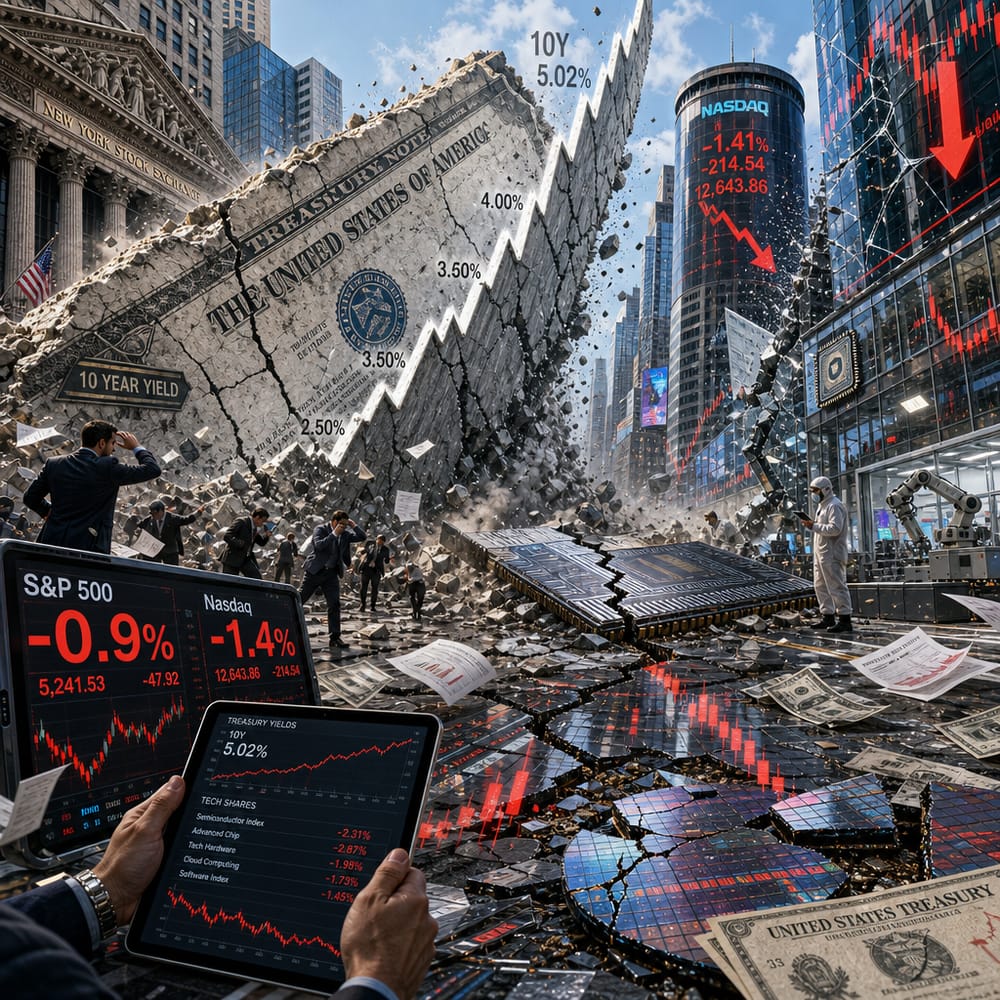
THE BOND MARKET ROLLERCOASTER: WHY TECH STOCKS ARE SCREAMING
If you've ever experienced the thrill of a rollercoaster, you know the feeling: that gut-dropping plunge when your stomach seems to leap into your throat. Well, folks, hang on tight because that's exactly how the tech sector is feeling right now, thanks to the bond market's wild ride.
Let's break down the latest drama in the world of finance where rising bond yields have gnawed away at tech stock valuations, leaving the S&P 500 and Nasdaq tumbling in their wake.
THE BOND YIELD BONANZA
So, what exactly is a bond yield, you ask? Simply put, it's the return an investor realizes on a bond. When yields go up, so do interest rates, making it more expensive for companies to borrow money. For the tech sector, which thrives on growth and innovation (read: needs lots of cash), higher borrowing costs are like cement shoes—slowing them down.
This week, bond yields decided to throw a surprise party and crank up the dial, sending tech stocks, especially semiconductors, into a tailspin. The S&P 500 dropped 0.9%, and the Nasdaq didn't fare much better. It seems the bond market decided to remind everyone who's boss, and tech investors weren't amused.
WHY TECH STOCKS CARE
Tech companies are like the fast cars of the stock market—built to zoom ahead with big dreams and even bigger price tags. But rising bond yields mean higher discount rates for future cash flows. Translation: future profits seem less attractive, making investors rethink those lofty valuations.
For instance, semiconductor giants—those shiny chips running everything from your smartphone to cutting-edge AI—have been particularly sensitive. With higher yields, the cost of innovation goes up, and investors start getting jittery about growth prospects. It's a bit like trying to buy the latest iPhone with a maxed-out credit card—not ideal.
THE BROADER MARKET RIPPLE
Now, let's not forget the ripple effect. This bond market drama isn't just a tech problem; it's a market problem. Rising yields are making investors reevaluate risk. The higher the yield, the less attractive stocks become compared to safer bets like bonds. It's the financial equivalent of trading in your hot new sports car for a reliable old station wagon.
With the S&P 500 sliding, broader market stability is starting to look a little wobbly. Investors are left wondering if this rollercoaster has more twists and turns ahead.
WHAT THIS MEANS FOR YOU
For everyday investors, this might feel like trying to watch a high-stakes chess game when you just came for the popcorn. But here's the scoop: understanding these dynamics can help you navigate the market rollercoaster. Rising bond yields can signal a shift in market winds, and being aware can keep your investment strategy on track.
If you're invested heavily in tech, it might be time to reassess your exposure. Spreading your bets to include more stable sectors or income-generating assets could help cushion the ride. Keep an eye on the bond market's next move—it could be the key to predicting the market's next rollercoaster loop.
LOOKING AHEAD
As we move forward, the big question is whether this bond market volatility is a brief stint or a harbinger of future market instability. While nobody has a crystal ball, it seems likely that as long as inflation and interest rate concerns linger, the bond market won't stop flexing its muscles anytime soon.
For now, tech stocks are holding on tight. Investors will need to keep their eyes peeled for any signs of stabilization in yields before the tech sector can regain its footing.
So, the next time you check your portfolio and feel that stomach-lurching sensation, take a deep breath. Remember, markets—and rollercoasters—tend to smooth out eventually. In the meantime, keep your seatbelt fastened and your investment strategy nimble. After all, it's all part of the ride.
This article is for informational purposes only and is not investment advice. Always do your own research or consult a licensed financial professional before making investment decisions.
© Copyright 2024. All Rights Reserved.
© Copyright 2024. All Rights Reserved.