

Bond Market Volatility Eases After Treasury Intervention
Thursday, August 20, 2026
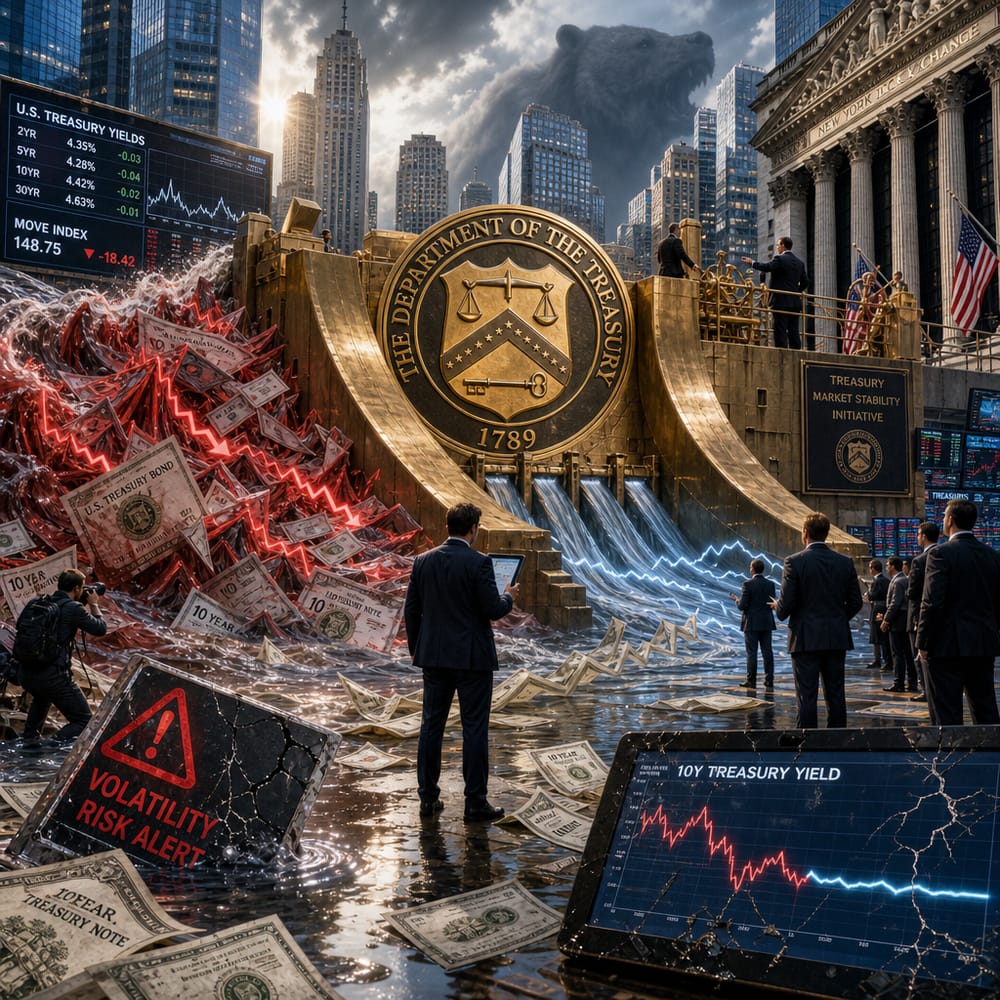
THE CALM AFTER THE STORM: HOW THE TREASURY TAMED THE BOND MARKET
If you listen carefully, you might just hear it—the gentle sigh of relief emanating from Wall Street. The bond market, that rollercoaster ride of financial thrills and chills, has finally hit a smooth track, thanks to a timely intervention by Uncle Sam. But before you pop the champagne, let’s not be too hasty. Beneath this newfound calm lie economic tremors that could shake things up just when we least expect it.
Just last week, U.S. Treasury Secretary Scott Bessent stepped onto the scene like a financial superhero, promising to double down on buybacks of long-dated Treasuries. You know, those bonds that feel like they’re as eternal as your pesky student loans. His plan? To raise bond prices and lower yields, which are essentially the interest rates these bonds pay. It’s a neat trick to make borrowing cheaper for everything from your shiny new car to that charming suburban home.
Now, if you’ve been keeping an eye on the financial weather, you'll know that bond markets have been stormier than a soap opera love triangle. Yields were flirting with peaks not seen in ages, and investors were clutching their portfolios like life preservers. Enter the Treasury with its bond-buying spree. The result? Yields on the 30-year Treasury took a nosedive, slipping from the daunting heights of over 5.3% to a much more breathable level.
But let's not mistake this lull for a happily-ever-after. Scott Bessent's intervention might be more like rearranging the deckchairs on the Titanic than patching up holes in the hull. Sure, the bond markets might have hit the pause button on volatility, but there are plenty of gremlins lurking in the economic shadows that could reignite turmoil faster than you can say “interest rate hike.”
First off, there’s the economy that might be trying to sneak a recession past us. While some sectors are bouncing like a kid on a sugar high—hello, consumer spending—others are tripping over their own feet. Mixed signals abound, not unlike trying to interpret the ending of a Nolan movie. The Fed’s been on an interest rate roller coaster of its own, trying to balance inflation with economic growth. And let's not forget those geopolitical storm clouds on the horizon—like the ongoing trade tussles and international tensions that refuse to simmer down.
The Treasury’s move to stabilize the bond market might have given everyone a breather, but it’s like putting a band-aid on a leaky pipe. The Waters of market tension still hold potential for a flood. If the Fed decides to turn up the heat with another rate hike, or if inflation decides to throw a tantrum, all bets are off. Investors might find themselves back to white-knuckling their portfolios.
So, what should the everyday retail investor—yes, you with your morning coffee and scrolling thumb—do with this information? First, take a breath. Enjoy the momentary serenity the Treasury’s move has provided. But don’t get too comfortable. Keep an eye on those economic indicators that often slip under the radar. Is the job market holding steady, or are layoff announcements becoming too frequent? How’s consumer sentiment shaping up? Any signs that inflation is acting like a houseguest who’s overstayed their welcome?
The takeaway here is to stay informed and be ready to pivot. The bond market might be catching its breath, but the underlying economic risks are still very much in play. Diversify your investments and be prepared for possible changes. You might not be able to control the economic weather, but you can certainly adjust your financial sails accordingly.
The Treasury has thrown us a lifeline, but it's up to us to navigate the choppy waters ahead with a keen eye and a steady hand. Keep your wits about you, and let’s hope the next storm is a long way off. After all, in the world of finance, calm is often just the calm before the next storm.
This article is for informational purposes only and is not investment advice. Always do your own research or consult a licensed financial professional before making investment decisions.
© Copyright 2024. All Rights Reserved.
© Copyright 2024. All Rights Reserved.