

Bond Market Volatility Despite Treasury Buybacks
Monday, August 24, 2026
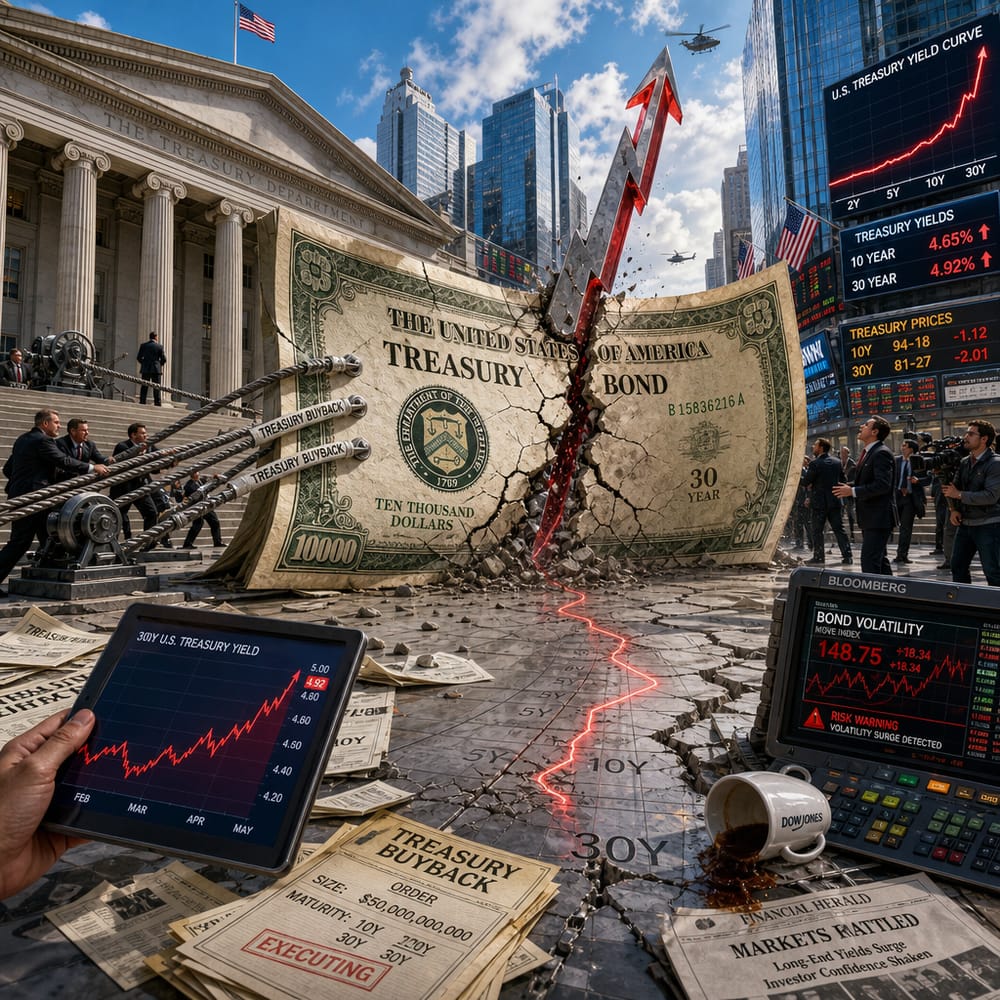
WHY YOUR BOND PORTFOLIO IS FEELING THE HEAT — AND WHY THE GOVERNMENT'S FIRE EXTINGUISHER ISN'T WORKING
If the bond market were a party, it's safe to say that Treasury Secretary Bessent just tried to crash it with a fire hose, and somehow managed to squirt champagne all over the dance floor. While his announcement of increased Treasury bond buybacks was meant to calm the room, it's only added to the chaos — with long-term Treasury yields climbing like they've lost their cool. What's going on here?
Let's back up a bit. In theory, when the government buys back bonds, it should lower the yields, like a well-placed DJ lowering the volume just enough to let people have a conversation. But this time, instead of soothing investors, it seems to have cranked up the anxiety. Long-term yields rose despite the buyback efforts, leading to those frowns and furrowed brows among investors.
So, why didn't Secretary Bessent's plan work? For starters, there's the whole pesky issue of inflation. Investors are still on edge about its stubborn presence and what it might mean for interest rates in the future. Higher inflation often leads to higher interest rates, and this expectation can make bond yields climb even when the government is trying to hold them down with buybacks. It's a bit like trying to stop a runaway train with a speed limit sign — it just doesn't cut it.
And let's not forget about the heavy borrowing by companies. As corporations scramble to raise funds, the demand for credit balloons, pushing long-term rates skyward. Kind of like everyone at the party suddenly deciding they want to be at the bar all at once — prices go up, and patience wears thin.
What does this rising tide of bond yields mean for the greater economy? It's a ripple effect, and not the soothing kind you'd hope for. Higher yields can have a chilling effect on the stock market, as they offer investors an alternative place to park their money that might seem safer, if not as exciting. This shift can drag on stock prices, as we've recently seen with the S&P 500 and Nasdaq taking hits, largely thanks to tech stocks faltering under this pressure.
Moreover, persistent volatility in the bond market can spell trouble for broader economic conditions. If investors remain jittery, it can lead to tighter financial conditions — think of it like the bartender cutting everyone off early. Businesses find it more expensive to borrow money, which can stifle investment, curb hiring, and dampen economic growth. It’s the economic equivalent of the party ending before midnight.
Now, you might wonder, what's next? If the bond market continues to be a roller coaster, we could be in for a tough ride. The Treasury's attempts to stabilize yields with buybacks might need a rethink. Perhaps more nuanced fiscal policies could help, addressing the root causes like inflation and corporate debt levels rather than just responding to symptoms.
For everyday investors, however, the takeaway is clear: stay informed, keep a diversified portfolio, and maybe keep an eye on those bond yields even if they usually seem like the sleepy part of your financial news. Because while stocks might be the life of the party, bonds are often where the real stories unfold.
In the meantime, if you're feeling your portfolio heat up, remember: that's the market giving you a nudge, telling you it's time to pay attention. And in this topsy-turvy world, that's advice worth taking.
This article is for informational purposes only and is not investment advice. Always do your own research or consult a licensed financial professional before making investment decisions.
© Copyright 2024. All Rights Reserved.
© Copyright 2024. All Rights Reserved.