

Bond Market Under Pressure as Treasury Yields Surge
Friday, August 28, 2026
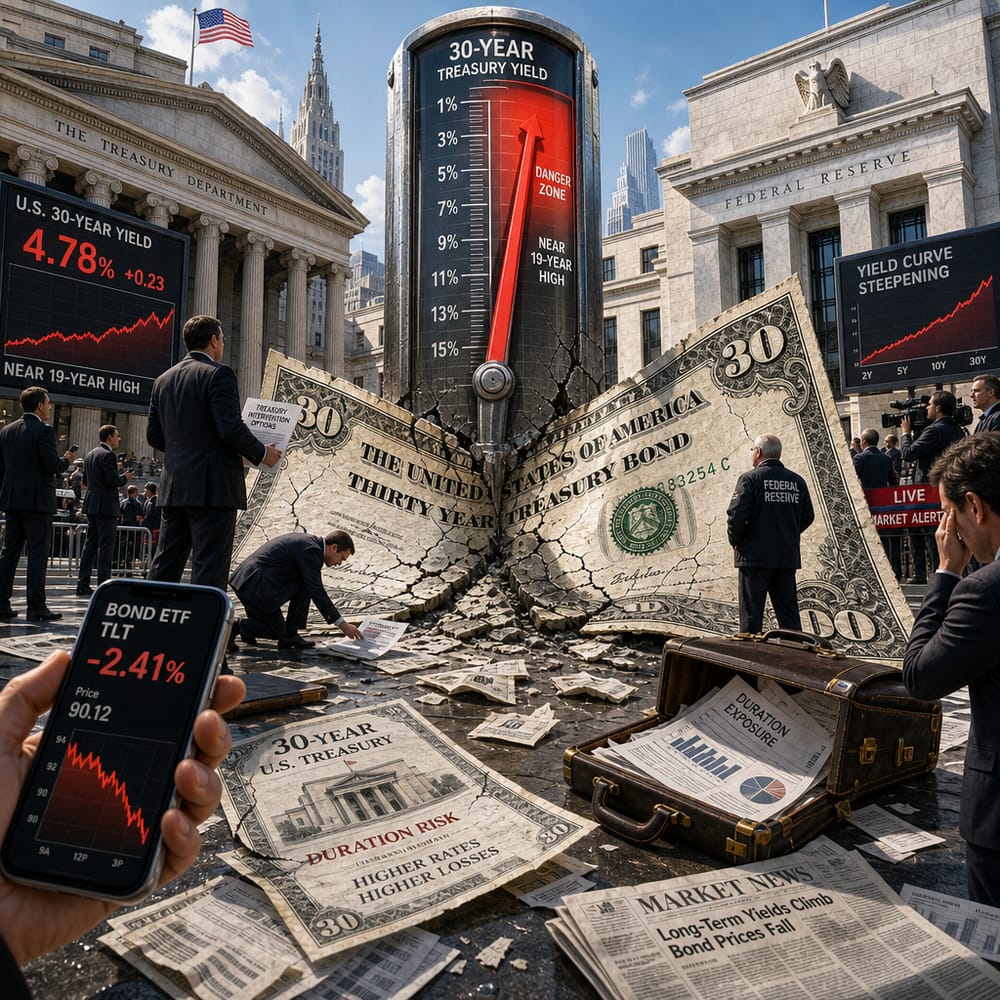
The bond market is feeling a bit like a kettle about to whistle, with Treasury yields climbing to heights not seen in nearly two decades. It's a sight reminiscent of the early 2000s when boy bands ruled the airwaves and flip phones were the height of tech savvy. But back to the present, where the financial landscape is shaking under the weight of the 30-year Treasury yield marching up to its highest point in nearly 19 years. What’s driving these yields skyward, and what could they mean for you and your wallet? Let’s dig in.
First, a crash course in Treasury yields: They're basically the returns you, as an investor, get from lending money to Uncle Sam by buying Treasury bonds. When yields go up, it usually means treasuries are being sold off, driving prices down. This phenomenon often reflects investors’ expectations of future inflation and interest rate hikes.
So, what’s causing this surge? Picture the Federal Reserve and the U.S. Treasury as two frenemies trying to steer a giant economic ship. The Fed, led by Chairman Kevin Warsh, is battling inflation with a superhero-like zeal by keeping interest rates higher for longer. The idea is simple: higher interest rates make borrowing more expensive, which can cool down spending and, ultimately, inflation. The flip side? Rising rates tend to scare bond investors, who dump longer-dated Treasuries, pushing yields upward.
Meanwhile, the Treasury Department is playing its own game, absorbing a mountain of debt. With the government knuckling down on hefty fiscal outlays, they're issuing more bonds than you can shake a stick at. And with more supply in the mix, investors demand higher yields to buy these bonds. It’s like putting out more lemonade stands in a neighborhood – you’d better offer a sweeter deal if you expect folks to buy from you.
Now, let’s talk about the broader economic implications of these rising yields. When Treasury yields jump, so do borrowing costs for everything from mortgages to car loans. That dream house might start looking more like a mirage when you factor in those sky-high interest rates. And businesses? They could start sweating about the cost of financing new projects, which could slow down expansion plans.
Higher yields can also make stocks less attractive. Why risk your hard-earned cash on the rollercoaster that is the stock market when you can get a decent return from a safer, government-backed bond? This shift in sentiment can weigh on stock prices, causing your investment portfolio to look a little less sunny.
On the flip side, there’s a silver lining if you’re a fan of stability. Rising yields reflect expectations of a stronger economy and can attract foreign investment, which is good news for the dollar. A strong dollar can be a boon for U.S. consumers who are buying imports, though it can be a downer for U.S. exporters as their goods become pricier on the world stage.
As the Fed and Treasury continue their delicate dance, how might they respond to these rising yields? The Fed could signal a pause in rate hikes if it feels inflation is cooling, which might ease the pressure on yields. The Treasury might juggle its issuance strategy, perhaps focusing on short-term debt that investors are less skittish about.
For retail investors, the key takeaway is to stay nimble. If you're looking at bond ETFs, consider how rising yields could impact their prices. Diversification remains your best friend in these uncertain times – a mix of stocks, bonds, and perhaps a dash of cash for good measure. Keep an eye on the Fed's next moves and the government's fiscal policies, as they could quickly change the landscape.
In the end, what we're witnessing is a classic tale of economic forces colliding, with rising yields spotlighting the tension between monetary policy and fiscal needs. Whether you’re a seasoned market hawk or a casual observer, it's a show that demands your attention. So grab your popcorn, keep your finger on the pulse, and navigate this evolving financial scene with savvy and confidence.
This article is for informational purposes only and is not investment advice. Always do your own research or consult a licensed financial professional before making investment decisions.
© Copyright 2024. All Rights Reserved.
© Copyright 2024. All Rights Reserved.