

Bond Market Turmoil Sends Stocks Sharply Lower
Thursday, August 20, 2026
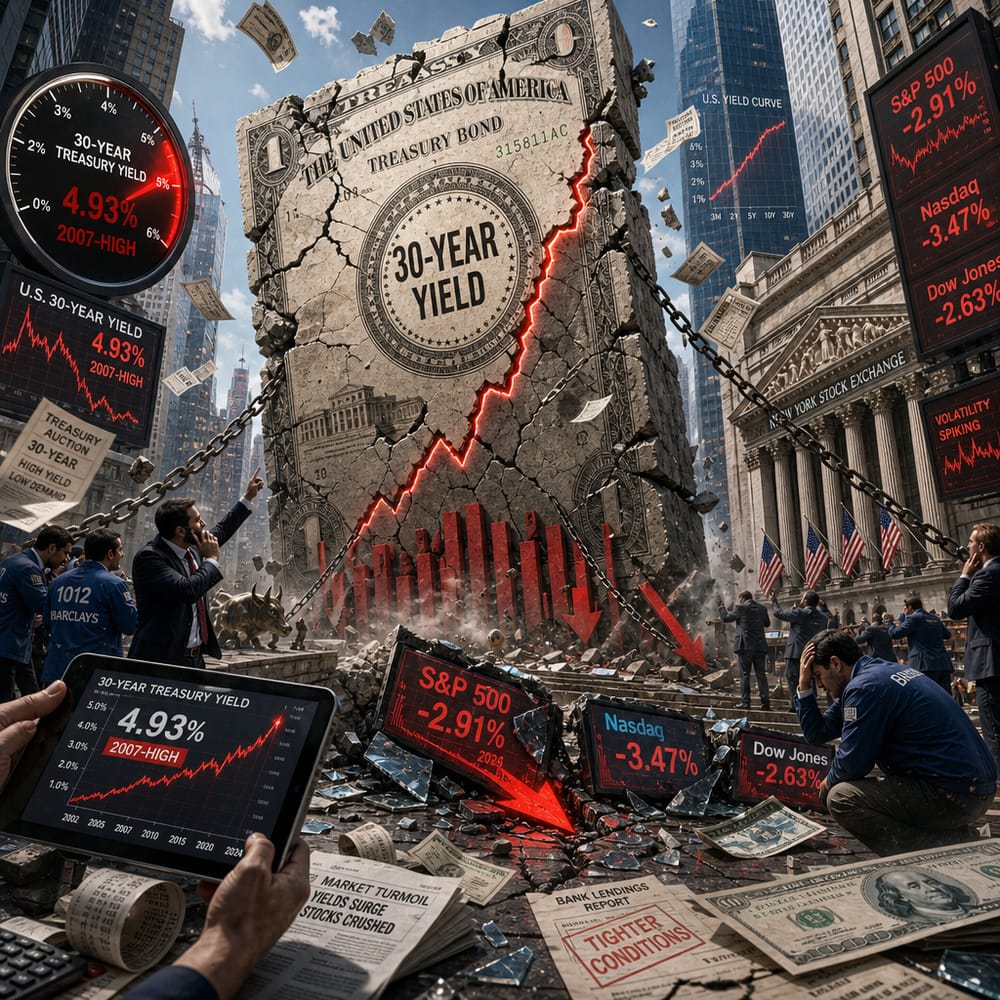
STOCKS IN TURMOIL AS BOND YIELDS SOAR HIGHER THAN A DOUBLE ESPRESSO
If your portfolio's been feeling like a rollercoaster lately, it's not just you. The bond market's gone wild, and it's dragging stocks along for the ride. Cue the 30-year Treasury yield, which just hit a high water mark not seen since 2007, sending a seismic shockwave through financial markets. This isn't just a ripple in the pond; it's the financial equivalent of a cannonball dive.
What's the big deal with the 30-year Treasury yield, you ask? Think of it as the canary in the coal mine for the economy. When yields rise, it suggests that investors are anticipating stronger economic growth, which sounds peachy until you realize it also means higher borrowing costs for everyone: from Uncle Sam to big corporations to Jane Doe looking to finance her new car. And as borrowing costs climb, the once dazzling allure of stocks can start to fade like last year's fashion trends.
It's not just the bond yields that are sky-high anymore. U.S. stock markets are feeling the burn, with the S&P 500, Nasdaq, and Dow all taking a hit. And if you're holding onto those high-flying tech stocks, you might want to take a seat. Tech companies, which have been gobbling up cheap borrowing like it's going out of style, are finding themselves squeezed in the vise of rising yields. Higher rates mean tighter financial conditions, and suddenly the growth stocks that investors were fawning over don't look quite as glamorous.
REPRICING EQUITIES: WHO'S IN THE HOT SEAT?
The sectors sweating bullets right now aren't just the tech giants. Think of your trusty consumer goods stocks—those companies that rely on predictable, stable growth. When the bond market sneezes, they're catching the cold. As Treasury yields rise, it puts pressure on future earnings, meaning investors are casting a more skeptical eye on those steadfast sectors as well.
Then there’s the financial sector, which usually thrives on higher rates since they can charge more for loans. But even here, success is a double-edged sword. Rising rates can dampen the appetite for borrowing, meaning banks might not see the windfall they’d hoped for.
BONDS, STOCKS, AND THE LONG HAUL
You might be wondering: What's the long-term play here? Are we just in a flash flood, or is this the new high tide? Sustained high Treasury yields can ripple through the economy with persistent tenacity. If they stick around, brace yourself. The impacts could alter everything from mortgage rates to corporate debt decisions to that ambitious startup's quest for funding.
But it's not all gloom and doom. For the retail investor, this could be a wake-up call to mix things up. Those with an eye for opportunity might start looking at dividend-paying stocks or sectors that can withstand the headwinds better. Utilities or healthcare, with their more stable cash flows, might start looking attractive.
TO THE BOND MARKET BRINK AND BACK?
As the Treasury market teeters on the edge, the government's efforts to throw a lifeline haven't exactly steadied the ship. Treasury Secretary Scott Bessent has been trying to reign in the chaos with buybacks and a pep talk, but let's just say that it's like trying to calm a tempest with a paper fan. Meanwhile, Fed Chair Kevin Warsh is sitting tight, with no sign that the Fed intends to jump into this latest fray. The drama between these two heavyweights makes for a juicy subplot, as Bessent's actions could eventually intertwine with the Fed's stance on economic interventions.
When it comes down to it, rising bond yields are a stark reminder that the market party can't swing forever without someone noticing the tab. So whether you're a casual observer or a seasoned market player, keep your wits about you. The bond market's turbulence is a signal, the kind you don't want to ignore, even if there isn't a convenient GPS app for navigating market storms.
As always, invest wisely and keep those seatbelts fastened. This ride might be a bumpy one, but it's one that's sure to teach us all a few lessons on market dynamics, Treasury yields, and maybe even a bit about ourselves as investors. Stay sharp, stay informed, and remember: the only thing constant in markets is change.
This article is for informational purposes only and is not investment advice. Always do your own research or consult a licensed financial professional before making investment decisions.
© Copyright 2024. All Rights Reserved.
© Copyright 2024. All Rights Reserved.