

Bond Market Turmoil: 30-Year Treasury Yield Hits 22-Year High
Thursday, September 24, 2026
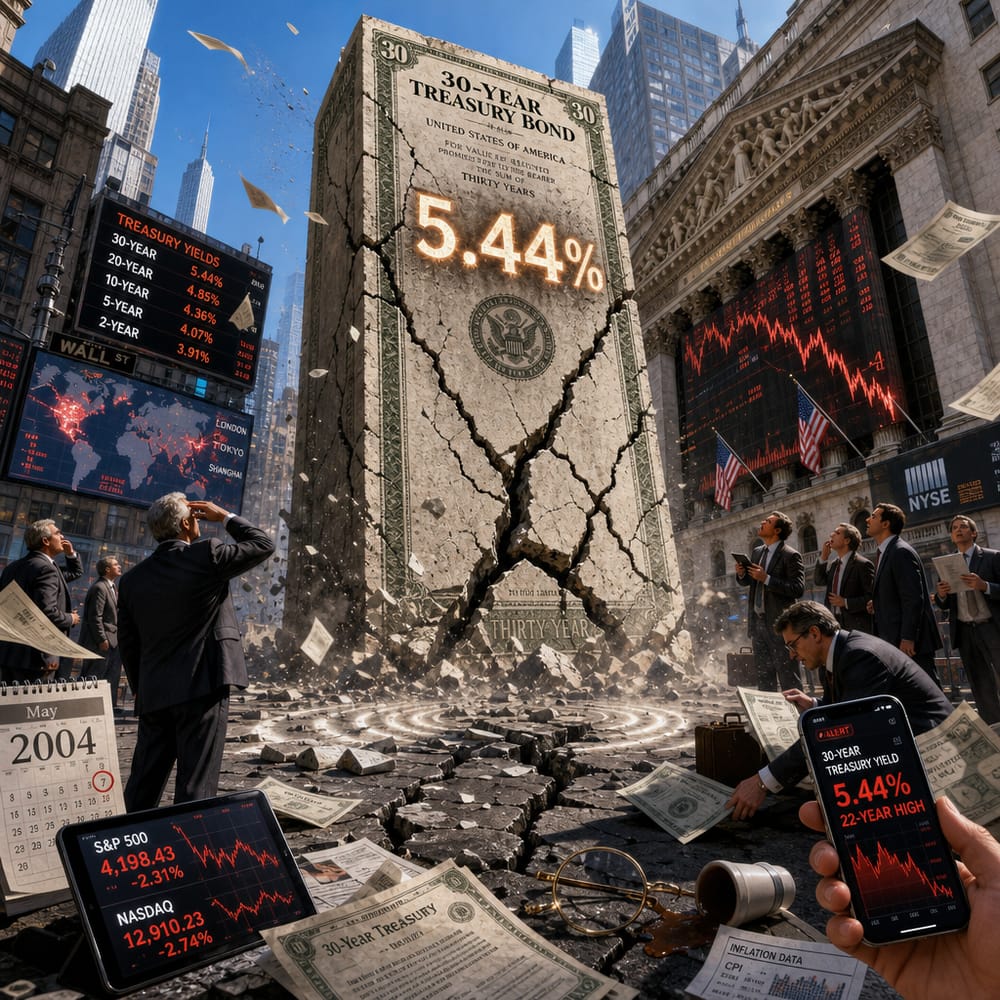
30-Year Treasury Yield Soars: What It Means for Your Wallet and Wall Street
Buckle up, folks. The 30-year Treasury yield just hit 5.44%, a high watermark we haven't seen since 2004. If you’re thinking, “big whoop, how does that affect me?”—well, sit tight. This isn’t just about bonds; it’s about ripples across the financial pond that can hit your wallet, your stock portfolio, and even the prices at the local coffee shop.
When Treasury yields rise, it's like the financial warning bells are ringing. This isn’t just a blip on the radar; this is a full-blown siren alerting us to inflation concerns. As yields climb, borrowing costs follow, and that means everything from your mortgage to your credit card could get more expensive. But let's dive deeper into the implications and how they're reshaping the landscape of the financial markets.
IMPACT ON EQUITY MARKETS
First, let's chat about stocks. Rising yields are kryptonite for equity markets, particularly the tech sector, which has been many investors' darling. The S&P 500 and the tech-heavy Nasdaq are already feeling the heat. Why? Because higher yields make the safe, steady returns from bonds more attractive compared to the riskier, volatile returns from stocks. Investors might start weighing their options and think, "Maybe I don't need to risk it all in Tesla shares when Uncle Sam's giving me 5%."
And speaking of tech, here's the zinger: tech companies, notorious for their mega valuations based on future earnings, get hit hardest when yields rise. Higher rates discount those juicy future earnings, cutting down the allure of tech stocks faster than you can say "AI revolution."
THE FED'S NEXT MOVE
Now, let’s talk about the puppet master behind the curtain—the Federal Reserve. The Fed's been in the hot seat since the onset of persistent inflation. With the 30-year yield soaring, the big question is: Will the Fed pump the brakes and hold off on more rate hikes, or will it double down to tame inflation?
If the Fed stays hawkish—fancy term for keeping rates high—it could throttle economic growth in its quest to keep inflation in check. But there's a fine line between caution and causing a recession. Fed Chairman Kevin Warsh has a tough decision ahead: listen to the markets begging for rate relief, or stick to his guns and keep rates high?
PORTFOLIO PIVOTS: WHAT INVESTORS ARE DOING
With the bond market turning into a sea of red ink, investors are scrambling to re-jig their portfolios. Gone are the days when stocks were the only game in town. Now, bonds are back on the radar with their juicier yields, especially those perceived safe havens like U.S. Treasuries.
Some savvy investors are looking at sectors traditionally less sensitive to interest rate hikes, like consumer staples or utilities—think of the companies that provide you with electricity and toilet paper. Others are hedging their bets entirely, diversifying into international markets, or seeking refuge in commodities like gold, which has historically been a safe bet during turbulent times.
But don't count equities out just yet. There's a world of opportunity still on the table for those willing to ride the waves. Companies that can pass on costs to consumers without losing them could still shine. Look out for firms with strong pricing power or those poised to benefit from the inflationary environment.
WHAT’S NEXT?
So what does all this mean for you, the everyday investor, or anyone with a vested interest in their retirement accounts (which is basically all of us)? Keep an eye on those yields. The next few months could be pivotal. The bond market's moves will signal what lies ahead—whether an economic soft landing or bumpier terrain.
In the meantime, don’t panic, but don’t get complacent either. Staying informed and nimble will be your best strategy. Consider sitting down with a financial advisor to discuss how these shifts might affect your long-term plans. Review your portfolio, keep an eye on the bond market, and remember: sometimes the safest play is just staying the course.
So, as we speed along this economic rollercoaster, hold onto your hats. We’re in for a ride, and it’s imperative to keep our eyes wide open—because in today's markets, standing still could be riskier than moving forward.
This article is for informational purposes only and is not investment advice. Always do your own research or consult a licensed financial professional before making investment decisions.
© Copyright 2024. All Rights Reserved.
© Copyright 2024. All Rights Reserved.