

Bond Market Tensions Amid Equity Calm
Monday, August 31, 2026
BOND MARKET TENSIONS AMID EQUITY CALM
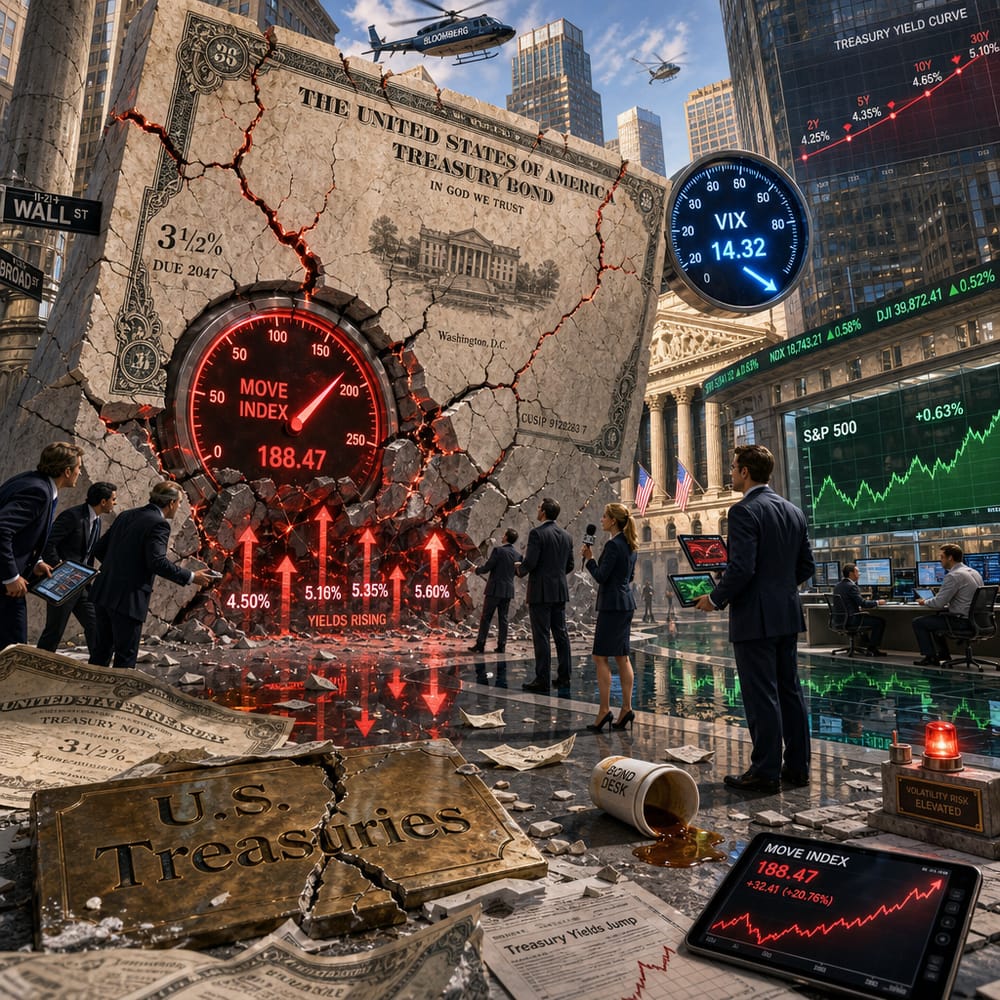
Brace yourself, Wall Street, because we've got a tale of two markets, each telling a story that seems to defy the other. Picture this: the MOVE Index, which tracks the volatility of U.S. bonds, is throwing a tantrum like it's discovered it's out of coffee. Meanwhile, the VIX, the so-called "fear gauge" for equities, is lounging on a beach without a care. What's going on?
Bonds and stocks are usually tethered in a delicate dance, but right now, they're moving like they've had a messy breakup. The bond market's on edge, screaming about some serious underlying concerns, while equities are blissfully ignoring the ruckus, riding high on a wave of tech-fueled optimism. This disconnect is raising eyebrows and questions about what it might mean for your portfolio.
WHAT'S SHAKING UP THE BOND MARKET?
At the heart of this bond market volatility is uncertainty, the kind that keeps economists up at night. Treasury yields, which reflect the cost of borrowing in the U.S. government bond market, are swinging like a pendulum. They're reacting to a cocktail of geopolitical tensions—think missile launches and sanctions—and economic jitters over inflation and interest rate policies.
The recent U.S. military action against Iranian forces has only turned up the heat. Add to that the Federal Reserve's tricky balancing act of managing inflation without stifling growth, and you have a recipe for bond market anxiety. Investors in bonds are skittish, worried about what might come next and how it will affect the value of their investments.
EQUITY MARKETS: CALM BEFORE THE STORM?
While the bond world frets, stocks are seemingly on a different planet. Major indexes like the S&P 500 and Nasdaq are strutting through August with gains, driven by sectors like technology that are riding the AI wave. This detachment raises the question: are equities too optimistic, ignoring the storm signals flashing from their bond market cousins?
Equities have been buoyed by strong earnings reports and a belief that consumer spending will hold strong, even as interest rates flirt with higher levels. The tranquility in VIX—a measure of expected volatility in the stock market—suggests investors are not immediately worried. But this calmness could be the eye of the storm if bond market signals translate into broader economic disruptions.
POTENTIAL ECONOMIC IMPLICATIONS
So, why does any of this matter to you, the everyday investor? Well, the bond market often acts as an early warning system for the broader economy. Spiking bond volatility could be hinting at upcoming economic turbulence—think inflationary pressures or a slowdown in growth—that could eventually catch up with equities.
If bond yields continue to rise, borrowing costs for companies could increase, potentially squeezing profit margins and putting a damper on stock prices. Moreover, if the Fed feels compelled to hike interest rates to combat inflation, that could further impact both consumer spending and business investments, slowing down economic growth.
The tension between these two markets could also spell volatility ahead. If stocks decide to pay attention to the bond market jitters, we could see swings in stock prices as investors reassess risk and return expectations.
WHAT SHOULD YOU DO?
First, don't panic. Markets are complex, and they thrive on emotions like fear and exuberance. As an investor, it's crucial to keep your cool and stay diversified. Balance your portfolio across different asset classes. If you're heavily invested in equities, it might be worth considering some exposure to bonds or other assets that can weather economic storms.
Keep an eye on the Federal Reserve's next moves. If they signal a shift in interest rate policy, it could swing both the bond and equity markets. And remember, don't let short-term volatility derail your long-term investment strategy.
In the end, while the equity market might seem serene as a Zen garden right now, it pays to heed the warnings blaring from the bond market. Because when these two eventually reconcile their differences, you want to be ready. After all, in the world of investing, fortune favors the prepared.
This article is for informational purposes only and is not investment advice. Always do your own research or consult a licensed financial professional before making investment decisions.
© Copyright 2024. All Rights Reserved.
© Copyright 2024. All Rights Reserved.