

Bond Market Signals Trouble for Tech Stocks
Thursday, August 13, 2026
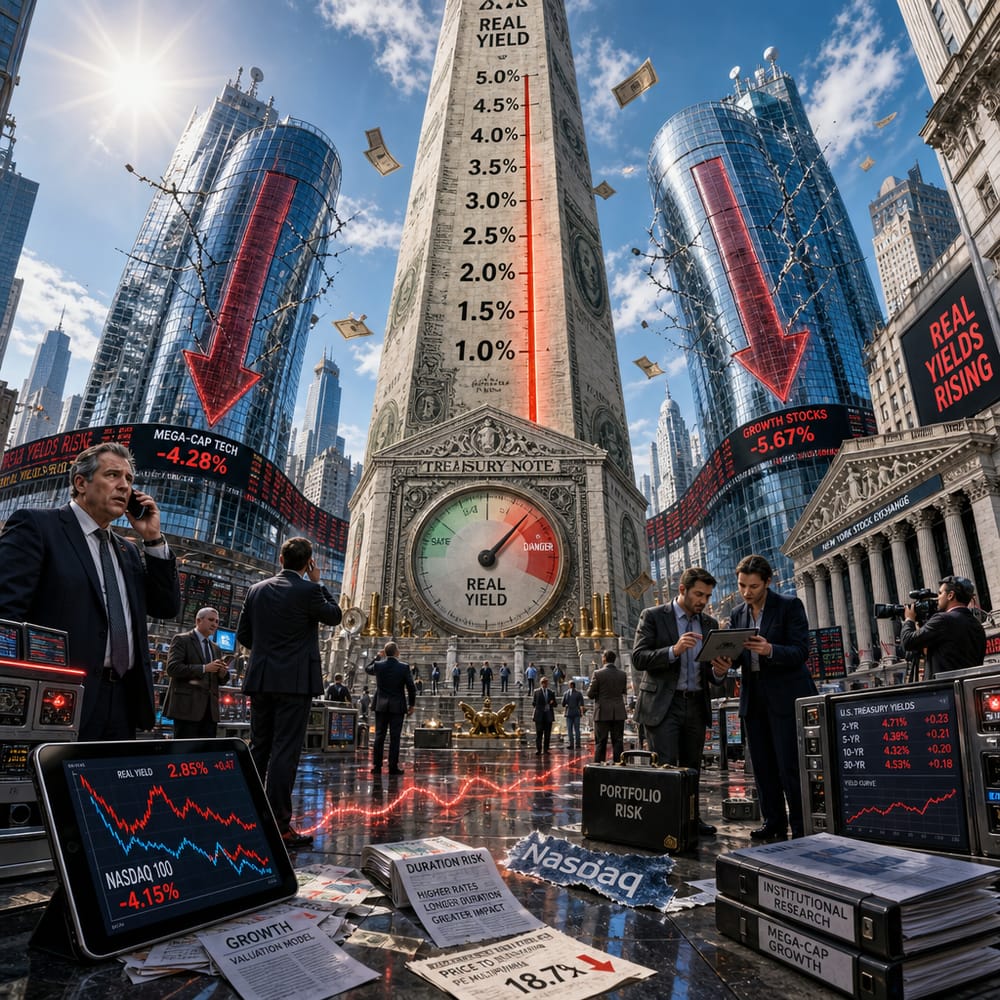
BOND MARKET SIGNALS TROUBLE FOR TECH STOCKS
If the bond market were a fortune teller, right now it’s reading some pretty ominous signs for tech stocks. Investors are shuffling tarot cards and scratching their heads as elevated real yields hint at weaker returns for equities, especially for big-name tech and mega-cap growth stocks. But hey, when has a little market drama not kept things interesting?
Let’s break it down like this: real yields, which are bond yields adjusted for inflation, have been creeping upwards. That’s essentially the bond market waving a red flag to stock investors. When those real yields rise, it signals that bonds are offering more attractive, safer returns compared to riskier investments like stocks. And who takes the biggest hit in such scenarios? Our beloved tech sector.
Tech stocks, especially the giants like Apple, Microsoft, and Google, have been living the high life. They’ve been riding the wave of low-interest rates and investor enthusiasm for future earnings growth. But now, with bonds starting to whisper sweet nothings of higher yields into investors’ ears, the allure of high-multiple growth stocks begins to dwindle.
Elevated real yields mean that investors could potentially get better returns from bonds without the risk of betting on future tech innovations that may or may not pay off. So, we’re seeing a bit of a shake-up. The tech sector, once the darling of the stock market, is faced with the unsettling prospect of investors rotating out in search of more stable pastures.
But where’s the money likely headed if not into the arms of tech giants? Enter the value and defensive sectors. Think utilities, consumer staples, and even healthcare—these are stocks that tend to be less volatile and offer more predictable returns. You know, the kind of stocks that don't promise to change the world tomorrow but are there to keep your portfolio's lights on today.
Investors are taking these bond market signals seriously. The prospect of higher yields is prompting them to reconsider their portfolios. Some are eyeing those steady value stocks as safe harbors in potentially stormy financial weather. It’s not goodbye forever to tech, but maybe a temporary “let’s-just-be-friends” situation while they seek solace in the arms of sectors that promise a little more stability in the short term.
And it’s not just an investor hunch. Analysts and economists have been watching this trend unfold, noting the increasing appeal of bonds as a viable alternative to the rollercoaster ride of tech stocks. As these real yields rise, it’s a cue for investors to get a little more conservative with their cash.
But here’s the kicker—this isn’t the first time tech stocks have been thrown off their pedestal. They’ve been the poster children for resilience, bouncing back time and again. So, while the current dance with bonds might shake up the tech party, don’t count these stocks out just yet. There’s a reason they’ve kept climbing to new heights—they’ve got a knack for innovation and growth that’s hard to ignore for long.
In the grand scheme of market movements, these rotations are a reminder of the cyclical nature of investing. Bonds and stocks play a perpetual game of tug-of-war, with investors caught in the middle, trying to make their best moves. For now, it seems bonds might be winning a round, but the game is long, and tech stocks have a history of coming back swinging.
So, what's next for the average retail investor scrolling through their phone, sipping on their morning coffee? It might be time to take a good look at your portfolio. Consider diversification, weigh the risks and rewards, and remember that a mix of assets could be your best bet for weathering shifts in market sentiment.
In the meantime, keep an eye on those bond yields. They're like the cheeky kid in the back of the classroom—quiet but capable of stirring things up in an instant. And who knows, this bond market twist might just be the nudge needed to turn your investing strategy into a winning play, regardless of where the winds blow next.
This article is for informational purposes only and is not investment advice. Always do your own research or consult a licensed financial professional before making investment decisions.
© Copyright 2024. All Rights Reserved.
© Copyright 2024. All Rights Reserved.