

Bond Market Rout Deepens—Treasury Yields Hit Two-Decade Highs and Drag on Equities
Thursday, October 01, 2026
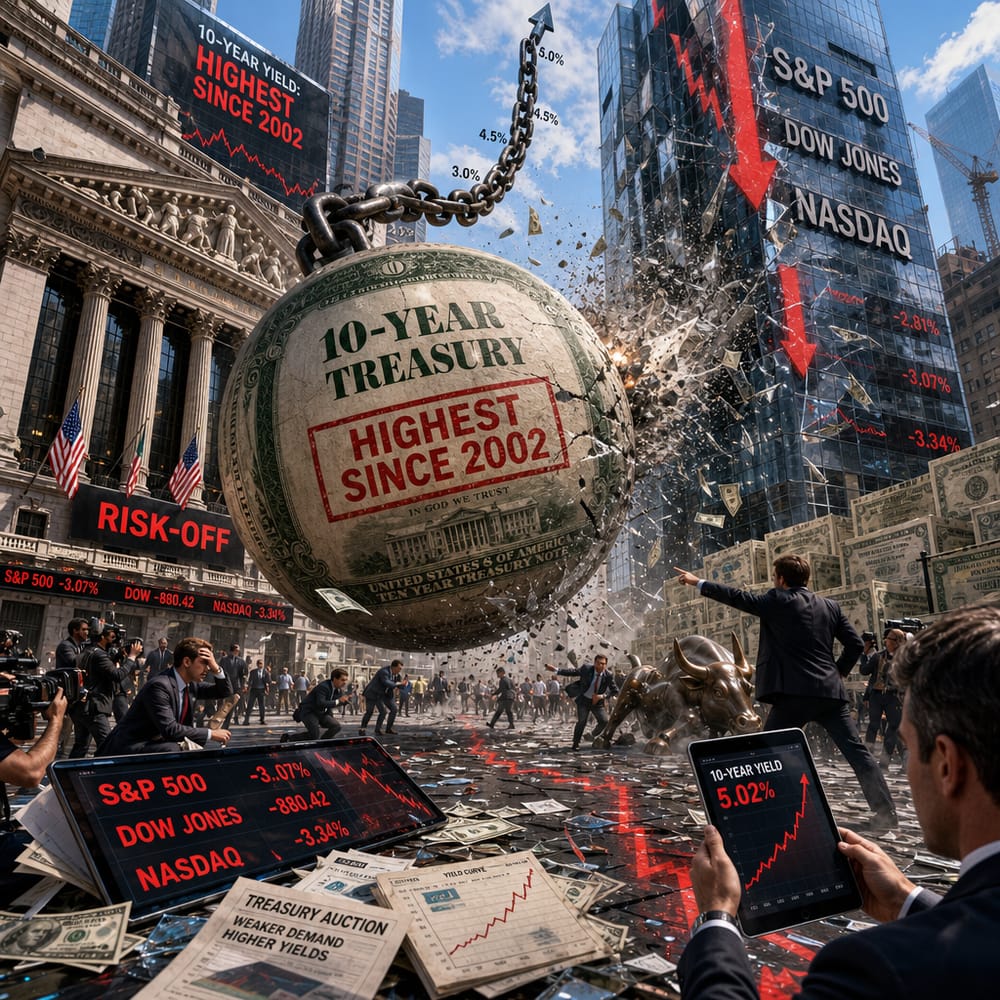
BOND MARKET ROUT DEEPENS—TREASURY YIELDS HIT TWO-DECADE HIGHS AND DRAG ON EQUITIES
Welcome to the economic rollercoaster! This week's thrill ride, the U.S. Treasury bond market, is not for the faint-hearted. If you thought the stock market was dramatic, wait until you hear what the bond market is pulling now. The 10-year U.S. Treasury yield has skyrocketed to levels not seen since 2002, taking the spotlight and throwing a wrench into the equity markets. Buckle up as we dive into how these rising yields are shaking up sectors, investor strategies, and potentially even the Federal Reserve's playbook.
The 10-year Treasury yield has breached the 5.3% mark, marking a milestone that harks back to the early 2000s. It's like seeing a ghost from the past, only this one is waving around higher borrowing costs like they’re party favors. For those of us who skipped their Economics 101 lecture, here’s the Cliff Notes: when bond yields rise, borrowing gets more expensive, and investors get itchy feet about stocks. Cue the equity market sell-off.
This bond market bonanza is sending shockwaves through Wall Street. The S&P 500, Dow Jones, and Nasdaq all took a hit as investors ponder whether their stock portfolios are about to be the next victim of these climbing yields. Rising yields generally mean investors are demanding higher returns to tie their money up in bonds, which in turn can make stocks look less appealing. It's like comparing a rollercoaster ride to a merry-go-round—suddenly, the rollercoaster doesn’t seem as thrilling for the same price.
MAJOR SECTORS TAKE A HIT
So, how is this bond drama affecting different sectors? Let's talk tech first. The tech-heavy Nasdaq has been particularly jittery. High-growth sectors like technology are often more sensitive to interest rate changes because they rely on borrowing to fuel their growth. Think of them as the caffeine junkies of the stock market—more jittery with every little rate hike.
Then there's the financial sector. One might think banks might do a happy dance at the thought of higher rates. After all, they get to charge more for loans. But not so fast. While increased rates can be beneficial, the rapid rise and potential for economic slowdown make this far from a straightforward win for the banks.
Utilities and real estate—typically seen as safe havens—aren’t escaping the turbulence either. These sectors are getting hammered as they are generally considered bond proxies because of their dividend yields. When Treasury yields spike, these sectors lose a bit of their shine.
INVESTOR STRATEGIES IN THE SPOTLIGHT
As investors digest these rising yields, strategies are quickly shifting. Some are opting to flee to shorter-duration bonds, which are less sensitive to interest rate hikes. Others are considering the unthinkable—holding more cash. Yes, actual cash, which is suddenly looking like a viable option amidst market volatility.
On the flip side, some investors are using this moment to hunt for bargains in the stock market, especially in sectors like energy, which is seeing its own separate drama unfold. With Brent crude back above $100 due to Chinese export restrictions and global supply chain worries, energy stocks are getting their time in the limelight.
WHAT THIS MEANS FOR THE FED
And what about the Federal Reserve? Rising bond yields are putting the Fed in a bit of a pickle. On one hand, strong yields can naturally cool down an overheated economy, potentially taking the pressure off the Fed to raise interest rates. On the other hand, if this bond market rout nudges the economy towards a slowdown, the Fed might have to reconsider its current stance on rate hikes.
The speculation is thick. Will the Fed maintain its hawkish stance or pause to let the economy catch its breath? The bond market is certainly testing its resolve, providing a real-life stress test of its current monetary policy posture.
In the end, whether you’re a seasoned investor or a casual observer, the current state of the bond and stock markets is a reminder that nothing in finance is static. The landscape is shifting, and those who can adapt will find opportunities even in volatility. For now, keep your eyes on those Treasury yields—they’re the star of this financial drama, and the next act is sure to be just as riveting.
This article is for informational purposes only and is not investment advice. Always do your own research or consult a licensed financial professional before making investment decisions.
© Copyright 2024. All Rights Reserved.
© Copyright 2024. All Rights Reserved.