

Bond Market Reprieve Briefly Reignites Risk Appetite—but Relief Quickly Fades
Friday, August 21, 2026
BOND MARKET REPRIEVE BRIEFLY REIGNITES RISK APPETITE—BUT RELIEF QUICKLY FADES
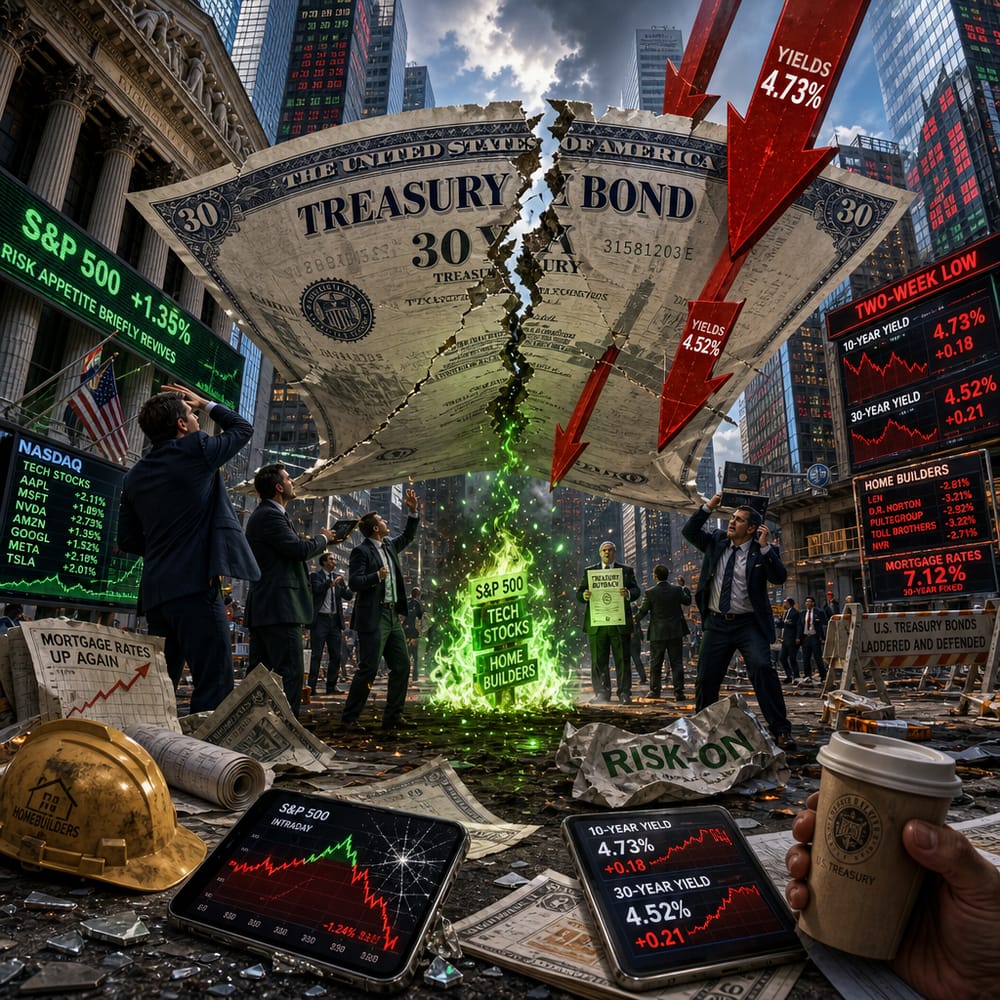
If there’s one thing the financial markets hate more than anything, it’s uncertainty. And right now, volatility in the bond market is giving investors more whiplash than a bad night on Wall Street. On August 19, the S&P 500 decided to flirt with optimism, edging up 0.21% after the Treasury announced a plan to double its long-bond buybacks. It was like the universe gave stocks a wink and a nudge, whispering, "Hey, maybe everything's gonna be alright." But just like a bad rom-com plot twist, the next day bond yields decided to fall back into their old habits, reversing the reprieve and dragging the S&P down to its lowest level in two weeks.
So, what gives? The Treasury's grand gesture was a welcomed effort to ease those sky-high yields investors have been losing sleep over. Lower yields typically mean cheaper borrowing costs, and that’s music to the ears of businesses and homebuyers alike. Tech stocks and homebuilders started dreaming of sugar plums and profitable quarters. But before anyone could break out the champagne, reality made a comeback.
The relief rally was short-lived as bond yields reversed course faster than a politician caught in a scandal. The root of the issue? Inflation fears. As oil prices remain high and the specter of more aggressive Federal Reserve rate hikes lurks in the shadows, investors are skittish. The delicate balance between monetary policy and market stability feels like a tightrope walk without a safety net.
The Treasury's intervention initially gave tech stocks a boost. They were among the first to pop the bubbly, as lower yields often mean better valuations for growth stocks. Companies like Apple and Microsoft were feeling festive, at least for a moment. Meanwhile, homebuilders, who have been battling rising mortgage rates, thought they saw light at the end of the tunnel. Imagine their dismay when that light turned out to be the glare of another yield spike.
But why didn't this bond market break hold steady? The answer is complex, tied up in investor psychology and macroeconomic trends. First, the global economy is still grappling with inflationary pressures. High oil prices have become an unwelcome guest, pushing up costs across the board. And as long as inflation rears its ugly head, the Federal Reserve will remain on edge, potentially tightening the monetary policy screws.
Moreover, bond yields are the sirens of Wall Street, their song luring investors to reassess risk. When yields climb, bonds become more attractive compared to stocks, leading to an outflow from the equity markets. It’s a classic case of “flight to safety”—a tendency that grows whenever the economic outlook gets murky.
Investor sentiment is a fragile ecosystem. The Treasury’s bond buyback plan might have been a Band-Aid on a bullet wound. A temporary fix in a market that’s desperately seeking stability. Yet the relief it provided was enough to reignite risk appetite, even if just for a day. It’s a reminder that in the financial markets, the promise of a little stability can spark a lot of action.
Still, this flip-flop in market sentiment underscores a broader issue: the delicate dance between fiscal policy and market reactions. Investors are watching the Fed like hawks, looking for any sign of a pivot or pause. Until there's clarity, expect more of this seesaw action in the stock and bond markets.
In this uncertain landscape, the big question remains: how will investors adjust their strategies? Will they keep riding the rollercoaster of volatility, or will they seek refuge in safer assets? Only time will tell. But for now, keep your eyes on the bond markets. They're the barometer for where the winds of investor sentiment are blowing next.
So, if you're scrolling through your phone, pondering what it all means for your portfolio, remember: these are not times for the faint of heart. But in the world of investing, a little heartburn is par for the course. Keep your seatbelt fastened—it's going to be a bumpy ride.
This article is for informational purposes only and is not investment advice. Always do your own research or consult a licensed financial professional before making investment decisions.
© Copyright 2024. All Rights Reserved.
© Copyright 2024. All Rights Reserved.