

Bond Market Pricing and Rate-Cut Expectations Re-Aligned
Monday, August 17, 2026
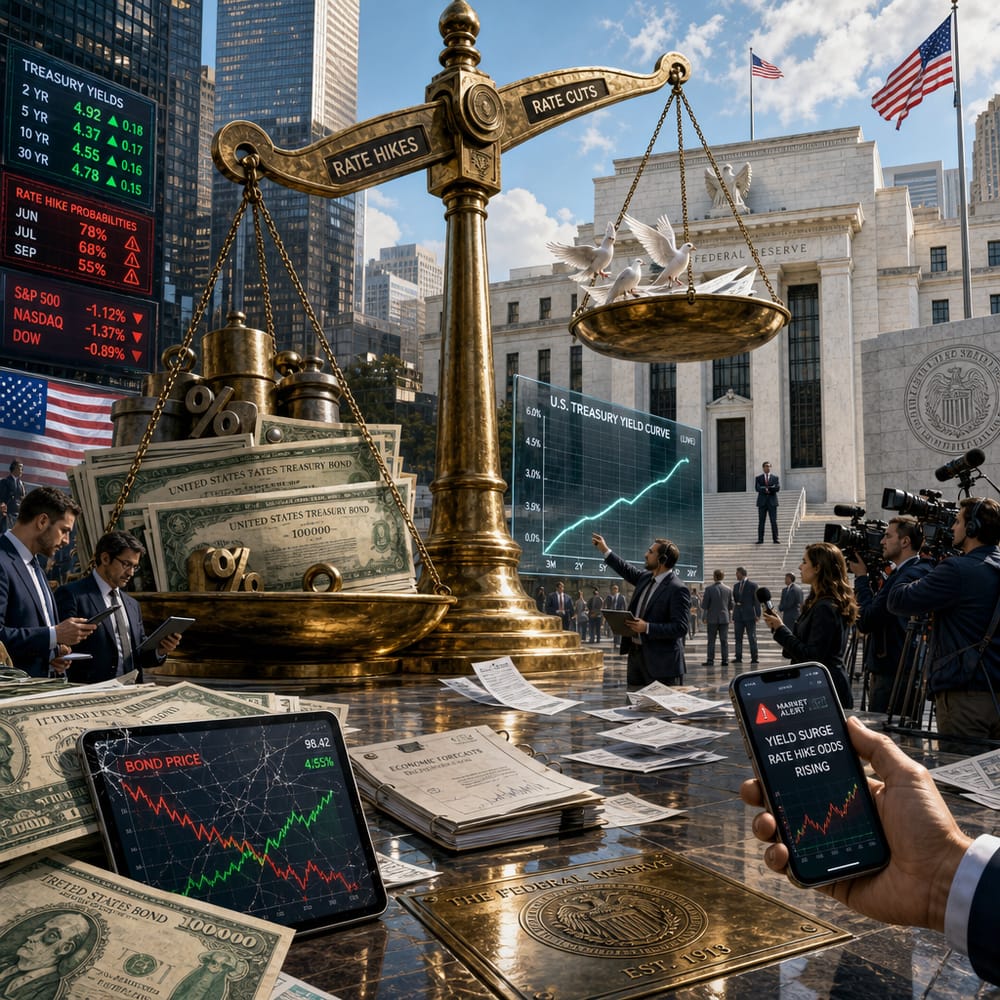
What do you do when your favorite rollercoaster is suddenly hurling in reverse? You white-knuckle the safety bar and hope you don't spill your drink. That's sort of how traders have been feeling lately as the bond markets pull a sudden U-turn on rate cut expectations, making the chances of a Federal Reserve rate hike suddenly soar. It feels like being promised a gentle cruise down Easy Street but finding yourself on a rickety, thrill-filled ride with no end in sight.
The confidence in a September rate cut has crumbled faster than a cookie at the bottom of a purse. Investors, once buoyed by the idea of a relief cut from the Federal Reserve, are now facing the harsh reality of a possible rate hike instead. But why the sudden shift?
Blame it on the economy's stubborn resilience. The market was previously convinced that the Fed would cut rates to ease up on the economic throttle. The picture was painted: inflation moderating, a labor market cooling off juuuust enough, and consumers catching their breath. But the economy, ever the unpredictable beast, is still galloping along with a bit too much gusto for the Fed’s liking.
Now, traders and analysts, the oracles of Wall Street, are seeing stars—specifically, the kind that hint at interest rates that don't budge or even tick upward. The bullish U.S. economy, despite geopolitical jitters and a carousel of global crises, managed to stay spry and snappy. This unexpected vitality has, however, led to a rethink: Maybe an interest rate hike is the bitter pill necessary to keep inflation in check and ensure everyone doesn’t get too comfy in the land of low interest rates.
This isn’t the first time the market has gotten ahead of itself. History’s scrapbook is brimming with similar tales of recalibrated expectations. Remember 1994? A time when grunge was king, and the Fed's surprise rate hikes left investors scrambling to adjust their portfolios. The economy had hinted it was overheating, and the Fed, not one to shy away from playing the bad cop, slammed on the brakes.
Fast forward to today, and the bond market finds itself in a familiar dance. Treasury yields, the bread-and-butter gauge for interest rates, have been inching up. Especially those stubborn 10-year yields which are watched like hawks by everyone from mortgage lenders to car dealers. They’ve been flirting with higher rates, signaling to the market that the Fed might be less inclined to do any cutting.
So, what does all this mean for the average investor, the 9-to-5 warriors juggling a portfolio on the side? Well, for starters, it might be wise to brace for some turbulence in the bond markets and other interest-sensitive sectors. Things like real estate, for instance, might see some wobbles as borrowing costs stay steeper than a Wall Street skyscraper. And those eyeing bonds for their stability might want to rethink their strategy as the market continues to adjust and adapt.
Ultimately, the takeaway here isn't just about rates and bonds, but about expectations—a quintessential lesson in staying nimble and informed. Because, as the market has shown time and again, what goes up can come down, and what's expected can become the unexpected.
In the end, whether the Fed hikes or holds, the savvy investor knows one thing for sure: the market's a lot like that rollercoaster—best enjoyed when you’ve buckled in and are ready for whatever twists and turns come your way. So, hang tight, keep an eye on those FOMC minutes, and maybe, just maybe, hold off on that celebratory drink until you're safely back on solid ground.
This article is for informational purposes only and is not investment advice. Always do your own research or consult a licensed financial professional before making investment decisions.
© Copyright 2024. All Rights Reserved.
© Copyright 2024. All Rights Reserved.