

Bond Market Pressures Drive Broad Market Selloff
Friday, August 21, 2026
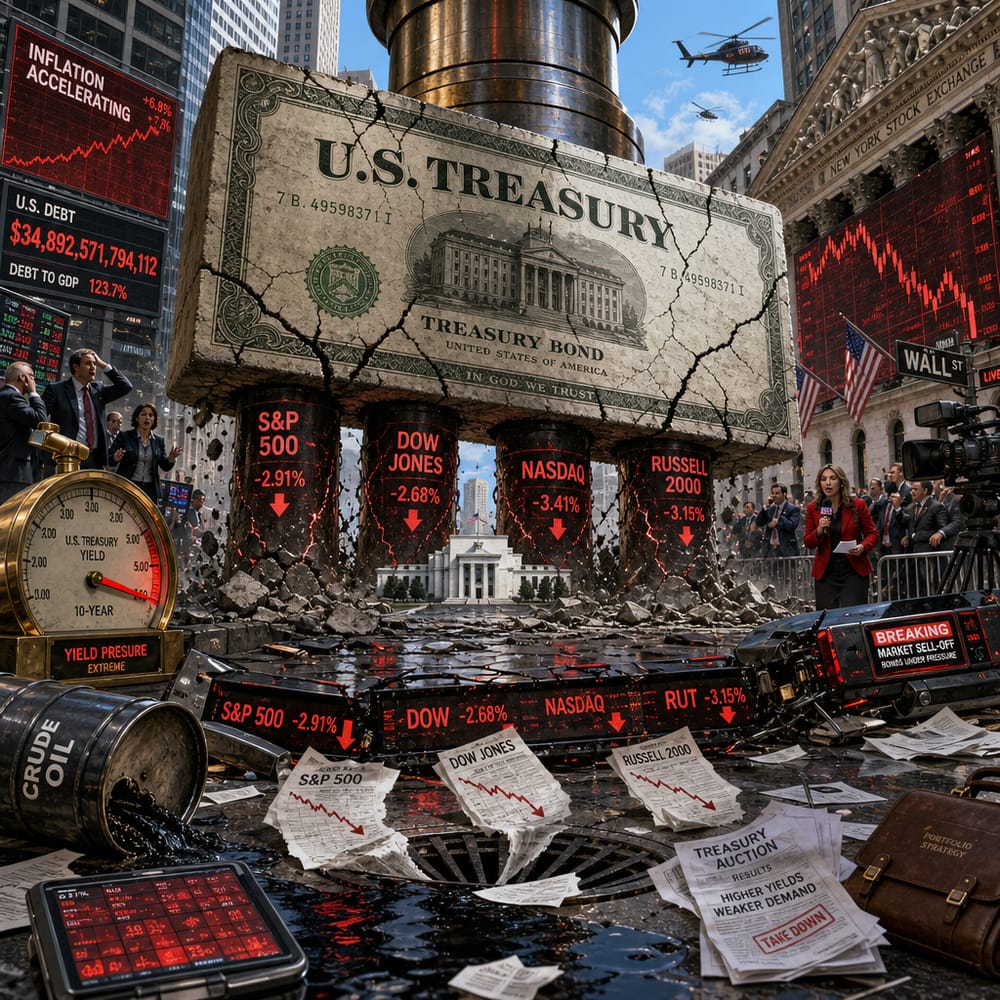
Batten down the hatches, folks. If you thought the stock market was a smooth sailing ride to riches, think again. On August 20th, major U.S. stock indexes took a nosedive in what could only be described as a financial freefall, leaving investors clutching their smartphones in horror. What sent the markets spiraling? A toxic cocktail of rising oil prices, inflation jitters, and fretting over government debt.
Let's take a closer look at what triggered this market meltdown and what it means for you, the retail investor, sipping a latte and wondering if your 401(k) is safe.
BOND MARKET BLUES
First off, let's talk bonds. They may sound boring, but these government IOUs are the steady foundation that keeps the financial world from collapsing like a house of cards. Recently, though, bonds have been acting more like unstable Jenga pieces. Long-dated U.S. Treasury yields, which are the returns on these bonds, have inched upwards, fueled by fears of rising inflation and government debt.
When bond yields go up, it means people are dumping them—likely because they're worried Uncle Sam is going on a spending spree funded by debt. This isn't a new issue. What's new is the recent climb in oil prices, which fan the flames of inflation, making investors jittery that the dollars in their pocket could soon buy them less.
OIL PRICES SIZZLE
Ah, oil. The black gold that makes the world go round—or at least, makes our cars and planes go vroom-vroom. Lately, prices have been climbing like a cat up a tree, driven by geopolitical tensions and supply hiccups. According to market whispers, over 660 million barrels of crude oil have waltzed through the Strait of Hormuz since May, under the watchful eye of the U.S. military. Yet, that's peanuts compared to what flowed before the Middle East muscled up its saber-rattling.
Price hikes in oil flow straight into your wallet's jugular, raising costs everywhere and spooking investors who fear inflation will devour economic growth.
INFLATION SPECTER
Inflation may sound like a fancy economics term, but at its core, it's the menace that makes your dollar worth less. Rising oil prices are inflation's best buddy, and together, they're putting the squeeze on consumer spending and corporate profits. As if that wasn't enough, the Fed, our friendly neighborhood financial watchdog, has its hands full trying to keep a lid on everything, juggling interest rates like flaming torches.
STOCK INDEXES STUMBLE
With this chaos largely stemming from rising bond yields and expensive oil, stock indexes took a hit. The S&P 500, Dow Jones, Nasdaq—you name it, they all tumbled. The Russell 2000, home to those charming small caps, wasn't spared either. When the bond market sneezes, the stock market catches a cold. The correlation is that rising bond yields make stocks less appealing, as investors can get better returns with supposedly less risk elsewhere.
THE RIPPLE EFFECT
So, what does this all mean for you, the intrepid retail investor? Are we talking about a blip or a full-blown bear market? While the selloff does underscore the market's sensitivity to macroeconomic shifts like inflation and debt, it also serves as a stark reminder of the interconnectedness of financial markets.
For some sectors, like cryptocurrencies, it has been a rollercoaster of a week. Bitcoin, for instance, has been riding high on a wave of speculation and positive news from the financial bigwigs. But don't let your guard down; volatility is the kryptonite of unprepared investors.
STRATEGIES FOR RETAIL INVESTORS
Amidst all this turmoil, what's a retail investor to do? Keep a cool head and remember your investment fundamentals. Diversification is your friend. Don't put all your eggs in one basket; spread your investments across sectors, including both equities and bonds. Consider sectors less impacted by inflation, such as healthcare or utilities.
Watching the markets like a hawk, but acting like a turtle, might just be the best strategy here. Reacting to every market twitch can lead to decisions that you might regret when calm heads prevail.
In conclusion, while the selloff on August 20th might have been a wake-up call, it's important to remember that markets are inherently unpredictable. Today’s panic may become tomorrow’s opportunity. So, keep your eyes open, your portfolio diversified, and your coffee strong—after all, this financial ride is far from over.
This article is for informational purposes only and is not investment advice. Always do your own research or consult a licensed financial professional before making investment decisions.
© Copyright 2024. All Rights Reserved.
© Copyright 2024. All Rights Reserved.