

Bond Market Jitters Undercut Stocks: Dow Down Over 600 Points
Thursday, August 20, 2026
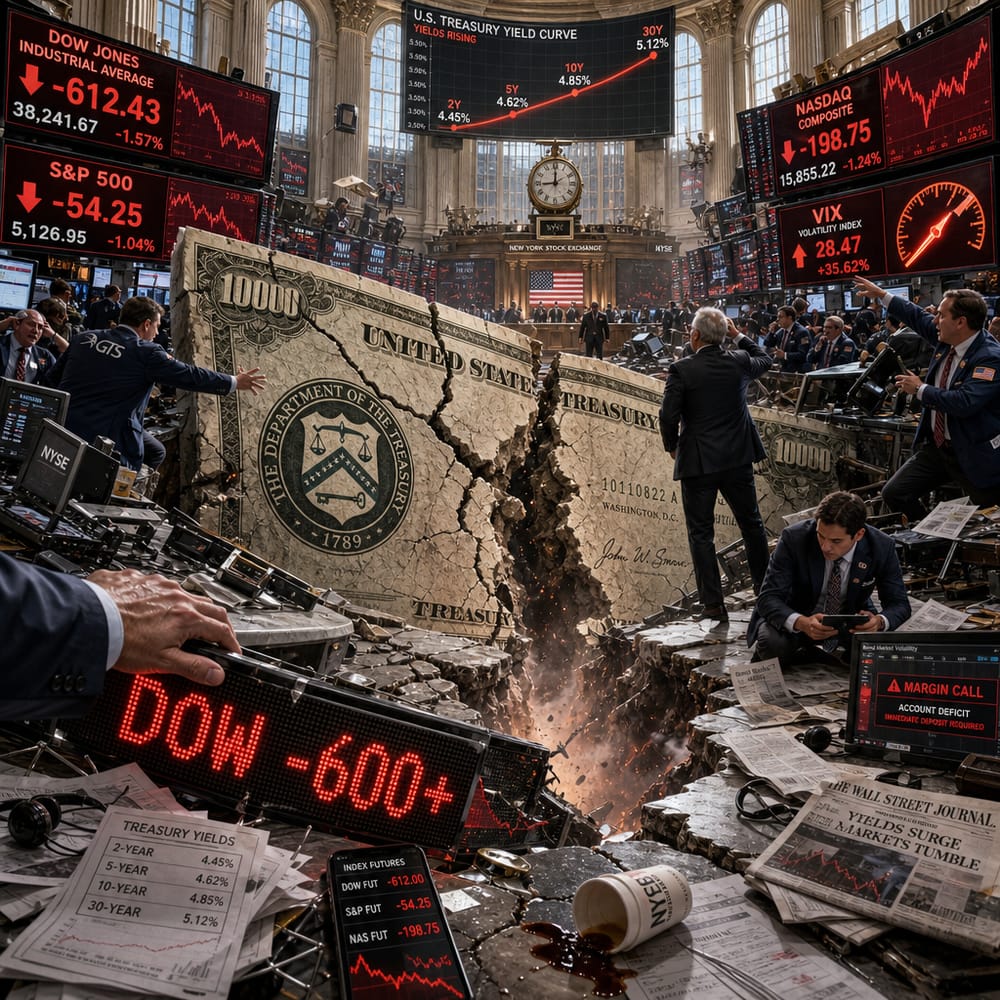
BOND MARKET JITTERS UNDERCUT STOCKS: DOW DOWN OVER 600 POINTS
If the stock market were a rollercoaster, today was the part where everyone screamed. The Dow Jones took a nosedive, plunging over 600 points, and it wasn't alone in its descent. The S&P 500 and Nasdaq also slipped on fresh fears stemming from—you guessed it—those fickle rising bond yields.
You might be wondering, "How does a bond yield make Wall Street lose its collective mind?" Good question. A bond yield is essentially the return investors get for lending their money to Uncle Sam. When these yields rise, it costs more to borrow money, which can lead to a slowdown in business investment and consumer spending. Think of it as suddenly hiking the price of popcorn at a movie theater — it might just put a damper on your entertainment plans.
Rising bond yields are like the annoying neighbor who blasts music at odd hours; not only are they disruptive, but they can also affect everyone around. As yields on the 10-year and 30-year Treasury notes soared past recent highs, stocks tumbled. Even a surprise blitz by the Treasury Department to buy back longer-dated debt—intended to curtail those yields—did little to settle the storm. Investors are jittery, and their concerns aren’t without reason.
AT THE HEART OF THE PANIC: BOND YIELDS AND THE STOCK MARKET
Higher bond yields tend to steal investors' hearts away from the stock market's charms. Why gamble on volatile stocks when you can get a decent return from a relatively safe bond? When bond yields rise, stocks can seem less attractive, sparking sell-offs, and that’s exactly what we witnessed. But it's not just any stocks that take the hit; it's the high flyers—the tech stocks, the growth stocks that promise future glory but can’t match the immediate allure of a fixed income.
The Dow Jones took the hardest hit, with Walmart's shares tumbling a gut-wrenching 9% due to disappointing sales growth. Meanwhile, the S&P 500 and Nasdaq weren't spared either, dropping 0.7% and 1%, respectively. It's like watching a game of dominoes where each piece hits another, until everything falls into chaos.
SECTOR SHOCKWAVES AND INVESTOR CONCERNS
Some sectors feel the bond yield earthquake more than others. Tech and growth stocks, heavily reliant on cheap borrowing to fuel expansion and innovation, are quaking. The cold reality of higher yields raises the cost of financing, making those glittering future profits look a lot less shiny.
But the anxiety doesn’t stop there. Investors are also fretting over unpredictable economic policies that have put the bond market in a tailspin. Treasury Secretary Scott Bessent, now infamous for his interventionist moves, has become a figure of intrigue. Despite bold measures like increasing debt buybacks, the market remains unconvinced, as if someone threw a bucket of water at an oil fire.
Compounding the panic are global economic tensions. With the U.S. threatening to tighten the economic noose around Iran, oil prices are on the rise, adding another layer of unpredictability. Higher oil prices can stoke inflation, which, you guessed it, leads to higher bond yields. It’s like the world's worst chain reaction, affecting everything from your gas pump experience to your investment portfolio.
SO, WHAT'S NEXT?
Investors are on edge, questioning where the markets will head next. With bond yields climbing like they're in peak mountain-goat mode, the stakes are high. Will treasury interventions calm the storm? Or will this be a long, grueling battle for the markets?
In times like these, it's crucial to stay informed and tactical. Diversification—think a bit of stocks, some bonds, maybe a dash of crypto—is key. Higher bond yields don’t just impact Wall Street suits; they affect anyone with savings, loans, or investments.
As the days unfold, keep an eye on Treasury maneuvers and global political developments. Investors are seeking stability amidst chaos, and understanding the interconnectedness of bond and stock markets is more important than ever. The markets may be jittery, but with a clear strategy, retail investors can navigate these uncertain waters. Just remember: in market turmoil, sometimes the best action is no action at all.
This article is for informational purposes only and is not investment advice. Always do your own research or consult a licensed financial professional before making investment decisions.
© Copyright 2024. All Rights Reserved.
© Copyright 2024. All Rights Reserved.