

Bond Market Jitters Shake Small-Cap Stocks and Risk Appetite
Saturday, August 29, 2026
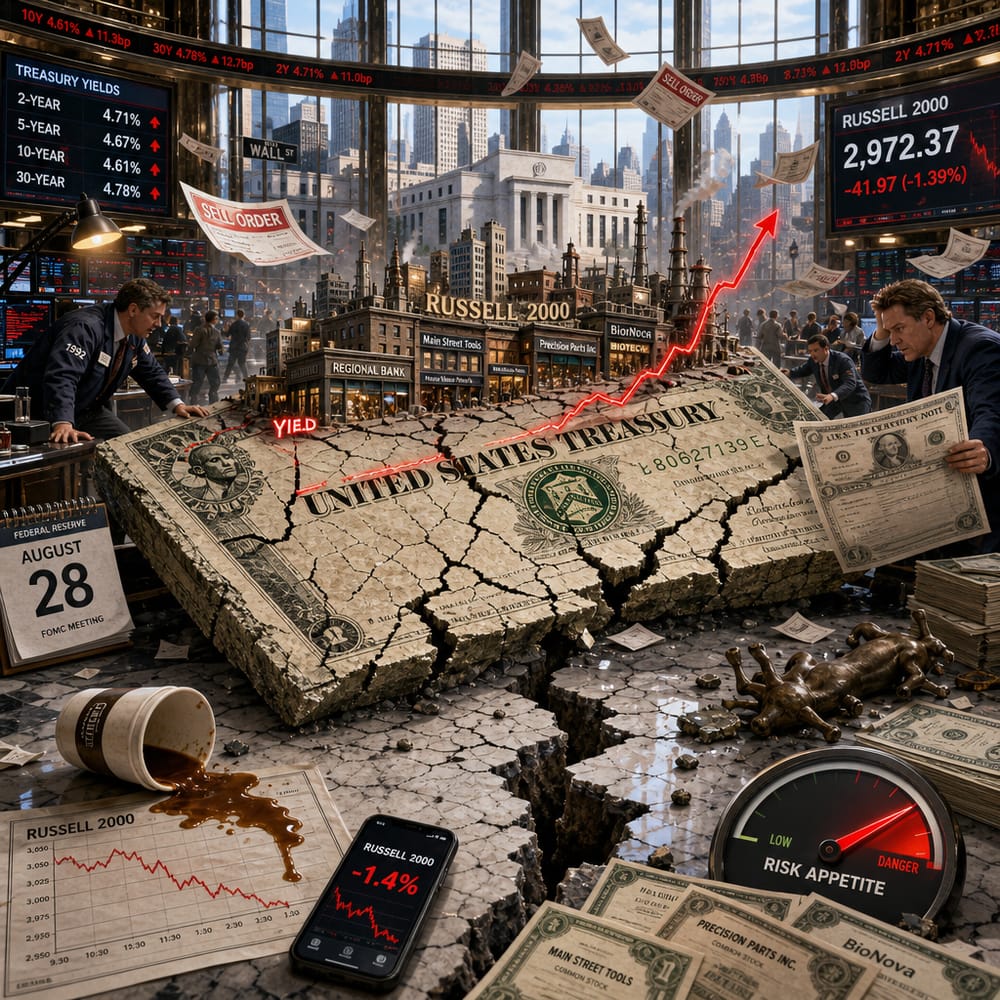
THE BOND MARKET BLUES: HOW RISING YIELDS ARE TANGOING WITH SMALL-CAP STOCKS
Picture this: it's a sunny summer day, and you're all set for a lazy afternoon, lounging by the pool with a cold drink in hand. Suddenly, the clouds roll in, thunder crackles, and before you know it, you’re caught in a downpour. That's the kind of storm the Russell 2000 faced on August 28, dropping 1.4% in a single day as bond market jitters sent shockwaves through every corner of the market. So what’s behind this financial tempest, and why should it matter to you?
THE BOND MARKET: A CAGEY DANCE PARTNER
Before you start thinking that bonds are just for your grandparents, let's clear the air. Bonds are essentially IOUs from governments or corporations. You lend them money, they pay you back later with some interest for your trouble. Simple, right? But here's the kicker: when bond yields, the return on those IOUs, start climbing, it often means stormy weather for stocks, particularly the small-cap variety found in the Russell 2000.
Small-cap stocks, the market's lovable but volatile little siblings, are sensitive to changes in interest rates. Why? Because many of these companies rely on borrowing to fuel their growth. Rising bond yields can signal higher interest rates on the horizon, making that borrowed cash more expensive. It’s like trying to run a marathon with weights tied to your ankles.
WHAT DOES THIS MEAN FOR YOUR PORTFOLIO?
If you're invested in small-cap stocks, rising bond yields can be the canary in the coal mine. As yields rise, the risk appetite among investors often shrinks faster than a cheap cotton shirt in the dryer. Investors begin to favor safer, income-generating assets over riskier bets like small-cap stocks. This shift in sentiment can lead to a sell-off, as we witnessed with the Russell 2000’s recent tumble.
To put it in perspective, it’s like the financial equivalent of a diet trend sweeping through Silicon Valley. Everyone's suddenly thinking twice about that extra slice of cake — or in this case, that extra bit of risk in their portfolio.
THE RUSSELL 2000: MARKET SENTIMENT’S LITTLE BROTHER
The Russell 2000 isn't just any old index. It's the pulse of small business America, the scrappy upstarts and growth-driven companies that fuel innovation. When it takes a hit, it often reflects broader market sentiments. It's like the precocious youngster at a family gathering: when they're upset, everyone feels it.
Therefore, the recent dip in the Russell 2000 serves as a red flag not just for small-cap investors, but for anyone with a stake in the stock market. It signals that investors are bracing for tighter monetary conditions, courtesy of the Fed, and a potential slowdown in economic growth.
KEEPING AN EYE ON THE FED
Fed Chairman Kevin Warsh has been playing his cards close to the chest, keeping Wall Street guessing about the future of interest rates. His recent remarks about inflation being “concerning” without committing to a rate path leaves investors in suspense. It's like waiting for the finale of a TV show without any spoilers — nerve-wracking, to say the least.
Investors are trying to navigate this new era of uncertainty, where the Fed no longer spells everything out. When the central bank is short on communication, traders and investors react to every hint of a change in the wind. Rising bond yields could well be interpreted as a precursor to more aggressive Fed action on rates, adding another layer of complexity to the investment landscape.
SO, WHAT NOW?
If you’re holding small-cap stocks, now might be the time to take stock (pun entirely intended) of your portfolio’s risk level. Diversifying across different asset classes or sectors that might weather the storm better could be a savvy move. Consider this a gentle nudge to chat with your financial advisor about your investment strategy.
In the meantime, keep a watchful eye on bond yields and Fed announcements. The bond market may seem like a dull understudy compared to the drama of stock trading, but right now, it's holding a lot of power. In this topsy-turvy market landscape, staying informed is your best defense.
In the wild world of investing, there's always a storm on the horizon. The key is not to avoid it, but to sail through it like a pro. Just remember to pack your raincoat.
This article is for informational purposes only and is not investment advice. Always do your own research or consult a licensed financial professional before making investment decisions.
© Copyright 2024. All Rights Reserved.
© Copyright 2024. All Rights Reserved.