

Bond Market Easing Continues to Underpin Equity Strength
Wednesday, August 26, 2026
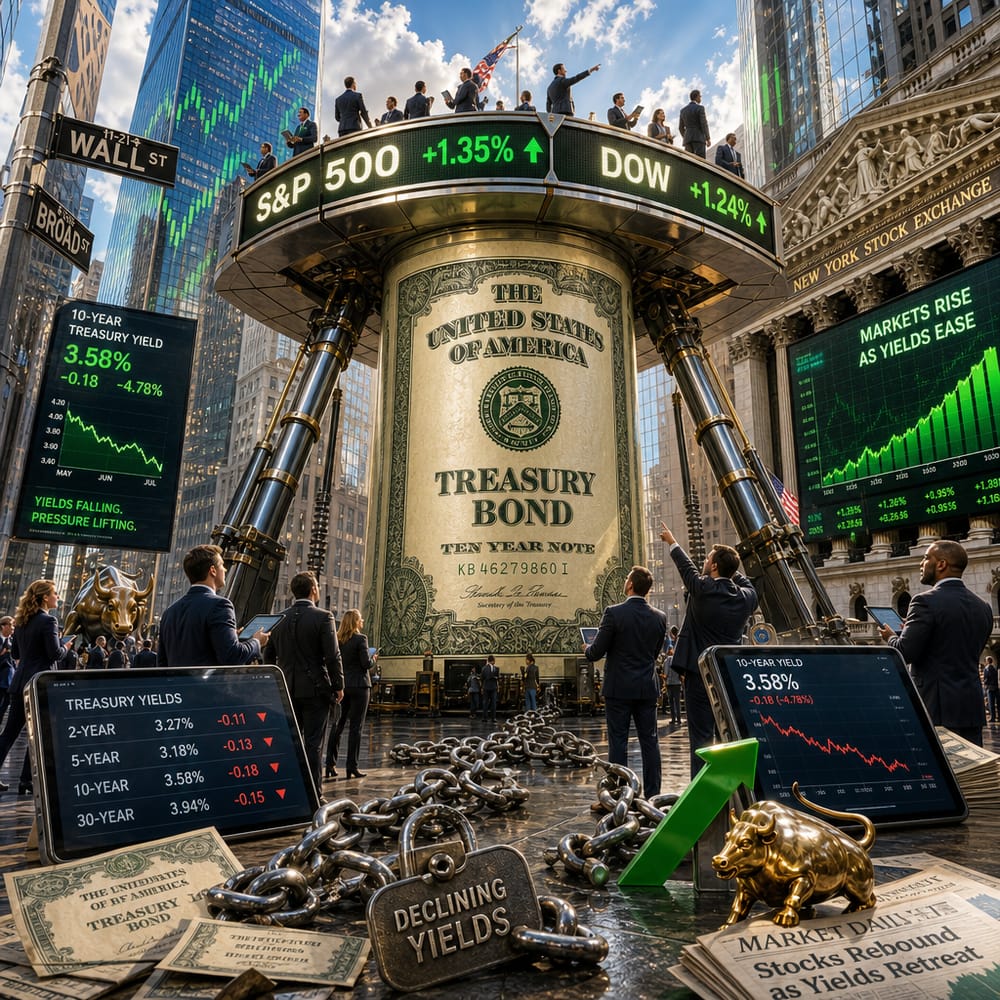
Here's a riddle for you: what goes up must come down, might drag stocks along for a rollercoaster ride, and often leaves investors guessing? If you said “bond yields,” give yourself a pat on the back and maybe a small glass of bourbon. Treasury yields have been on a wild ride lately, but the recent downturn in yields might just be the fairy godmother U.S. equity markets needed to get back to their bullish ways.
Let's dive into how these bond yields are impacting stock markets, and why you might want to keep one eye on your equities and the other on those ever-fluctuating Treasury rates.
BOND YIELDS AND THEIR EQUITY ROMANCE
We all know opposites attract, but in the financial world, bonds and equities have a more complex relationship. When bond yields drop, like they have recently, it essentially means that borrowing is cheaper for businesses. Think of it as a discount on the price of money. With cash being more affordable, companies can invest more in growth, which in turn, makes stocks more appealing to investors.
But here’s the spicy bit: lower yields also mean less attractive returns on bonds, driving yield-hungry investors to look for alternatives. Cue the stock market, stage left. When bonds don't deliver the goods, equities start looking a lot more attractive like the last slice of pizza at a party. And just like that, we have a recipe for a stock market rally.
THE DOWNWARD SPIRAL AND MARKET REBOUND
Recently, the U.S. Treasury yields took a little trip downhill after previously hitting some eye-watering highs. The 10-year yield, for instance, has been flitting around like a hummingbird at a flower show, dropping eight basis points in a single day after gaining multi-year highs. This yield decline has effectively eased the pressure on equities, allowing key indices like the S&P 500 and the Dow to catch their breath and show some resilience.
With yields cooling down, it’s like the market just turned on the air conditioning. Investors are less inclined to panic sell their stocks for the safety of bonds, allowing equities room to rebound and possibly even thrive.
DEBT BUYBACK MAGIC
Now, let's sprinkle some debt buybacks into the mix. Companies sometimes engage in buyback antics to reduce debt, improve their financial leverage, and boost shareholder value. In simple terms, they’re cleaning up their balance sheets and making themselves look prettier to investors.
Debt buybacks can lead to a reduction in interest costs, which supports higher earnings and, in turn, a more attractive stock proposition. So, when yields are falling, and companies are buying back debt, it’s like a double whammy of good vibes for stocks, adding to their allure.
This dual action—lower yields and strategic debt buybacks—creates a more supportive environment for equities, encouraging an investment shift from bonds to stocks. It’s like the financial equivalent of a spa day, leaving the markets feeling refreshed and revitalized.
FED ENERGY AND MARKET MOMENTUM
Of course, all eyes are still glued to the Federal Reserve. The central bank has been dancing a delicate waltz, trying to manage inflation without spooking the market horses. Their next moves will undoubtedly shape the trajectory of both the bond and stock markets. Lower yields might be the market's happy place right now, but too much of a good thing can signal economic worries, so the Fed's next steps will be crucial.
If the Fed suggests it's less hawkish about hiking rates in the future, it could just be the green light bulls are looking for to push the S&P 500 and the Dow into more favorable territory. But if they're still thinking inflation is a stubborn guest who won’t leave the party, brace yourself for more volatility ahead.
THE TAKEAWAY FOR RETAIL INVESTORS
So, what’s the takeaway for those of you scrolling through this article, perhaps over a morning coffee or an afternoon snack? Keep your eyes on the yields, stay nimble with your stock picks, and be ready for whatever market madness unfolds.
If you’re in the market for equities, now might be a strategic time to look at sectors that benefit from cheaper borrowing costs, such as tech and consumer discretionary. But as always, be mindful of the broader economic signals and Fed speak—after all, no one wants to be caught off guard on this financial rollercoaster.
In the play between bonds and equities, understanding their dynamic can be your secret weapon. Happy investing!
This article is for informational purposes only and is not investment advice. Always do your own research or consult a licensed financial professional before making investment decisions.
© Copyright 2024. All Rights Reserved.
© Copyright 2024. All Rights Reserved.