

Bond Market Dynamics Ahead of Key Fed Speech
Friday, August 28, 2026
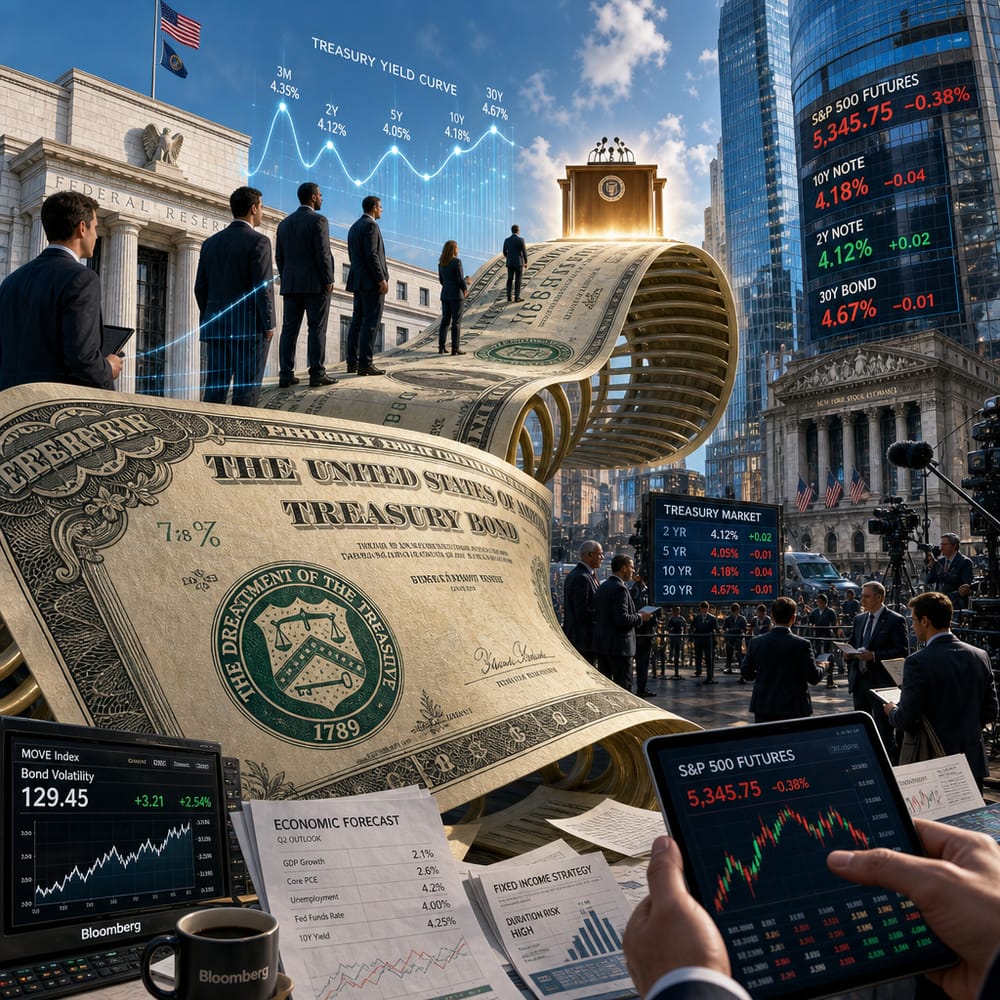
MARKET JITTERS AND THE WAIT FOR WARSH: WHY THE BOND MARKET IS ON EDGE
What do a tightrope walker and the bond market have in common? Both are desperately trying to maintain balance in a world determined to knock them off course. And right now, every investor with a finger on the financial pulse is eyeing U.S. Treasury bonds like they might a trapeze artist wobbling above a pit of alligators. With the Federal Reserve's Chair, Kevin Warsh, poised to address the nation, there's a collective breath-holding routine that's become almost as integral to the market as trading itself.
Why all the fuss? Because what Warsh says—or doesn't say—could very well set the course for market dynamics in the months to come. And that has a little something to do with bond yields, the mysterious yet crucial indicators that act like the canary in the coal mine for economic expectations.
CURRENT TRENDS IN BOND YIELDS
Let's start with the basics: Bond yields have been acting like caffeine-fueled squirrels, darting unpredictably as traders try to anticipate what the Fed is planning. Currently, yields are erratically moving, reflecting an investor sentiment that's as indecisive as a teenager choosing a Friday night outfit. The rise or fall of these yields often offers clues about the economy; when yields rise, it's usually because investors expect the Fed to hike interest rates to curb inflation.
But hold onto your hats—because in this seesaw market, nothing is certain. The bond market has become a battleground for investors betting on everything from a looming recession to an economic revival. This volatility is exacerbated by mixed signals from Fed officials, some of whom are talking tough on inflation while others are in no hurry to slam that rate-hiking button.
WARSH'S SPEECH: THE MARKET WHISPERER?
The real firework, however, is Fed Chair Warsh's upcoming speech. Picture it: investors are crowded around their screens, refreshing news feeds with the kind of anticipation usually reserved for the last episode of a scandalous reality show. Warsh has been famously cryptic, suggesting that the Fed might move away from its "forward guidance" strategy. In plain English, this means he might stop dropping hints about what the Fed's next move will be, leaving markets to operate without a compass—or a crystal ball.
If Warsh does ditch the hints, it's no exaggeration to say the market could react with all the calm of a cat in a room full of rocking chairs. Investors love predictability, and Warsh's hands-off approach might just send the bond market into a tailspin—at least initially.
INVESTORS' STRATEGIES IN A WAIT-AND-SEE WORLD
So, what's a savvy investor to do in this climate of uncertainty? Well, some investors are hedging their bets, keeping one eye on traditional stocks and the other on safe-haven assets like Treasury bonds. The idea is to balance the potential for growth with a safety net should the market take a nosedive. It's a bit like having your cake and eating it too, only this cake could either turn into a feast or crumble right before your eyes.
There’s also a keen interest in the tech sector, buoyed by recent gains from chipmakers like Nvidia, whose stock is soaring on the wings of an AI boom. But the broader equity market, reflected by S&P 500 futures, has been lackluster as investors await Warsh's speech. This cautious positioning indicates that investors are playing a high-stakes game of poker, where every word from Warsh could be a card that changes the hand completely.
Meanwhile, some are diversifying internationally. As geopolitical uncertainties, like those concerning Singapore's financial landscape, continue to unfold, global opportunities are being weighed as alternatives to the unpredictable U.S. market.
THE BOTTOM LINE
In this financial game of "will-they-won't-they," the bond market is the thread tying together investors' hopes and fears. Warsh's speech could either soothe the markets or whip them into a frenzy. The stakes are high, and the potential for volatility is real. As investors and analysts alike hang onto Warsh's every word, one thing is clear: this is financial theater at its finest. Whether you're a seasoned investor or just keeping an eye on your 401(k), buckle up—it's bound to be an interesting ride.
This article is for informational purposes only and is not investment advice. Always do your own research or consult a licensed financial professional before making investment decisions.
© Copyright 2024. All Rights Reserved.
© Copyright 2024. All Rights Reserved.