

Bond Gains Fade — Stocks Slide Again
Thursday, August 20, 2026
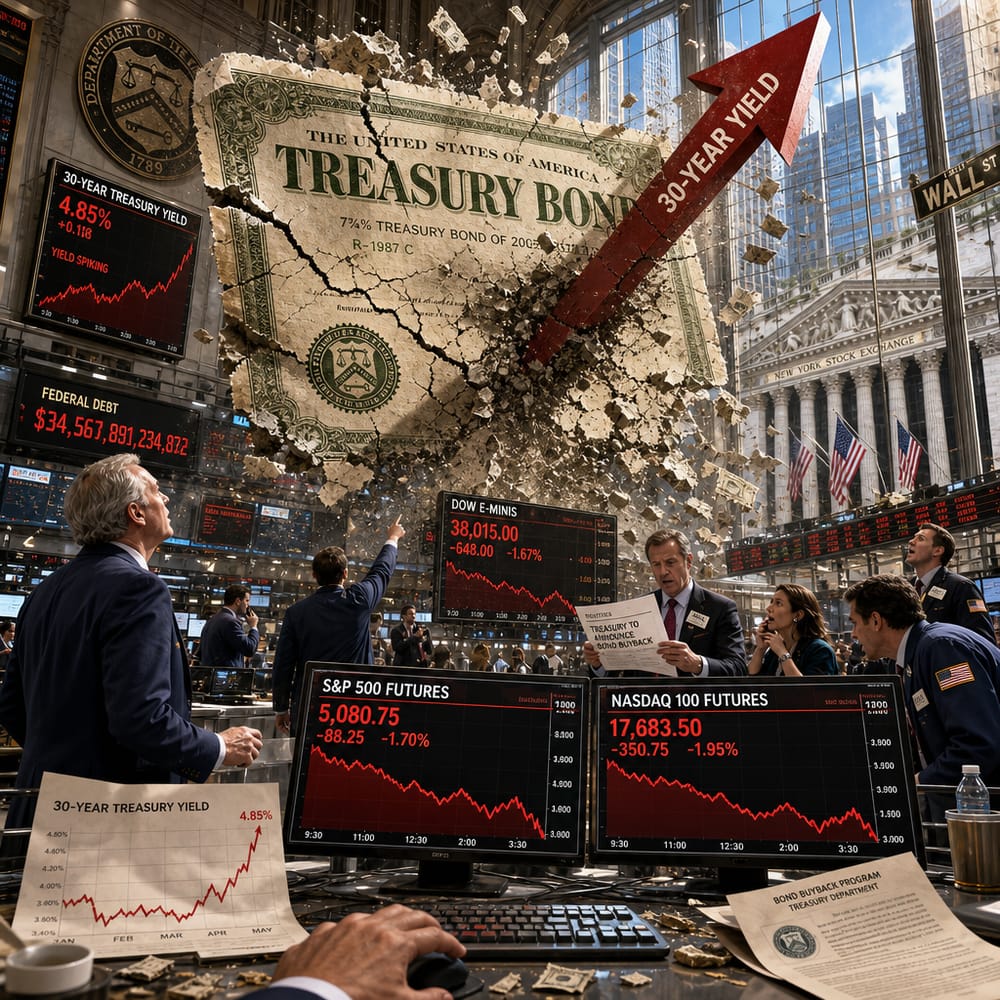
BOND GAINS FADE — STOCKS SLIDE AGAIN
In the rollercoaster of financial markets, it seems we’re all just along for the ride, clinging on for dear life as the Treasury Department throws another curveball our way. Just when investors thought they had secured a cozy seat with a promising view—enter the bond buyback announcement—their optimism quickly did a disappearing act, leaving everyone grasping for the exit signs. So what went wrong?
The initial cheer from the bond buyback news turned into a collective groan as the market realized the Treasury's magic wand was looking a bit more like a standard-issue stick. In a bold attempt to rein in the surging bond yields, the Treasury vowed to significantly boost its repurchases of long-term debt. Yet, instead of easing concerns, the move seemed to fuel skepticism. Investors, never ones to be starstruck for long, promptly reevaluated the situation. “Is this it?” they wondered. “Is this all they’ve got?”
You see, the bond market has been a bit like a caffeinated squirrel lately—jittery and all over the place. The initial thrill from doubled buybacks was like a sugar hit, but reality set in fast. The 30-year Treasury yield, instead of doing what it was supposed to—calm down—decided to throw a party and go higher, hitting levels not seen in nearly two decades. When bond yields rise, it means Uncle Sam’s borrowing costs are climbing, and that’s never a good look.
For stock markets, this is akin to waking up with a bad hair day. The S&P 500 futures and Dow E-minis both took a tumble, while the tech-loving Nasdaq 100 futures couldn't escape the gravitational pull of investor dismay. Stocks generally prefer low yields—cheap borrowing is part of their happy place. So when yields do the cha-cha upwards, it feels like someone just unplugged the party lights.
Why, you might ask, did the market’s optimism evaporate quicker than morning dew on a summer’s day? For starters, there's a sneaking suspicion that the Treasury's buyback plan might not pack enough punch to bring yields down substantially. The skepticism is understandable; after all, this isn't the first time a government intervention has landed with a thud rather than a bang.
The stakes are high. Rising bond yields could be the financial equivalent of a bad credit score—they make it more expensive for everyone, from Uncle Sam to your local mom-and-pop shop, to borrow money. More expensive borrowing costs could slow growth, dampen investments, and eventually, put a damper on those beloved stock returns. Investors are acutely aware of these potential long-term implications, and it's got them biting their nails.
So, what’s the outlook for bond yields? Well, the uncertainty is thicker than a New York bagel. With Treasury Secretary Scott Bessent pulling out all the stops to manage the situation, there’s still hope that yields might eventually simmer down. But until there’s a clear sign of effective containment, investors might just keep their seatbelts fastened a little longer.
Meanwhile, in this unpredictable financial landscape, seasoned investors will be keeping both eyes on the bond market scenes, trying to read the smoke signals. It’s a delicate dance, one that requires both patience and a touch of humor because, let's face it, markets are about as predictable as a cat on a hot tin roof.
As the curtain on this market drama lifts and falls, investors would do well to keep an eye both on the stage and behind the scenes. Because when it comes to financial markets, the only constant is change—and maybe a whiff of chaos for good measure.
This article is for informational purposes only and is not investment advice. Always do your own research or consult a licensed financial professional before making investment decisions.
© Copyright 2024. All Rights Reserved.
© Copyright 2024. All Rights Reserved.