

Boeing Faces Potential Strike as Union Rejects Contract
Friday, August 21, 2026
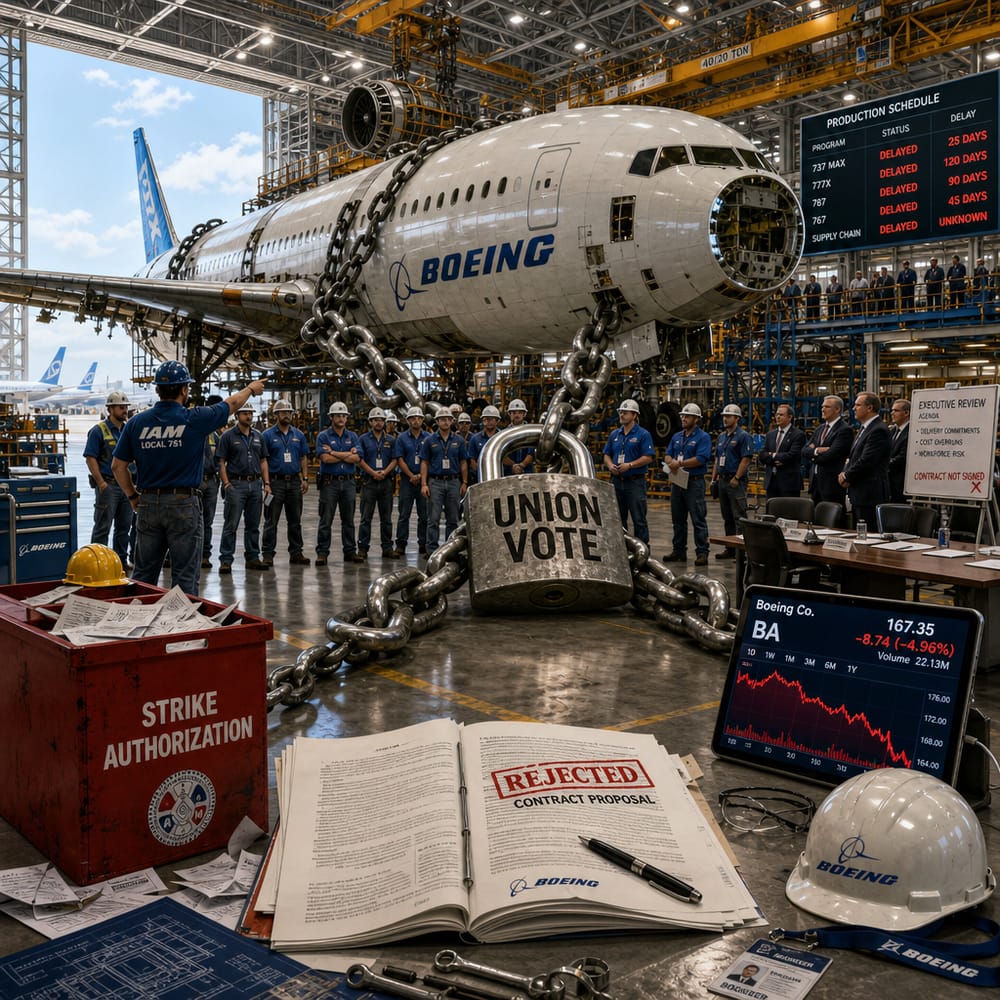
BOEING'S BUMPY RIDE: WHAT THE POTENTIAL STRIKE MEANS FOR THE AVIATION GIANT
Buckle up, Boeing fans, because it looks like the turbulence is just getting started. In a move that’s making headlines and shaking up investor nerves, Boeing’s army of engineers and technical workers have collectively given a thumbs-down to the company's latest contract offer. And just like that, the engines of one of the world’s largest aerospace manufacturers could be grinding to a halt if a strike gets the green light.
Here’s what's up in Boeing land: The Society of Professional Engineering Employees in Aerospace (SPEEA), a union representing 17,000 members, just rejected Boeing's four-year contract proposal. They’ve also handed their negotiating team an all-important launch code to declare a strike if the ongoing talks don’t land smoothly by October. In other words, if negotiations don't turn the corner, Boeing’s production schedule could soon be in as much trouble as a lost suitcase on a layover.
So, what’s causing all this turbulence? Well, it seems Boeing offered better terms than expected, but evidently, not good enough. The negotiating team was on board, but the union's bargaining councils weren't, which suggests there are some substantial sticking points. While neither side is singing from the same hymn sheet, the usual suspects in negotiations like these are typically pay, benefits, and job security.
If a strike does take off, it could cause some serious delays in Boeing’s production schedules. Imagine an already delayed flight that just discovered another hour on the tarmac because, surprise, there's a penguin on the runway. We're talking about postponed deliveries and further setbacks on Boeing's already beleaguered 737 Max 10 and 777-9 planes. Those models have already been playing catch-up for years, and a work stoppage would only add more pages to the delay diary.
So, why do these delays matter? For starters, Boeing’s bottom line could take a hit, and not just a little one. Delays in production mean delays in delivery, which equates to delays in revenue. It’s the domino effect that nobody wants to see. And let’s not forget that time is money — for Boeing, for its customers, and for its investors. Investors don't typically enjoy seeing their investments pause mid-air, and the threat of a strike is like turbulence that just won’t quit.
Where does this leave Boeing's stock amidst the storm clouds? Analysts are eyeing the situation like hawks. Some are warning that a potential strike could erode investor confidence, making Boeing’s stock performance as jittery as a long-tailed cat in a room full of rocking chairs. Others remind us that Boeing is no stranger to choppy waters and has weathered many a storm before.
But let’s be real: a strike is an unwelcome guest at Boeing’s already crowded party of challenges. Between supply chain snarls and certification setbacks, Boeing isn’t exactly flying high these days. Another delay could further darken the horizon, especially with competitors itching to swoop in. The name of the game is all about staying competitive, and any hiccup is a chance for others to get ahead.
Ultimately, the Boeing drama is a reminder of just how interconnected labor negotiations are with a company’s overall health. Investors will be watching, employees are gearing up for potential picket lines, and management is likely burning the midnight oil to find a way forward.
For retail investors wondering what this means for their portfolios, it’s a matter of keeping a close eye on the skies. Will Boeing reach a new deal that satisfies its workers and keeps the assembly lines humming? Or are we in for a protracted standoff that has everyone checking the clock? Strap in, because the next few months promise to be a bumpy ride.
This article is for informational purposes only and is not investment advice. Always do your own research or consult a licensed financial professional before making investment decisions.
© Copyright 2024. All Rights Reserved.
© Copyright 2024. All Rights Reserved.