

BLS to Release July Employment Report August 7
Tuesday, August 04, 2026
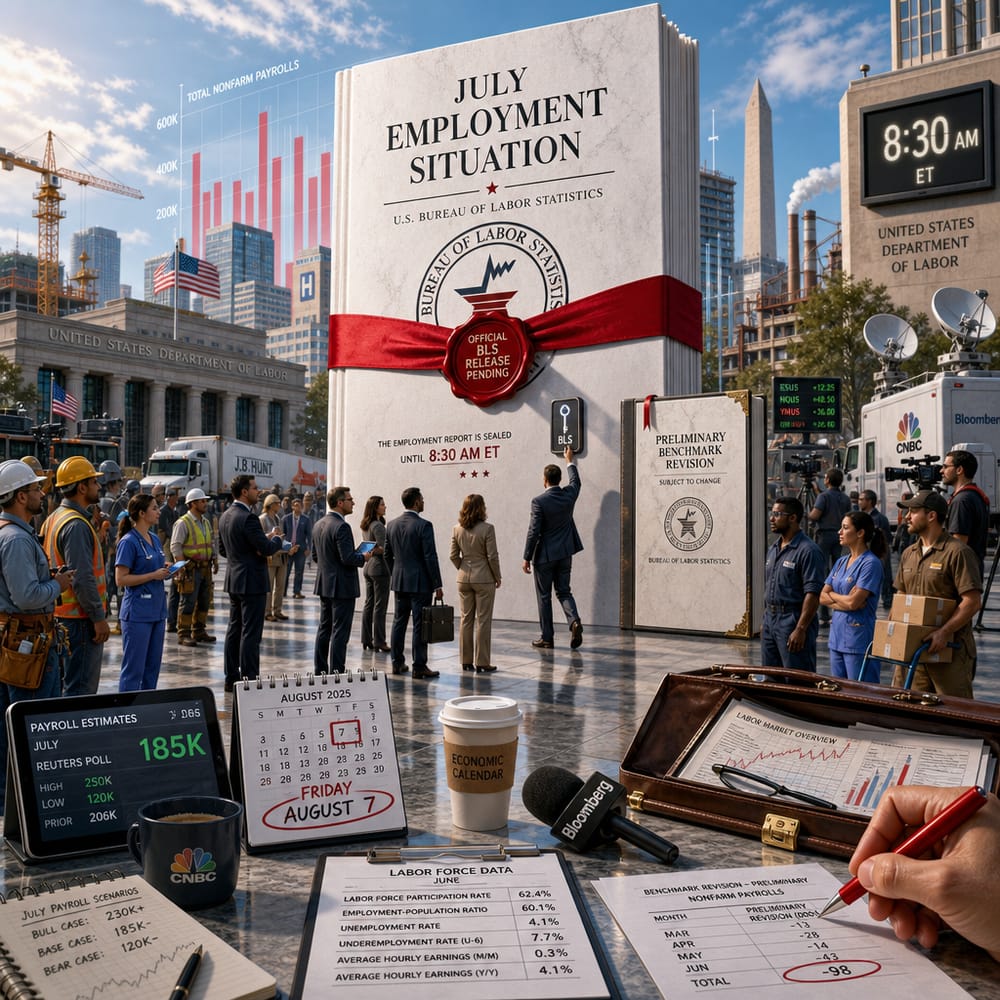
EMPLOYMENT REPORT: THE DATA DROP THAT KEEPS WALL STREET UP AT NIGHT
Brace yourself, folks. The Bureau of Labor Statistics is about to drop its July Employment Situation report this Friday, August 7, at 8:30 a.m. ET. And trust me, this isn’t just another government data dump to snooze through. It's the caffeinated jolt that could very well send Wall Street into turbo mode—or send it spiraling. Even Janet Yellen herself is likely refreshing her calendar.
But why all the fuss? Well, this report is the statistical equivalent of a crystal ball for the U.S. economy. And spoiler alert: its reading has a knack for moving markets as if it were a Taylor Swift concert. Whether you're a market geek or just trying to keep your 401(k) from flatlining, this is one report you want to watch.
THE CRYSTAL BALL OF ECONOMICS
Currently, the whispering winds of Wall Street are hinting at a mixed bag in job numbers. Economists are tugging at their collars, expecting a modest uptick in job creation but with a side of unease. Inflation still lurks around like that ex at a party, and businesses are grappling with that age-old question: How many workers can they afford without going broke? Lower-than-expected job growth might freak out the markets faster than a new Kardashian dating rumor.
If job numbers soar, it could hint that the economy is chugging along just fine, bringing smiles and sighs of relief. On the flip side, if the numbers are sluggish, cue the armrest-gripping and brow-furrowing. Investors will be glued to their screens, waiting for the first hint of whether they should panic-sell or push more chips onto the table.
THE REVISION FACTOR: LIKE A TWIST IN A DRAMA SERIES
Here's where it gets interesting. The BLS also has a delicious plot twist in store: a preliminary benchmark revision later this month. Think of it like finding out your favorite TV show character might not be dead after all.
Now, these revisions might sound as exciting as watching paint dry, but they can tweak past data in substantial ways. If a rebenchmark reveals higher employment than initially thought, markets might breathe easier and the Fed might consider tapping the brakes on interest rate hikes. Conversely, if the revisions show weaker data, it might be time to brace for impact, with potential for rate cuts if the economy appears to be veering off course.
HOW THE FEDERAL RESERVE MIGHT PLAY THIS
All eyes are also on the Federal Reserve. Will they keep jacking up interest rates and make borrowing more expensive? Or could they hit pause, giving the economy some breathing room? The employment report is a key puzzle piece in the Fed's grand game of economic chess.
A stronger labor market could mean more rate hikes to keep inflation at bay. However, if the labor market appears to be cooling, the Fed may reconsider—perhaps even lower rates to stoke economic growth. Either way, Fed Chairman Kevin Warsh will have his hands full, juggling market expectations like a seasoned circus performer.
WILL THE MARKETS GET THE SHAKES?
This report could also trigger something akin to high-stakes poker in the stock market. If businesses are hiring like there’s no tomorrow, investors might shout, "Hallelujah!" and dive deeper into their portfolios. But a gloomy report could have them heading for the exits faster than a fire drill.
Keep an eye on sectors like tech and industrials, which are often bellwethers for market sentiment. If the numbers are good, expect companies in these sectors to get a nice bump. If not, it could feel like a game of musical chairs with one seat too few.
FINAL THOUGHTS
So as you sip your morning brew this Friday, keep an eye on the BLS release. The employment report is likely to be a rollercoaster, with each tick of the numbers sending ripples across markets and influencing the Fed's next move. Whether you're a seasoned investor or just trying to make sense of it all, remember: in the world of finance, one report can change everything.
This article is for informational purposes only and is not investment advice. Always do your own research or consult a licensed financial professional before making investment decisions.
© Copyright 2024. All Rights Reserved.
© Copyright 2024. All Rights Reserved.