

Bloomberg Dollar Index Declines Amid Fed Sentiment Shift
Wednesday, August 19, 2026
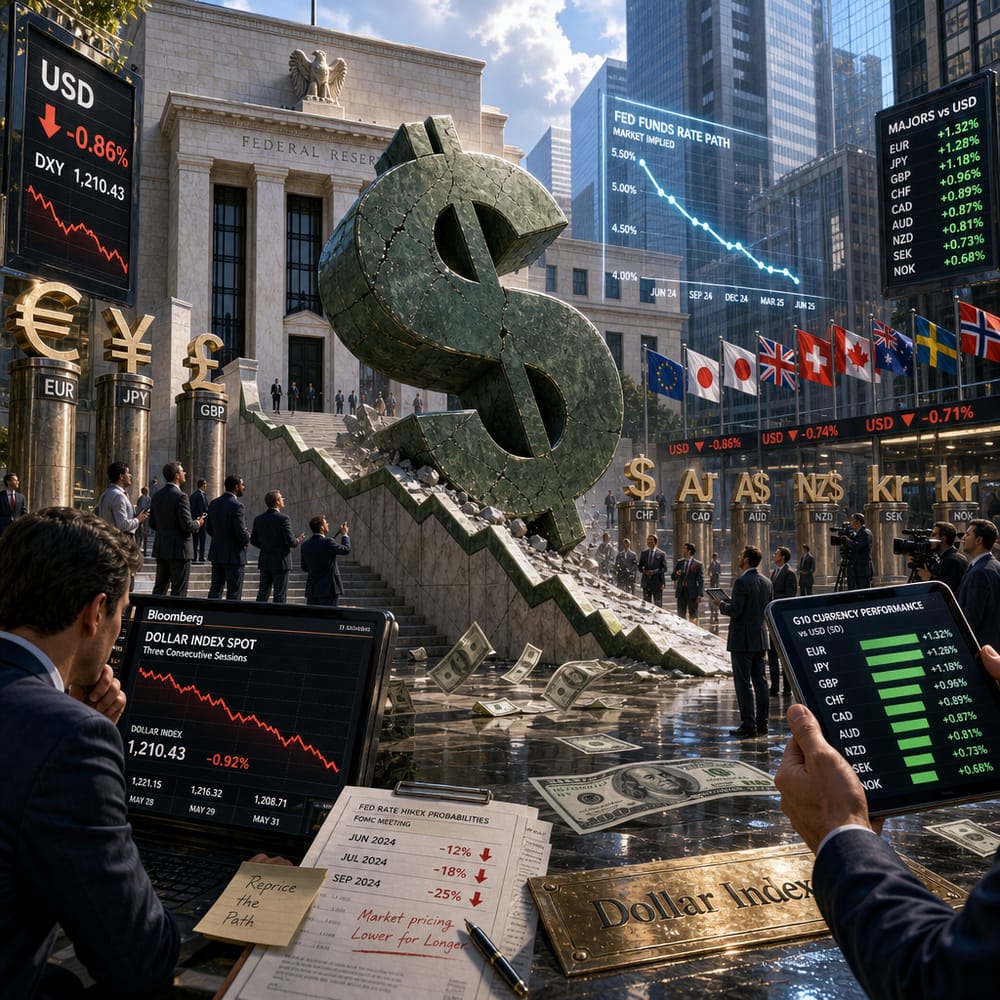
THE DOLLAR TAKES A DIVE: WHAT IT MEANS FOR YOUR WALLET
Spotting the Bloomberg Dollar Index falling for three consecutive sessions is like catching sight of a unicorn — rare, majestic, and possibly magical. So, what’s behind this mystical descent, and why should you, the average investor scrolling on your phone between slices of avocado toast, care? Let's break it down.
THE FED WAVES A WHITE FLAG
Let’s start with the heart of the matter: the Federal Reserve, the puppeteer behind interest rate hikes, seems to be having a change of heart. As recently as last month, the Fed was like a caffeine-fueled intern, hammering away on the rate hike button like there was no tomorrow. But now, whispers from the corridors of power suggest a softening stance. Several economic reports hint that inflation might be cooling its heels, giving the Fed room to hit the pause button on rate hikes.
And why does this matter? Because international investors, attracted to the U.S. for its high-yielding bonds, have started to shy away. Like moths to a flame, they’re fluttering back to other opportunities, causing the Dollar Index to lose some steam.
WHY A WEAKER DOLLAR MATTERS
The drop in the dollar isn't just a headline for finance geeks to debate over brunch. It’s a seismic shift that could ripple through global trade and even your grocery bill. A weaker dollar means U.S. goods are cheaper for foreign buyers. Great news for American exporters, but it also means imported goods could get pricier for you as a consumer. If you've been eyeing that imported Italian espresso machine, now might be the time to make your move before the price tags start climbing.
On the international stage, countries holding U.S. debt may feel the pinch, as their investments yield less bang for their buck. This could nudge these nations to reconsider their financial commitments or seek more diversified portfolios. Translation: the global economy might have to do a little reshuffling, potentially affecting international trade agreements and tariffs.
FOR CURRENCY TRADERS, IT'S GAME ON
Currency traders are like surfers always looking for the next big wave. A weaker dollar signals a swell in the market’s oceans, opening up new opportunities for arbitrage and big plays. Traders who take positions on the fluctuations between the dollar and other G10 currencies (like the euro, yen, and pound) could see a bounty of opportunities. However, when the dollar takes a dip, it's a double-edged sword. Profits can be made, but the market's unpredictability means any misstep can lead to quick losses.
WHAT'S NEXT?
The Fed’s cautious approach is less about throwing a party for a weaker dollar and more about reading the room — balancing inflation with sustainable growth. Still, this shift could impact how companies plan their investments and how countries manage their foreign reserves.
Keep an eye on international market reactions. Countries with strong export ties to the U.S. might see short-term boosts, while those relying heavily on imports from the U.S. could feel the burn of increased costs. For everyday investors, this could manifest in fluctuating stock prices and interest rates, potentially impacting your portfolio's bottom line.
BOTTOM LINE
While the dollar dances to a lighter tune, the implications are serious. From how your morning latte costs to the performance of your investment portfolio, a weaker dollar can impact life in surprising ways. With the Fed’s new mindset, and global markets adjusting their expectations, now’s the time to stay informed, keep your eyes on international trends, and maybe, just maybe, adjust your investment sails for the coming winds. Stay sharp, stay curious, and remember — in the world of finance, the only constant is change.
This article is for informational purposes only and is not investment advice. Always do your own research or consult a licensed financial professional before making investment decisions.
© Copyright 2024. All Rights Reserved.
© Copyright 2024. All Rights Reserved.