

Black Friday Retail Earnings & Consumer Sentiment Catalyst
Friday, November 27, 2026
BLACK FRIDAY RETAIL EARNINGS GAINS: IS CONSUMER CONFIDENCE HERE TO STAY?
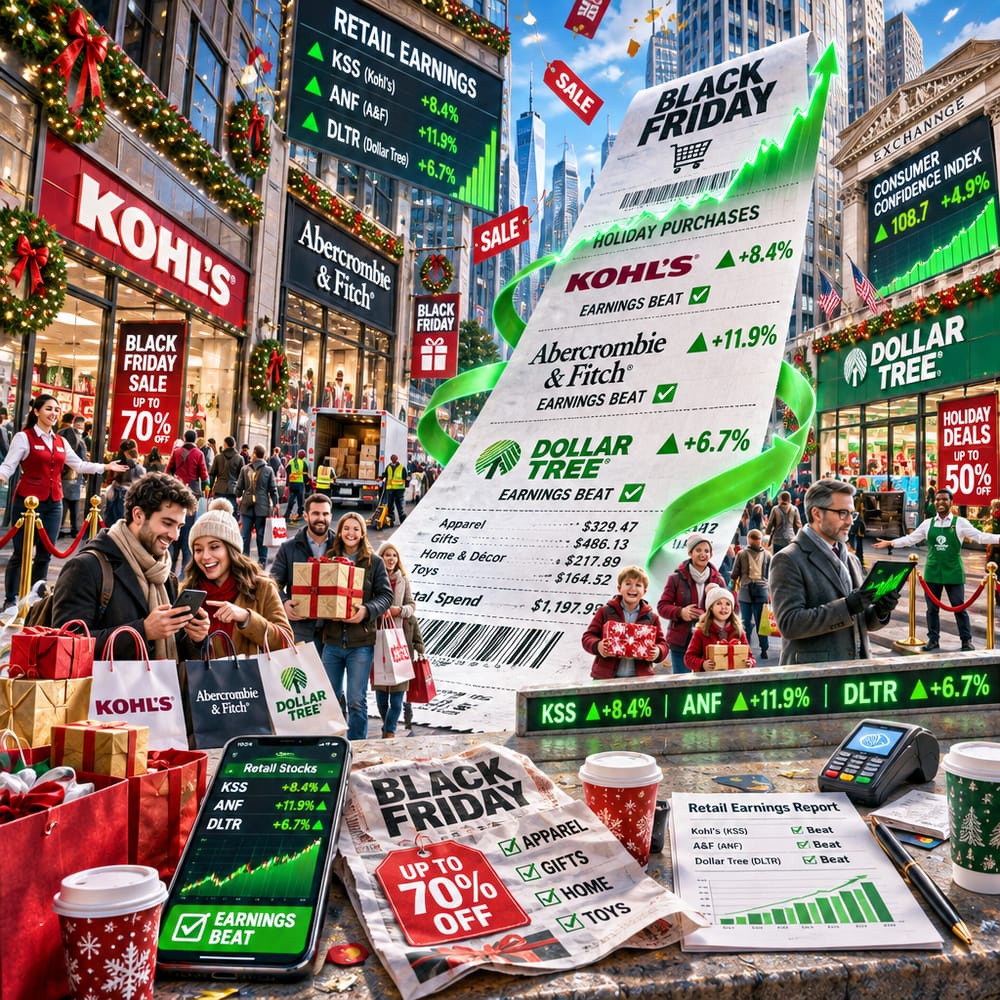
As the holiday season looms like an overeager relative at a family reunion, investors are finding a gift of their own: surging retail stocks. Kohl’s, Abercrombie & Fitch, and Dollar Tree are dancing to the tune of consumer confidence, with share prices spiking following meaty earnings reports. But what’s driving this retail renaissance, and can it last?
Let’s talk turkey. November has been a feast for retail stocks, thanks to a juicy mix of high consumer sentiment and early holiday promotions that even Santa would envy. Kohl’s, Abercrombie & Fitch, and Dollar Tree have been riding the wave, buoyed by shoppers eager to spend after a pandemic-induced drought.
You might be wondering, just how sustainable is this consumer confidence? Well, the short answer is: it’s complicated. Consumers seem to have rediscovered their wallets, driven by a cocktail of pent-up demand and loosening wallets as inflationary pressures ease. But before you start popping champagne, remember that consumer confidence is a fickle beast. It can shift faster than a toddler’s mood in a candy store.
Here’s a pro tip: keep an eye on economic indicators like employment rates and inflation. These factors play puppet master to consumer confidence. With a hint of unpredictability still looming over the economy, consumer sentiment could ebb and flow like tides — or a bad haircut.
So, which retail subsectors are best positioned to keep the momentum going? Time to break it down, folks:
VALUE RETAILERS ARE THE BELT-TIGHTENING HEROES
Dollar Tree stands tall in the face of economic uncertainty, with its focus on value. When wallets shrink, shoppers tend to flock to stores promising more bang for their buck — or in this case, more bang for their one dollar. Dollar Tree’s performance suggests that discount retailers could be the ones laughing all the way to the bank if consumer confidence takes a nosedive.
FASHION RETAILERS ARE MAKING A COMEBACK
Abercrombie & Fitch has tapped into the magic of nostalgia and trendy alternatives, pulling off a fashion comeback that might make even a one-time high-school jock do a double take. If Abercrombie’s resurgence tells us anything, it’s that fashion retailers with a keen eye on current trends and customer preferences can ride this wave for a while longer. But beware, the fashion tide can turn quicker than you can say “acid wash jeans.”
DEPARTMENT STORES ARE NOT DEAD YET
Kohl’s might have been the unlikely hero of this retail fairytale. Against all odds, this department store is finding its stride, perhaps proving that rumors of its demise were greatly exaggerated. Partnering with brands like Sephora has added some sparkle, attracting a fresh stream of consumers. While department stores have been hit-and-miss recently, strategic partnerships could be their ticket to staying relevant.
Now, let’s address the elephant in the room: margin pressures. Even as revenue numbers look sparkly, the cost of goods and supply chain snarls are challenges that can’t be ignored. Retailers may face a delicate balancing act to maintain profit margins while keeping prices attractive. It’s like trying to win a Jenga tournament on a wobbly table.
So, what’s the play for investors? If you’re keen on retail stocks, it might be time to bet on those with a value focus and a flare for trendsetting. Watch for companies that weather the economic storms without overpricing or underdelivering. And if you like a bit of drama, keep an eye on Kohl’s and its grand department store revival. All said, diversification is key. Don’t put all your eggs in one shopping cart.
In conclusion, while the holiday season is shining a light on retailers, the road ahead might have a few unexpected bumps. Stay ahead of consumer trends, keep a sharp eye on margin management strategies, and arm yourself with knowledge — it’s your best shopping companion. Happy investing!
This article is for informational purposes only and is not investment advice. Always do your own research or consult a licensed financial professional before making investment decisions.
© Copyright 2024. All Rights Reserved.
© Copyright 2024. All Rights Reserved.