

Bitget $387M Hack Escalation: North Korea Attribution and Partial Fund Recovery
Sunday, October 04, 2026
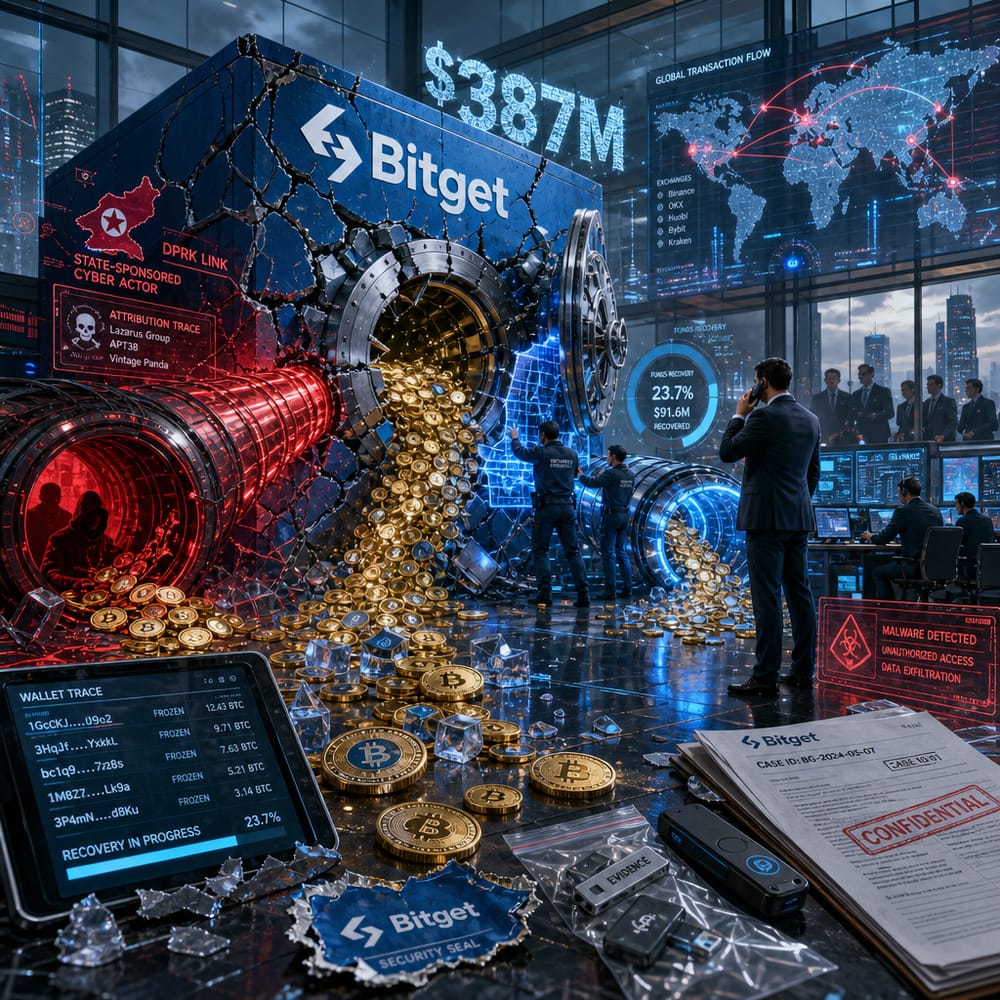
BITGET $387M HACK ESCALATION: NORTH KOREA ATTRIBUTION AND PARTIAL FUND RECOVERY
In the high-stakes world of cryptocurrencies, losing your virtual wallet to hackers is like discovering your entire life savings vanished because your mattress had a secret trap door. In the latest crypto caper, Bitget, a major crypto exchange, found itself $387 million poorer—thanks to some cyber-thieves with possible ties to a state we all know for state-sponsored surprises: North Korea.
You might be wondering how the hackers pulled off this digital heist. Picture Ocean's 11, but with more laptops and less George Clooney. These digital bandits exploited vulnerabilities in Bitget's infrastructure, bypassing the defenses like they were a mere speed bump on the cyber highway. Details are still emerging, but it seems the attackers exploited flaws within the exchange’s wallet management system—a kind of digital vault—compromising both hot wallets (those connected to the internet for rapid transactions) and cold wallets (offline and, supposedly, more secure).
In the wake of the attack, Bitget isn’t sitting on its hands. The platform has gone into full James Bond mode, chasing the stolen funds across the cryptosphere. So far, law enforcement agencies and cybersecurity firms have been able to track and freeze a chunk of the stolen money. It's a bit like finding some of the eggs from a smashed carton—certainly not ideal, but better than nothing.
The Bitget hack isn’t just a sob story for the exchange and its users. It's a cautionary tale for the entire cryptocurrency world. Crypto exchanges, with their digital treasure troves, are prime targets. Hackers, especially those with state-sponsored backing, are getting craftier, turning the digital world into a wild west where your bitcoin can go poof into the ether.
So, what’s being done to stop future hacks? Well, Bitget and its peers are stepping up their game, giving their security systems much-needed overhauls. Think of it as renovating a castle with taller walls and more vigilant guards. These efforts include implementing more robust encryption, multi-factor authentication (like those pesky text messages you receive for logging in), and real-time transaction monitoring that can flag suspicious activity faster than you can say "blockchain."
But the implications go beyond just Bitget. This episode shines a spotlight on the persistent threat of state-sponsored cyber attacks. North Korea, notorious for its hacking escapades, is allegedly bolstering its coffers with stolen crypto, sidestepping international sanctions. This troubling trend has governments worldwide scrambling to secure their own digital infrastructures.
For retail investors, the Bitget debacle is a stark reminder to weigh the risks. Crypto might offer the thrill of the roller coaster—the ups, the downs, the potential for big rewards—but it's crucial to buckle up and secure your holdings. Consider spreading your investments across multiple exchanges and taking a deeper dive into the security features of your chosen platforms.
And let's not forget regulation—a dirty word to the free-wheeling spirit of cryptocurrencies, but increasingly essential. Calls for stricter regulatory frameworks are growing louder, pushing for standards that ensure exchanges are as secure as your grandmother’s cookie jar. Policymakers are caught in a balancing act, regulating to protect consumers while not stifling the innovation that fuels the crypto engine.
In the end, the Bitget hack isn’t just a blip on the crypto radar—it’s a signal flare, warning that in the Wild West of cryptocurrencies, the sheriffs need to step up, and the townsfolk (that’s us, the users) need to stay vigilant. As the digital currency frontier continues to expand, the stakes are only getting higher for exchanges, regulators, and investors alike. Buckle your seatbelts; it looks like the ride is only just beginning.
This article is for informational purposes only and is not investment advice. Always do your own research or consult a licensed financial professional before making investment decisions.
© Copyright 2024. All Rights Reserved.
© Copyright 2024. All Rights Reserved.