

Bitcoin Rally Sparks Massive Short Liquidations Amid Regulatory Optimism
Friday, August 21, 2026
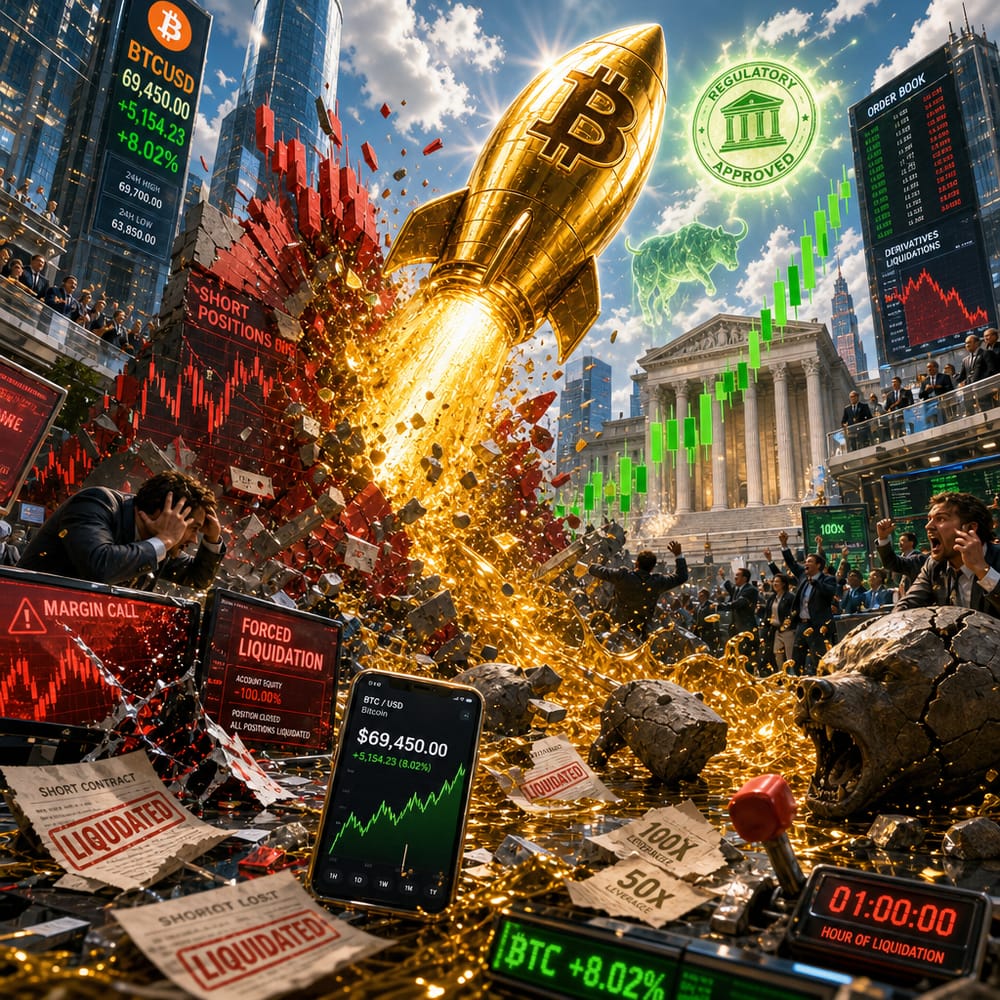
BITCOIN'S WILD RIDE: A SHORT SQUEEZE FOR THE AGES
If you're looking for a lazy, uneventful weekend, stay far away from the world of Bitcoin. On August 19, Bitcoin decided to throw a surprise party, skyrocketing about 8% to a tantalizing $69,500. Now, if you're not familiar with the roller coaster that is cryptocurrency, you might think, "What's the big deal?" But as Bitcoin surged, it triggered a staggering avalanche of short liquidations, wiping out over a billion dollars in bets against it in just an hour. Yes, you read that right—an hour.
WHAT'S A SHORT SQUEEZE ANYWAY?
Picture this: short sellers are investors who bet money on Bitcoin's price going down. They're like gamblers placing chips on a losing poker hand, hoping the dealer will bust. But when Bitcoin pulls off a Houdini act and skyrockets, these short sellers are left scrambling, forced to buy back Bitcoin at higher prices to cover their losses. This buying frenzy only adds fuel to the fire, pushing Bitcoin's price even higher and setting off what's known as a "short squeeze." It's like a snowball rolling downhill—fast and furious.
THE REGULATORY RUMBLE
But why did Bitcoin decide to stage this bull run? Enter the world of regulatory optimism, where governments drop hints of being crypto-friendly. Speculation buzzed around potential regulatory moves that may favor cryptocurrencies, sparking investor enthusiasm—like a match near a gasoline puddle. If regulators play nice, it could open the doors for more mainstream adoption, making Bitcoin investors giddy with anticipation.
MACRO FACTORS IN THE MIX
Beyond the regulatory whispers, there's a broader economic dance at play. You see, the financial markets are a bit like a high school drama—every action has a ripple effect. In this case, global economic factors—ranging from rising energy prices to inflation concerns—are sending shockwaves through the financial landscape. With U.S. Treasury yields on the rise and inflation worries bubbling over in Japan, uncertainty is the name of the game. In such times, Bitcoin often steps in as the rebellious teenager, attracting investors looking to hedge against traditional market jitters.
DERIVATIVES: THE UNSEEN HANDS
While Bitcoin steals the spotlight, let's not forget the supporting cast—crypto derivatives. These financial tools allow traders to bet on Bitcoin's future price. When Bitcoin's price makes headlines, the derivative market follows in a complicated dance of futures and options contracts. The short squeeze not only catalyzed price movement but also sent shockwaves through the derivatives market, a domain often dominated by professional traders. The volatility? Oh, it was palpable.
WHAT DOES THIS MEAN FOR THE FUTURE?
The recent drama underscores Bitcoin's notorious volatility, marked by swift and sweeping price changes. This wild ride is not just a spectacle; it's a reminder that the crypto market is still in its adolescent phase—unpredictable and prone to mood swings. While the regulatory landscape continues to shape the playing field, investors need to strap in for what promises to be a bumpy ride.
For retail investors, this means staying informed and keeping a cautious eye on the broader economic and regulatory currents. The macroeconomic factors, from inflation rates to geopolitical tensions, add layers of complexity to an already volatile market. And for those brave enough to venture into crypto derivatives, understanding the mechanics of short squeezes and leveraging market movements can be both thrilling and perilous.
So, as you sip your morning coffee and scroll through your phone, remember: in the world of crypto, surprises are par for the course. Whether Bitcoin's latest surge was a flash in the pan or the start of a longer trend remains to be seen. But one thing's for sure—the Bitcoin roller coaster isn't letting up anytime soon. Are you ready for the ride?
This article is for informational purposes only and is not investment advice. Always do your own research or consult a licensed financial professional before making investment decisions.
© Copyright 2024. All Rights Reserved.
© Copyright 2024. All Rights Reserved.