

Bitcoin Mining Metrics: Difficulty and Miner Revenue Updates
Friday, July 31, 2026
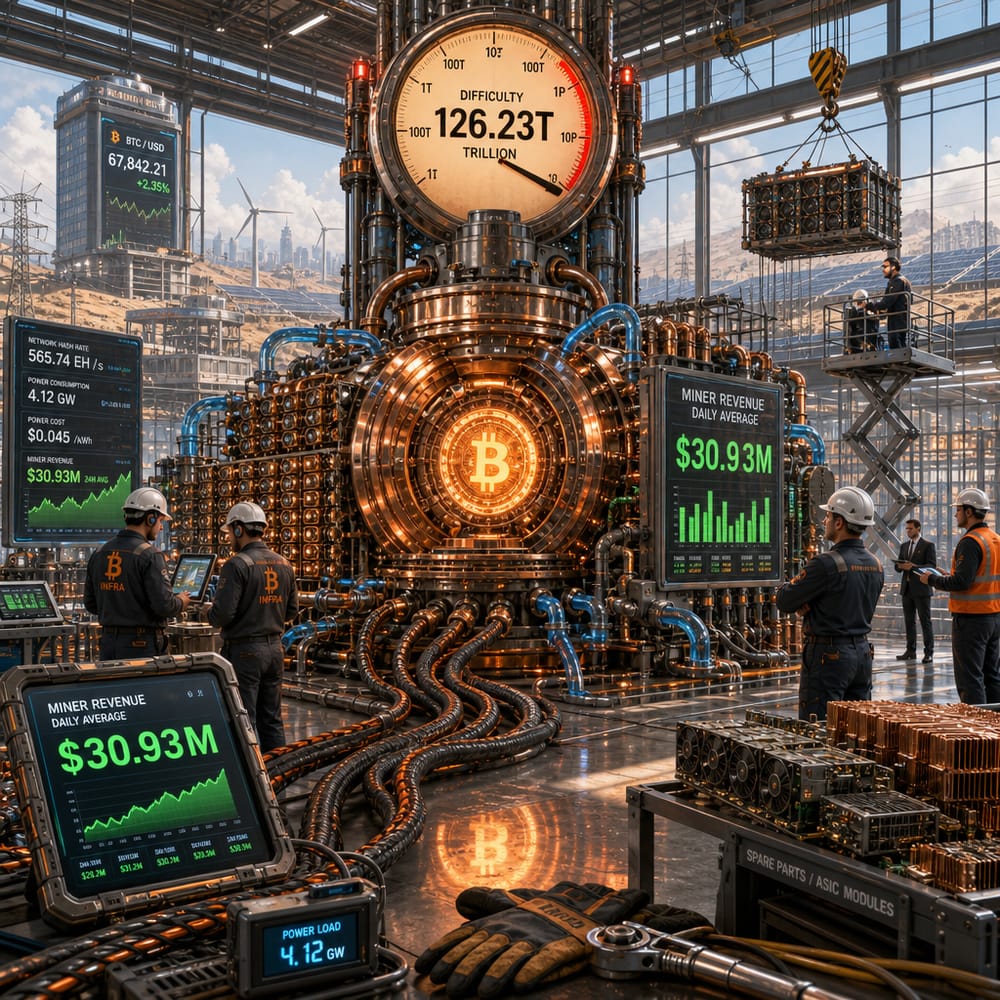
BITCOIN MINING: WHEN THE GOING GETS TOUGH, THE TOUGH CHECK THE METRICS
It may not have the intrigue of a Hollywood heist or the drama of a sports underdog, but in the world of Bitcoin, the saga of mining metrics is a must-watch thriller. For those unacquainted with the nitty-gritty of Bitcoin mining, think of it as the digital version of panning for gold—but instead of a pick and shovel, miners use computer chips and algorithms.
So, what's the latest headline? Bitcoin's mining difficulty is clocking in at a hefty 126.23 trillion, and average daily revenue for these digital prospectors is $30.93 million. But what does that mean in the grand scheme of things?
FIRST, LET'S TALK NETWORK HEALTH
Imagine Bitcoin as a colossal global operation. You need to be sure it's running smoothly, right? Mining difficulty is a bit like a heartbeat monitor for Bitcoin’s network. The harder it is to mine the coin, the more competitive and secure the system is. If mining difficulty is on the rise, it suggests a healthy network with plenty of participants trying to get a slice of the Bitcoin pie.
This digital behemoth has been through its fair share of ups and downs, but a difficulty level this high shows it's alive and kicking. More miners on the network means more competition, which makes it tougher for any one player to muck up the works or play fast and loose with the rules. So, all in all, this metric spells good news for Bitcoin’s integrity and security.
PROFITABILITY: THE MINER'S GOLDEN TICKET
If only mining Bitcoin were as simple as hitting the jackpot on a slot machine. The reality is a bit of a numbers game, and miners have to weigh the potential rewards against their costs, like electricity and hardware. The current average daily miner revenue of $30.93 million might sound like a small fortune, but it's spread across an army of miners, each vying for their share.
Rising mining difficulty points to increased competition, which can make it harder to earn those Bitcoin rewards. Essentially, miners are like contestants in an epic digital game show, with each new player making it tougher to claim the prize. If their costs outweigh their earnings, miners may decide to throw in the towel or relocate to regions with cheaper electricity. In the grand scheme of market economics, this could sway overall sentiment and influence Bitcoin's value.
MARKET SENTIMENT: WHY IT MATTERS
The interplay between mining metrics and market sentiment is akin to a delicate dance. A robust mining network injects confidence in Bitcoin's stability, which, in turn, can buoy market sentiment. Conversely, if miners start abandoning ship due to falling profits, it could raise red flags for investors, suggesting potential vulnerabilities in the network.
So, if you're watching the Bitcoin drama unfold, keep an eye on how these metrics play out. They may not capture headlines like a tech stock rally or an oil price surge, but in the cryptosphere, they are key indicators of what's bubbling beneath the surface.
WHAT SHOULD YOU DO ABOUT IT?
For the casual investor scrolling through headlines, it’s tempting to get swept up in the hype or panic over a dip. But understanding mining metrics offers a behind-the-scenes look at the crypto opera. If you’re thinking about diving into the Bitcoin pool, consider these metrics as part of your investment lore.
While miners are the unsung heroes of the Bitcoin network, their profitability and challenges tell a broader story of the market’s health. So, whether you’re a seasoned crypto enthusiast or a curious newcomer, these insights can add depth to your investment strategy.
To wrap it up, Bitcoin's mining metrics may not be the flashiest part of this digital currency saga, but they're absolutely worth your attention. They help paint the full picture, offering a glimpse into the vast, complex, and dynamic world that is Bitcoin. And that, my friends, is a thriller worthy of your investment read.
This article is for informational purposes only and is not investment advice. Always do your own research or consult a licensed financial professional before making investment decisions.
© Copyright 2024. All Rights Reserved.
© Copyright 2024. All Rights Reserved.