

Bitcoin Miner Fee Revenue Collapse
Saturday, August 15, 2026
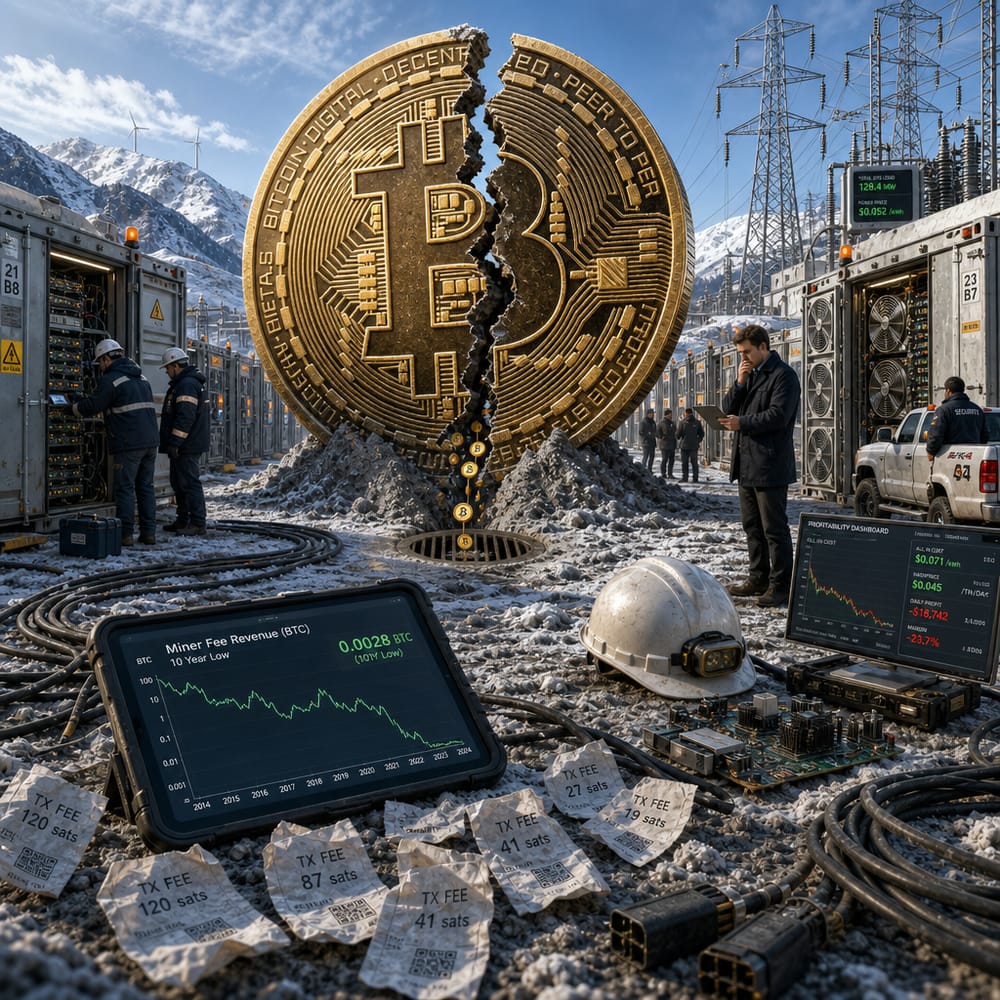
Bitcoin miners are facing a serious cash crunch, and it's not just because of their extravagant electricity bills. The real kicker? Fee revenue for these digital diggers has sunk to a level we haven't seen in nearly a decade. If there's one thing that's sure to make a miner's day worse, it's the realization that their digital reward is shrinking faster than a wool sweater in a hot wash.
Let's unpack this a bit. Those miners we hear so much about are basically the workhorses of the Bitcoin network, solving complex math problems to validate transactions. For their efforts, they usually get two bites at the apple: a slice of a brand-new Bitcoin and a cut from transaction fees. But those juicy transaction fees have now deflated like a tired balloon.
Here's the beef: Without enough fee revenue, miners are left pinching pennies, and this belt-tightening could have ripple effects that make the rest of the crypto world sit up and take notice. Miner profitability isn't just about keeping their lights on; it’s crucial for the security of the Bitcoin network itself. When the pickings get slim, miners might drop out. Fewer miners equal less security, leaving the network vulnerable.
So, what gives with this vanishing fee revenue? It's partly because Bitcoin's popularity as a medium of exchange isn't exactly soaring right now. High transaction fees in the past have been driven by a bustling network full of eager users wanting their transactions confirmed ASAP. But lately, it seems folks aren’t as keen on moving their Bitcoin around, which means fewer transactions and less money for miners to earn from fees.
Now, you might be wondering if this is just a blip or if we're headed for some kind of crypto Armageddon. It's worth considering the long game here. Bitcoin's design inherently reduces the number of new Bitcoins that come into circulation over time—a principle known as halving. It's like squeezing toothpaste out of a tube: there's only so much to go around, and it comes out slower and slower. As this happens, miners are expected to rely more heavily on transaction fees to stay afloat.
But if transaction fees can't pick up the slack? Uh-oh. That's when you might find miners flipping their rigs to play Fortnite instead of solving equations.
And it's not just the miners who need to worry. The whole crypto market could feel the heat. If Bitcoin's security weakens, the digital currency's reputation as the "digital gold" of the crypto world could tarnish. For investors, Bitcoin isn't just another shiny asset; it's the lodestone of the entire crypto ecosystem. If it wobbles, we might see a domino effect spreading uncertainty across the market.
In a world racing towards digital assets, stability is king. And Bitcoin's role within that kingdom is akin to holding the crown jewels. What we're witnessing with falling miner fees is the possibility of cracks in the throne room floor.
Critics love to proclaim Bitcoin’s doom, pointing to environmental concerns and regulatory hurdles. But don't count it out just yet. Innovation is the crypto world's bread and butter. We could see shifts—maybe even unexpected ones—that bolster miner profits. Perhaps new fee structures or tech advancements will change the game. Who knows, maybe the next Bitcoin conference will have a booth raffling off energy-efficient mining rigs as door prizes.
So, what's a retail investor to do? Keep a sharp eye on the horizon. Watch for changes in Bitcoin's transaction volume, and listen closely to what industry insiders are cooing or crying about. This fee revenue dip is a red flag, but it's not necessarily the end of the road. Bitcoin has been through storms before, and if history's any guide, it might just weather this one too. Whether this is merely a storm in a blockchain teacup, only time will tell—but hey, if you're feeling nervy, there's always that Powerball ticket.
This article is for informational purposes only and is not investment advice. Always do your own research or consult a licensed financial professional before making investment decisions.
© Copyright 2024. All Rights Reserved.
© Copyright 2024. All Rights Reserved.