

Bitcoin Crosses $80K: ETF Inflows and Exchange Liquidations
Saturday, August 29, 2026
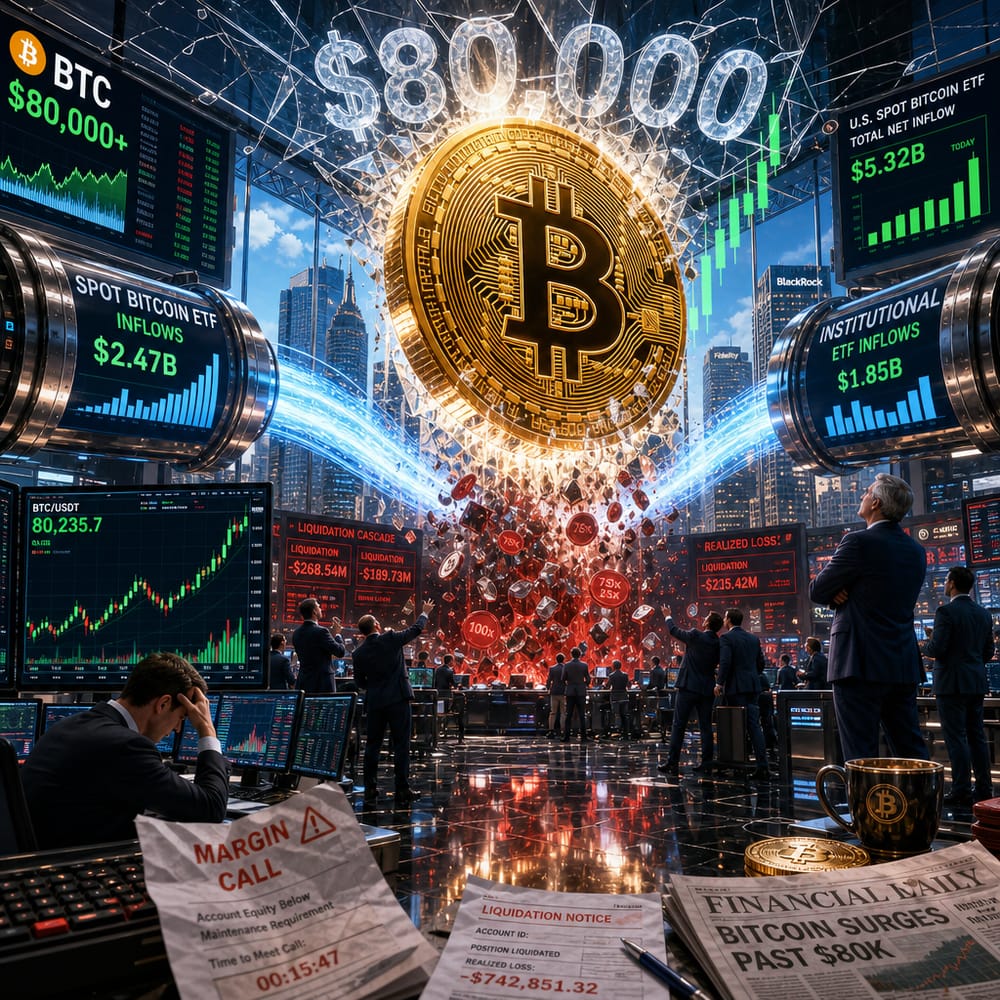
BITCOIN TAKES THE 80K THRONE: ETF INFLOWS AND LIQUIDATIONS FUEL THE ROCKET
Bitcoin has done it again, folks. After years of being the financial world's favorite roller coaster, Bitcoin has decided to set another milestone by breaking through the $80,000 mark. Let's take a closer look at what fueled this climb and what it means for all you digital gold diggers out there.
THE ROCKET FUEL: ETF INFLOWS
First up, let's talk about the shiny, new toy in town—Bitcoin ETFs (Exchange-Traded Funds). If you haven't heard, these are basically like regular stocks but for Bitcoin, which means you can buy and sell bits of Bitcoin in a more traditional way, without actually holding any digital coins yourself. It's like drinking non-alcoholic beer. The taste is there, but you won't get drunk on market volatility.
The recent surge in Bitcoin's price can be heavily attributed to the massive inflows into these ETFs. When more people invest in Bitcoin ETFs, the fund managers have to back up those investments by actually buying Bitcoins. And guess what? That’s exactly what's been happening. As demand for ETFs has skyrocketed, so too has the demand for Bitcoin, fueling its price rise faster than a Lamborghini on an open freeway.
THE LIQUIDATION TRAIN
Now, onto the other booster rocket—exchange liquidations. In simple terms, when people bet against Bitcoin (yep, there are folks who still do that), they essentially say, "Bitcoin is going down." If they're wrong and Bitcoin instead goes up, they have to buy it back at the higher price, causing what's known as a "short squeeze." This only adds more wood to the fire, sending the price even higher.
This time around, significant liquidations on various exchanges have contributed to Bitcoin's meteoric rise. Think of it like a domino effect: one short position gets liquidated, the price goes up, squeezing another position, and then another. It’s a digital chain reaction, and the crowd goes wild.
WHAT DOES THIS MEAN FOR RETAIL INVESTORS?
So here we are, watching Bitcoin break the $80K ceiling. But before you mortgage your home to buy some digital coins, let's ask: what does this mean for you, the everyday investor scrolling through this on your smartphone?
First off, the surge in Bitcoin's price suggests a shift in market sentiment. No longer is Bitcoin seen as solely the playground for thrill-seekers and speculative traders. Institutional interest, evident from ETF inflows, points to a more structural demand. In layman's terms, big players are taking Bitcoin seriously, and this could mean less volatility—at least in theory.
But remember, Bitcoin doesn’t always play by the rules. It's like that unpredictable uncle who shows up at family gatherings wearing a Hawaiian shirt in December. Just because institutional investors are showing interest doesn’t mean the volatility vanishes. The market remains a wild ride with twists and turns, and it pays to keep your seatbelt fastened.
For retail investors, this might be a moment to consider Bitcoin as a small part of a diversified portfolio, rather than the cornerstone of your retirement plan. The fundamentals are changing, but the game remains risky. Keep an eye on those ETF inflows and liquidations—they’re the canaries in the coal mine for Bitcoin’s future.
THE BIGGER PICTURE
In a world of AI revolutions, geopolitical surprises, and market uncertainties, Bitcoin breaking $80K is not just a headline—it's a story of evolving financial landscapes. This milestone might be signaling a new chapter where Bitcoin plays a more established role in global finance.
So, whether you're a Bitcoin veteran or a crypto-curious newbie, the message is clear: stay informed, tread carefully, and remember, this isn't just a trend. It could be the new norm.
Who knows where Bitcoin will go next? The only certainty is that the ride will be anything but boring. Buckle up and enjoy the journey, because in the world of crypto, the only constant is change.
This article is for informational purposes only and is not investment advice. Always do your own research or consult a licensed financial professional before making investment decisions.
© Copyright 2024. All Rights Reserved.
© Copyright 2024. All Rights Reserved.