

Big Three Stocks Edge from Records Monday as Retail Outlook Looms
Monday, August 17, 2026
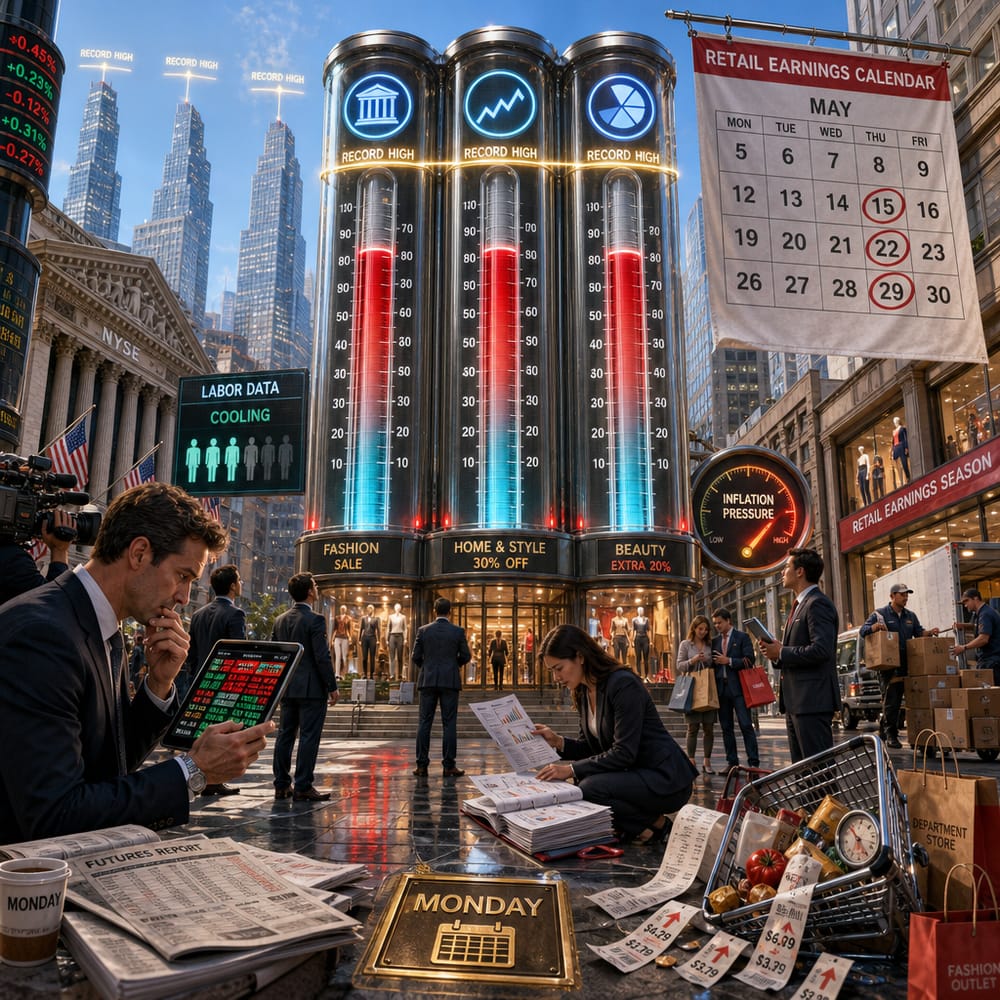
If you’ve ever watched a suspenseful movie scene where the hero tiptoes through a minefield, you’ll understand the vibe on Wall Street this Monday. Fresh off the high of record-breaking indices, the market did what it does best — it decided to add a little drama. The Dow, Nasdaq, and S&P 500 all took a cautious step back, as if to say, "Let's not get too comfortable here." The reason for this sudden hesitance? Retail earnings are looming, and investors are on edge, like cats near a cucumber.
But why all the twitchy behavior? Let's dive into the cauldron of factors stirring this uncertainty. Investors are meticulously examining every clue retailers might drop in their upcoming earnings reports. They’re keenly interested in how inflation is eating into profits and what’s happening with consumer spending. No one wants to be left holding the bag if it turns out consumers have tightened their purse strings tighter than a drumroll.
Investors are especially anxious about inflation. As the cost of living keeps climbing faster than a squirrel on espresso, it's got everyone asking: Just how much are people really willing to spend on those non-essentials? You know, the stuff that makes life fun but isn’t likely to survive a budget cut when prices soar. The retail sector, particularly the discretionary segment (think electronics, luxury goods, and dining out), is squarely in the crosshairs. If consumers are cutting back on impulse buys and high-end splurges, it could send ripples — or more like shockwaves — through the market.
And here’s the kicker: inflation isn’t the only gremlin lurking around. Recent job data isn’t exactly popping champagne either. The pace of job creation has slowed, which might sound like a snooze fest, but it’s essentially like the market’s version of a "low battery" warning. A slowdown here can stoke fears that economic growth might be losing steam, or worse, reverse.
Now, add in a 30-year Treasury yield that's hitting its highest point in 19 years. This is stirring the pot even more because rising yields make debt more expensive, which can influence everything from corporate borrowing costs to consumer loans. This alone is enough to give investors a case of the jitters, but when mixed with ongoing geopolitical tensions — hello, Iran and oil prices nudging $90 a barrel — it’s a wonder anyone in finance is getting any sleep.
This cocktail of high yields, inflation, and slowing job growth is leaving investors eyeing the retail sector like it's the last doughnut at a meeting — with both suspicion and longing. The question everyone’s asking is, who'll emerge as the winners and losers when these earnings reports start rolling in? Will big players like Walmart and Target shrug off these challenges, or will we see hot takes from analysts explaining why they’re not so hot right now?
Investors aren’t just looking for good news. They’re on the lookout for anything suggesting that retail will either hold the line or start faltering. Any sign that retailers are struggling to pass on higher input costs to consumers, or that profit margins are getting squeezed, could be the equivalent of yelling "fire" in a crowded theater.
So, what’s next? Well, retail earnings will either confirm that consumers are still opening their wallets, or it will show that they're guarding them like a dragon hoarding treasure. Either way, the results will be a temperature check on the broader economy. A positive surprise could pull the market back up; a negative one could see it sinking further.
In summary, it’s a classic hurry up and wait scenario. Investors are poised, watching, waiting like hawks. But until those retail earnings reports hit, the market remains a precarious balancing act of speculation. And just like any great thriller, we’re all left on the edge of our seats until the next big reveal.
This article is for informational purposes only and is not investment advice. Always do your own research or consult a licensed financial professional before making investment decisions.
© Copyright 2024. All Rights Reserved.
© Copyright 2024. All Rights Reserved.