

Big Bank Upgrades Amid Rate Outlook Shift
Saturday, October 03, 2026
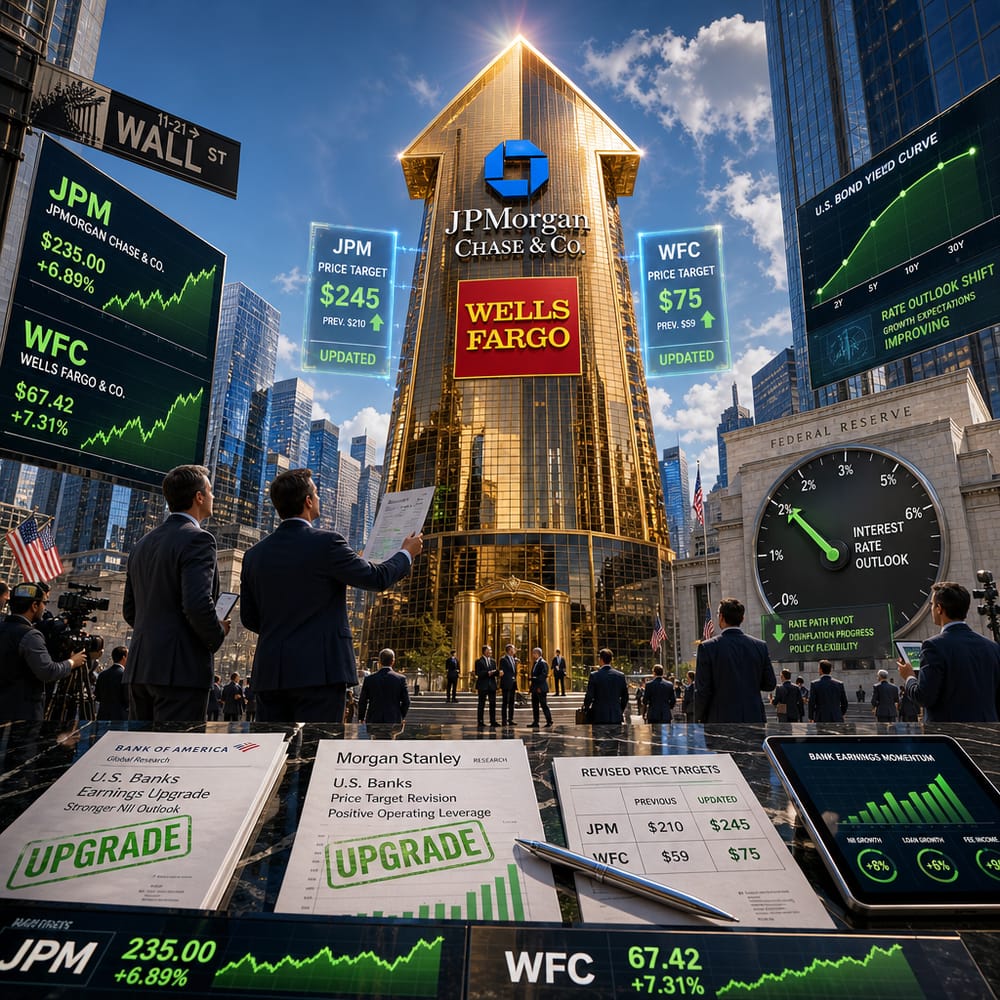
Some say bankers are just gamblers in suits, but this time, it’s the folks at Bank of America and Morgan Stanley who's rolling the dice with upgraded price targets for JPMorgan Chase and Wells Fargo. And in the high-stakes world of finance, they don’t ante up for nothing. Their bets aren’t blind; they’re putting their chips on a new hand dealt by the Federal Reserve.
Let’s break it down. Bank of America is smiling at JPMorgan Chase with an upgraded price target, while Morgan Stanley is showing Wells Fargo some love with a hiked-up target too. Why now? What’s changed in the Fed’s rate outlook that makes our banking behemoths suddenly look so fetching? Spoiler alert: It's all about interest rates, baby.
First, the Fed's pivot. Picture the Federal Reserve as the DJ at the biggest finance party in town. For a while, they've been playing a fast-paced beat of interest rate hikes. This tempo was all about slapping down inflation, but now, there’s talk of slowing down. A less aggressive Fed means cheaper borrowing costs for everyone and their grandma, potentially boosting loan demand. Banks, being the clever creatures they are, can capitalize on this by lending more, earning interest, and fattening their bottom lines. Cha-ching!
Now let’s talk about how this plays out in the banking sector. Banks thrive on the difference between what they earn on loans and what they pay on deposits—think of it as their financial sandwich. When rates are stable or gently rising, that sandwich is filled with thick, juicy profits. But rapid rate hikes can lead to a dry, thin spread, which nobody wants. The prospect of a Fed that’s letting up on the gas pedal is music to bankers' ears because it suggests a more predictable environment where they can plan and profit without fear of being blindsided by sudden jumps in borrowing costs.
However, before we pop the champagne, let’s take a look at the risks. Banking is like juggling chainsaws—there’s money to be made, but also a fair chance of losing a limb. Sure, a calmer Fed might boost loans and profits, but it could also encourage reckless lending. Banks might start handing out loans like candy on Halloween, and if consumers and businesses can’t pay them back, we could be in for a nasty trick instead of a treat.
On the flip side, even with a slowing Fed, external factors can still play havoc. Just look at the global economic landscape: geopolitical tensions, trade skirmishes, and the odd economic hiccup can still throw a monkey wrench into the works. A single unexpected event can shift the economic winds and sink the ship, even with a trained captain at the wheel.
Now, what does this all mean for you, the retail investor, who’s just trying to make your 401(k) grow faster than a Chia Pet? Well, these upgrades signal confidence in the banking sector’s resilience, which is like insider information that’s completely legal. If BofA and Morgan Stanley are bullish on banks, maybe you should be too.
But don't let optimism turn into reckless abandon. Investing isn’t as simple as betting it all on black. Keep diversification in your portfolio and a keen eye on your investments. Banks may look robust now, but as we've learned, conditions can shift.
In short, while Bank of America and Morgan Stanley have their eyes set on the prize with JPMorgan Chase and Wells Fargo, remember that no investment is without its risks. The potential for profit is palpable, but so is the chance for pitfalls. Keep your wits sharp, your portfolio diversified, and your finger on the pulse of the Fed’s next move. Your financial future might just thank you for it.
This article is for informational purposes only and is not investment advice. Always do your own research or consult a licensed financial professional before making investment decisions.
© Copyright 2024. All Rights Reserved.
© Copyright 2024. All Rights Reserved.