

Berkshire Hathaway's Q3 Earnings: A Closer Look at Buybacks and Valuation
Saturday, November 07, 2026
BERKSHIRE HATHAWAY'S Q3 EARNINGS: A CLOSER LOOK AT BUYBACKS AND VALUATION
How do you make a splash in the financial world when your profits are sinking faster than a stone in a pond? If you’re Berkshire Hathaway, you simply crank up the buyback machine to warp speed. In the third quarter of 2026, Warren Buffett’s colossal conglomerate defied the usual playbook by doubling its stock buybacks, even as both its operating and overall earnings took a nosedive. But why do that? What's the method to this financial madness?
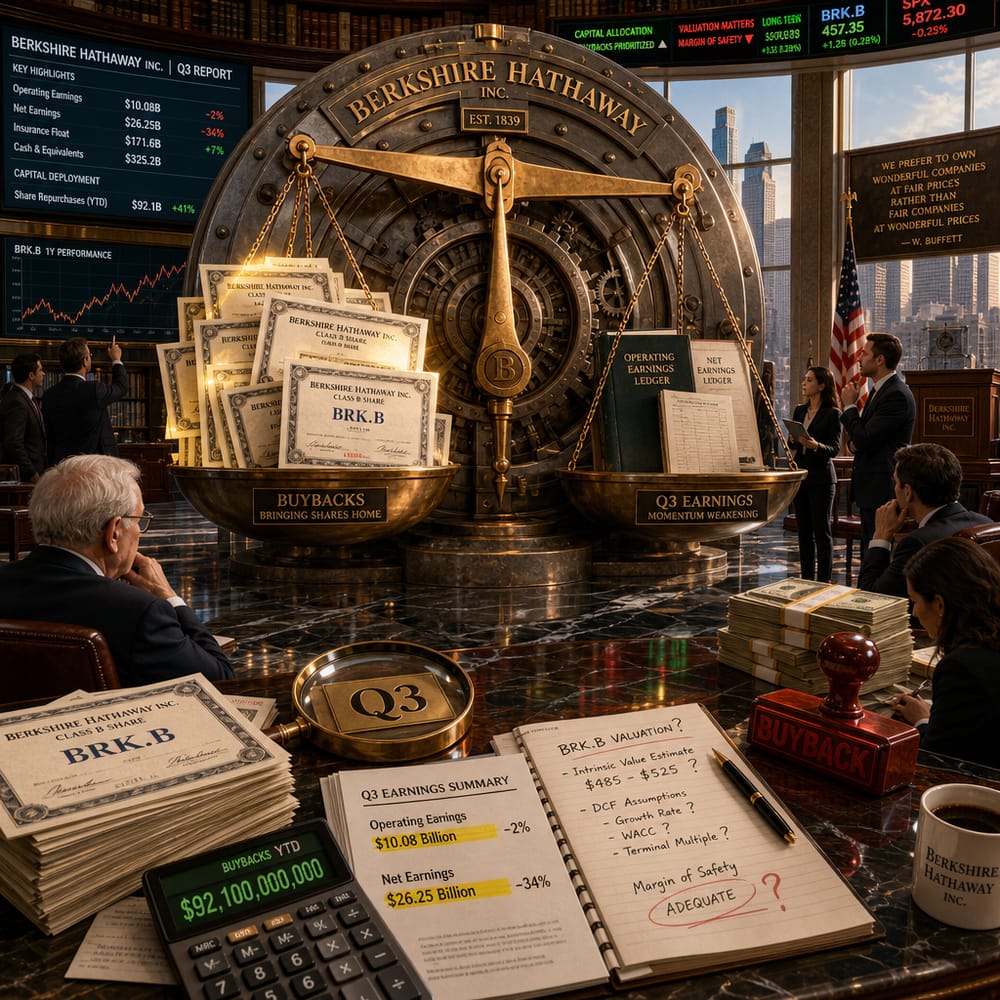
First, a quick recap. Berkshire shelled out a whopping $9.6 billion to repurchase its shares this past quarter. That's more than double the $4.5 billion from the preceding quarter, bringing their 2026 buyback spree to a hefty $14.4 billion. Meanwhile, the company’s operating earnings, or the lifeblood from its wholly-owned businesses, fell by nearly 6%. And the overall earnings, which include its titanic stock portfolio, plunged by a staggering 28%.
So, what's with the buyback bonanza? It’s simple, really. Warren Buffett and his crew think their stock is a screaming deal. Buybacks typically signal that a company believes its stock is undervalued. Think of it like a clearance sale where you’re sure you’re getting more bang for your buck. For Berkshire, it’s a vote of confidence in itself, a message that the market might be underestimating its true worth.
Now, about those earnings. The declines were largely driven by a dip in the profits from its insurance operations—down by 43%, to be exact. One might wonder if this spells trouble for Berkshire’s long-term growth strategy. Certainly, a dip in earnings isn’t the kind of headline that gets investors doing cartwheels. However, it’s worth noting that some of Berkshire’s segments, like railroad, energy, and manufacturing, actually posted gains. It's a mixed bag, but not one that reeks of desperation or decline.
Let's shine a light on the potential risks and benefits of Berkshire’s current capital allocation strategy. On the positive side, by buying back shares, Berkshire reduces the number of its shares outstanding, effectively boosting the value of each remaining share, not to mention the earnings per share. It’s like slicing a smaller, yet tastier cake where each slice is a little more decadent.
But it’s not all sunshine and rainbows. One key risk is opportunity cost. By directing so much capital towards buybacks, Berkshire might miss out on potentially more lucrative investments elsewhere. Imagine having a boatload of cash and choosing to buy back old comic books instead of investing in the next big tech startup.
Moreover, critics might argue that such aggressive buybacks could reflect a lack of better investment opportunities. It's a bit like a billionaire buying back shares of his company instead of launching new ventures because he can't find any other promising places to put his money. The implication for the rest of us? If Buffett can't spot a better deal, perhaps we should also be vigilant.
The stakes are high, and the moves are bold, especially in a world where Wall Street is jittery about the prospects of AI and tech stocks are teetering dangerously. Yet, Berkshire’s stock is having a moment in the sun, outperforming the S&P 500 by a considerable margin recently. Investors seem to be flocking to the stability and traditional charm of Berkshire Hathaway, perhaps as a safe haven in these turbulent times—or maybe they just like how Buffett and his team are playing this hand.
In the end, Berkshire Hathaway’s strategic buybacks amidst declining earnings are more than just a numbers game. They highlight a potential undervaluation, showcase a strategic allocation of resources, and send a message of resilience and confidence. It’s a masterclass in capital management from the Oracle of Omaha, and for the everyday investor, it’s a fascinating insight into high-stakes financial poker.
So, what do you think? Is Buffett’s buyback blitz enough to keep Berkshire at the top of its game, or is it a risky gamble that might not pay off in the long run? The answer might just lie in Buffett's own words: "Be fearful when others are greedy, and greedy when others are fearful." And right now, it seems, Berkshire is feeling just a little bit greedy.
This article is for informational purposes only and is not investment advice. Always do your own research or consult a licensed financial professional before making investment decisions.
© Copyright 2024. All Rights Reserved.
© Copyright 2024. All Rights Reserved.