

Berkshire Hathaway's Massive Q2 Deployments—What It Means for Equity Strategy
Sunday, August 16, 2026
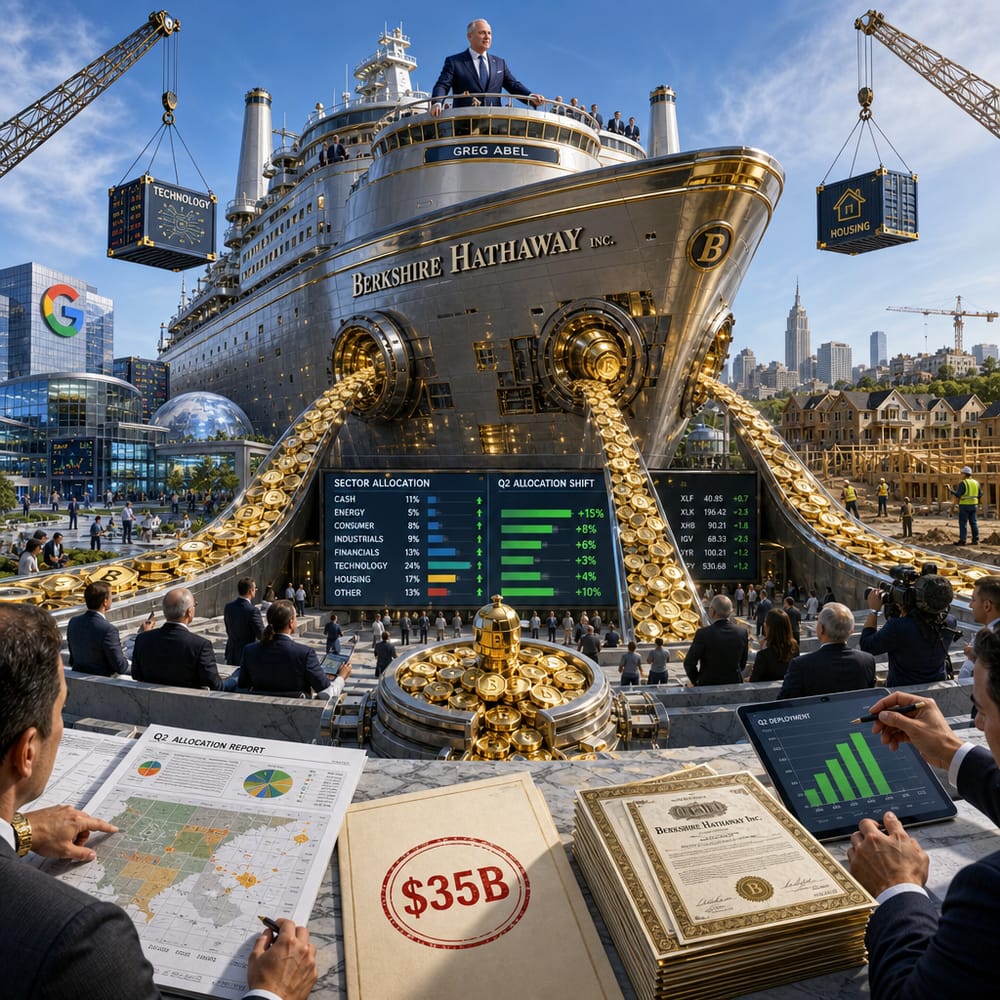
THE BILLION-DOLLAR CRYSTAL BALL: WHAT BERKSHIRE'S Q2 SPENDING SPREE TELLS US ABOUT THE FUTURE
If money talks, then Berkshire Hathaway’s $35 billion Q2 investment says more than a gossip columnist at a celebrity divorce trial. Seriously, if you thought Warren Buffett was the king of keeping cash under the mattress, think again. His successor, Greg Abel, just went all in like a poker champ with an ace-high flush.
A cool $10 billion chunk went to Alphabet, the company behind Google—not exactly chump change. Then, there’s nearly $7 billion to Taylor Morrison Home, suggesting Abel’s got a keen eye on housing, or maybe he just loves open floor plans and walk-in closets. Oh, and let’s not forget the $4.5 billion in share repurchases for good measure. This isn't just pocket change; it’s a major reshuffling of Berkshire’s massive financial deck.
WHAT DOES THIS MEAN FOR YOU, MR./MS. RETAIL INVESTOR?
So, what does Greg Abel know that the rest of us don’t? Is he predicting an AI takeover, a housing market renaissance, or just prepping for a new season of real estate reality TV? Let's break it down.
1. Alphabet and AI: The Big Bet
Investing $10 billion in Alphabet isn’t just a nod to the AI boom; it’s a screaming endorsement. With artificial intelligence rapidly becoming the shiny new toy across sectors, Abel’s move hints at his confidence in Alphabet's ability to lead the charge. AI can be transformative, but it's also a tightrope walk between innovation and over-hype—a bubble waiting to burst or the next big bang.
2. Taylor Morrison Home: Building on the Home Front
Dropping billions on a homebuilder indicates confidence in housing. Perhaps Abel's banking on the idea that despite market fluctuations, the need for homes—especially in a post-pandemic world where remote workspaces are as crucial as home gyms—is evergreen. It’s a sector that's less flashy than AI but ever so reliable. For those pondering where to park their savings, this could signal a solid foundation—pun intended—where bricks and mortar still rule the day.
3. Share Repurchases: Betting on Themselves
A hefty $4.5 billion in share repurchases shows Berkshire isn't just looking outward. It believes in its own value. This could suggest they see their stock as undervalued or just want to keep investors happy with fewer shares and potentially higher dividends. Either way, it's a vote of confidence in the Berkshire brand itself.
WHAT SHOULD YOU DO WITH THIS INFORMATION?
If you're a retail investor, shadowing Berkshire could be akin to following the cool kid at school. But remember, even the coolest kid trips sometimes. Key takeaways for you:
Follow the Trends: If Berkshire's buying AI, you might want to consider investing in tech stocks. Just remember to diversify; don't put all your eggs in one basket.
Watch Housing: With billions on the housing market, it might not be a bad idea to check out real estate investment trusts (REITs) or consider your own property ventures.
Be Ready for Risks: AI and housing could boom, but they could also bust. Be wary of over-extension and keep an eye on market conditions.
THE RISKS OF FOLLOWING THE TITAN
Before you go buying up stocks like a kid in a candy store, remember, even Berkshire isn’t immune to missteps. AI's rapid pace could lead to overvaluation, and the housing market, while dependable, isn’t bulletproof against economic shocks. Investing like Berkshire requires nerve, research, and the ability to play the long game.
Ultimately, Greg Abel’s Q2 spending spree is a window into a potential future—one where AI and housing play starring roles. Whether Berkshire’s strategy pays off remains to be seen, but one thing’s for sure: if they’re spending billions, something interesting is bound to unfold. So keep your eyes peeled, your ears open, and your investment strategy as agile as a gymnast on a balance beam. Who knows? Maybe following Abel’s lead is the next step to becoming the oracle of your own investment journey.
This article is for informational purposes only and is not investment advice. Always do your own research or consult a licensed financial professional before making investment decisions.
© Copyright 2024. All Rights Reserved.
© Copyright 2024. All Rights Reserved.