

Berkshire Hathaway Earnings Beat and Buybacks, But Michael Burry Sells
Monday, August 10, 2026
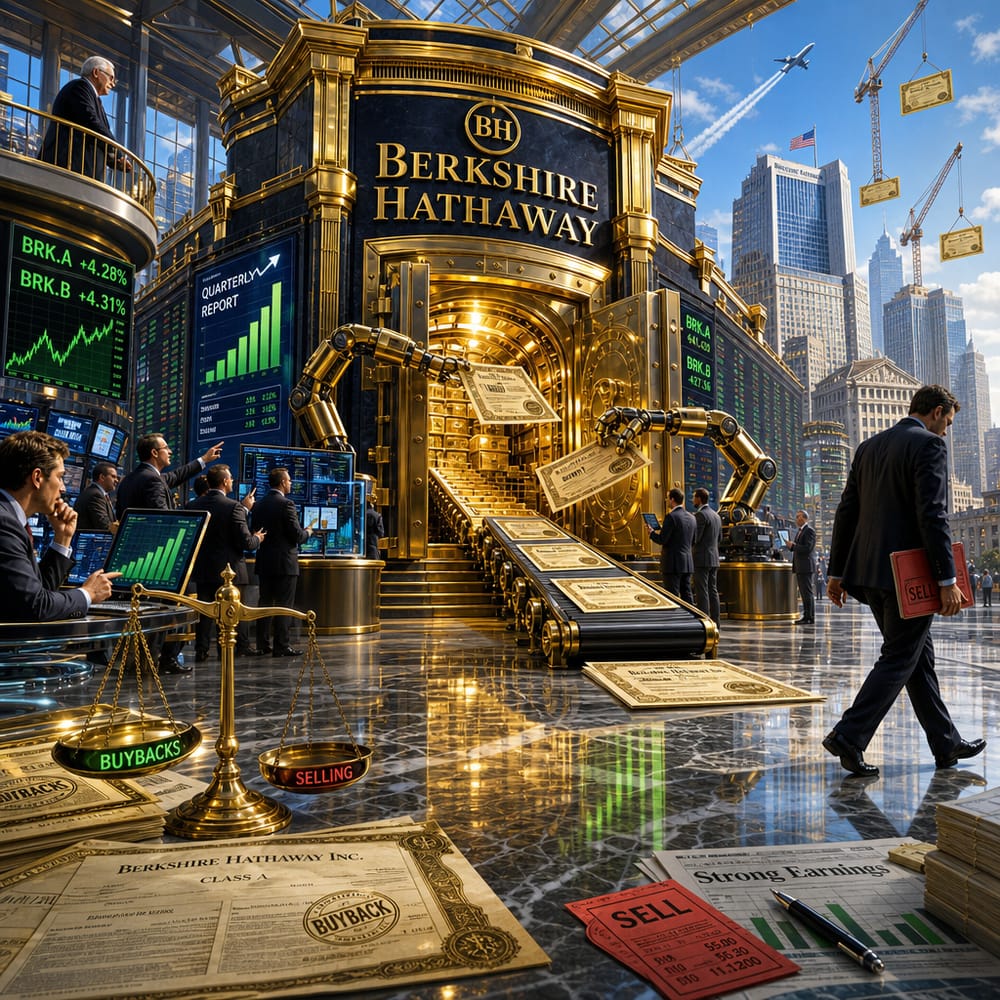
BERKSHIRE'S BIG BUYBACK BONANZA: WHY MICHAEL BURRY'S NOT BUYING IN
Picture this: Berkshire Hathaway, an investing juggernaut synonymous with steady growth and spectacular returns, just dropped a double whammy on the market. They reported strong Q2 earnings and unveiled a colossal share buyback program. Investors, naturally, are doing a happy dance. But hold your pom-poms: Michael Burry, the guy who famously bet against the housing market before it tanked in 2008, is quietly exiting stage left. What gives?
Let's start with the good news. Berkshire Hathaway, no longer helmed by the legendary Warren Buffett but still a force to reckon with, reported eye-popping earnings of $12.98 billion for Q2. That’s a hefty 16% jump from the previous year. Revenues climbed a respectable 10%, hitting the $101.8 billion mark. And in a move that would make any shareholder smile, the company announced plans to ramp up share buybacks. Translation for the uninitiated: this means fewer shares on the market, which can boost Earnings Per Share (EPS), making each share you own more valuable.
Yet, just as the confetti was settling, Michael Burry tossed a wet blanket on the celebration. Known for spotting financial storms before they hit, Burry has decided to trim his holdings in Berkshire. His move raises eyebrows, especially when everyone else seems to be clinking champagne glasses.
So, what's going on here? Is Burry seeing something the rest of us aren't?
Firstly, let's dig into what buybacks do. In simple terms, when a company buys back its shares, it reduces the number of shares available. Fewer shares mean each remaining share potentially represents a larger slice of the earnings pie, boosting the EPS. It’s a neat trick that can make a company look more appealing to investors. Berkshire's buyback is big news because it suggests the company believes its stock is undervalued and worth reinvesting in.
But here's where Burry's skepticism might come in. Share buybacks can be a double-edged sword. They're great if the company is sailing smoothly. But if the waters are choppy, they can be a sign that the company doesn't see more profitable growth opportunities to spend its cash on. Instead of investing in new ventures or expanding into new markets, a buyback can sometimes feel like sticking a Band-Aid on a bigger issue.
Could that be what Burry's sensing? In his usual cryptic style, Burry hasn't spelled out his reasoning. But given his track record for spotting financial trouble, it's worth considering the possibility that he's seeing red flags that others are missing.
Another layer to this puzzle is Berkshire's cash hoard. Burry might be wary of how they're choosing to whittle it down. Berkshire's cash pile has become famous in its own right, and the decision to spend a chunk on buybacks might suggest the company is running out of exciting places to invest.
So, what should investors do with this mix of optimism and caution? For the everyday retail investor, it's a moment to take a step back and think. Berkshire's strong earnings and buyback plan could signal robust confidence in its current value, making it an attractive option for those betting on sure-footed giants in uncertain markets. But Burry's move serves as a reminder to keep a close eye on the horizon and not get swept up in the market's mood without doing your homework.
In essence, Berkshire's buyback is a clear message of confidence, but Burry's exit flags a cautionary note. As always in investing, it pays to listen to both sides. Keep your ear to the ground and your eyes wide open. The investment world is full of twists, turns, and the occasional curveball — just ask Michael Burry.
This article is for informational purposes only and is not investment advice. Always do your own research or consult a licensed financial professional before making investment decisions.
© Copyright 2024. All Rights Reserved.
© Copyright 2024. All Rights Reserved.