

BBB Foods: Cash Flow Surge Amid Net Loss
Sunday, August 16, 2026
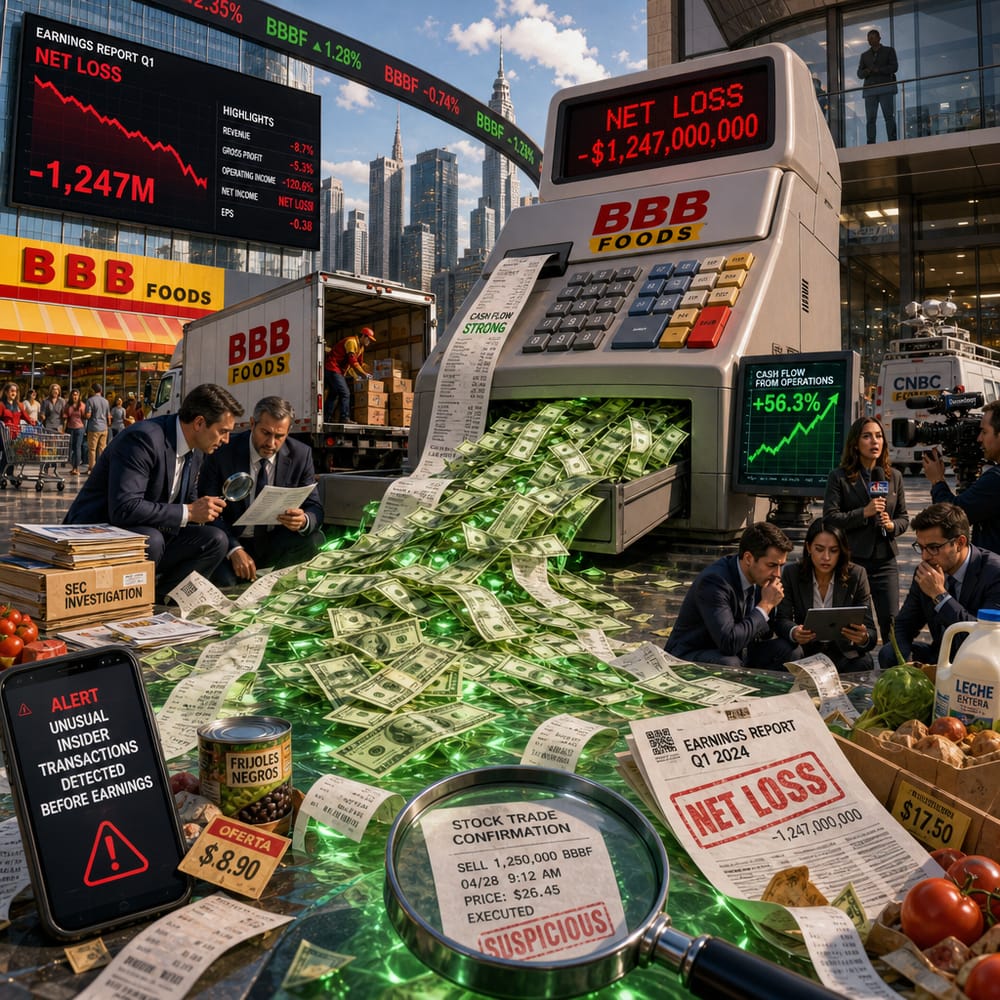
WHERE THERE'S CASH, THERE'S (SOMETIMES) FIRE: BBB FOODS' CASH FLOW MYSTERY
Welcome to the corporate edition of "What Just Happened?" Today's headliner: BBB Foods. They've got accountants scratching their heads, investors raising their eyebrows, and insider trading watchdogs on high alert. How does a company report a net loss accompanied by a cash flow surge? Let’s dive in.
First, let’s set the stage. Picture BBB Foods as a hungry, ambitious lion. Their revenue chomped up a 39% increase, soaring to a cool 26 billion pesos. And their store expansion? A whopping 155 net new outlets, like a fast-food joint on steroids. Sounds like a blockbuster, right? But behind the curtain, BBB Foods is nursing a net loss. Cue confusion.
So, how does a company lose money yet swim in cash like Scrooge McDuck? Enter non-cash charges, a fancy term for accounting entries that don't actually involve spending any cash. They might have pumped up depreciation — that’s an accounting technique to spread out the cost of their assets over time. Or racked up expenses linked to amortization — the gradual write-off of an intangible asset. This type of financial hocus-pocus keeps actual cash in the register even as the books bleed red.
Now, let’s throw in a spicy plot twist: insider trading. Could some low-key market maneuvering be happening in the shadows? Get this. BBB Foods’ director, Sami Gabriel Khouri, cashed in on 14,101 shares just days before the company served up its earnings report. That's about $573,500 worth of stock. Khouri’s trade was purportedly to cover tax obligations from stock options — yawn, sounds legit. But when a director sells before earnings, eyebrows rise faster than yeast in bread.
The implications of insider activities are as deliciously complex as a chef's special. For retail investors, insider selling can sometimes signal everything from forewarning to foresight. Is it time to worry? Maybe Khouri knows something we don’t. Or maybe it’s just really bad timing. Either way, investors might feel a twinge of anxiety gnawing at their portfolios.
But here’s a spoonful of optimism: BBB Foods’ bustling cash flow is a whisper of sustainable growth. Cash can fund expansion, fend off debt, and plump up profits. If they play their cards right, today's cash could turn into tomorrow’s profits, making BBB Foods a juicy investment opportunity.
Now, let's talk long-term. What does all this mean for BBB's stock? If the cash flow magic show keeps churning out green without drowning in red ink, BBB Foods might find itself on the fast track to investor favor. But—and here’s the big but—should insiders continue to cash in, it could raise alarm bells about the company’s inner workings and future performance.
Ultimately, the fate of BBB Foods stock hangs on a delicate balance: maintaining robust cash flow while shedding the baggage of net losses. Investors should keep their eyes peeled for more insider action and any shifts in the company’s financial strategies.
So, dear reader, consider this your appetizer. The main course? Keep an eye on those quarterly reports and perhaps dust off your magnifying glass to spot any more shadowy trades. Because in the world of finance, where there’s cash, there’s sometimes fire. And nobody wants to get burned.
This article is for informational purposes only and is not investment advice. Always do your own research or consult a licensed financial professional before making investment decisions.
© Copyright 2024. All Rights Reserved.
© Copyright 2024. All Rights Reserved.