

Bank of Canada Holds Rates Despite CPI Surprise, Loonie Strength Rebounds
Sunday, August 23, 2026
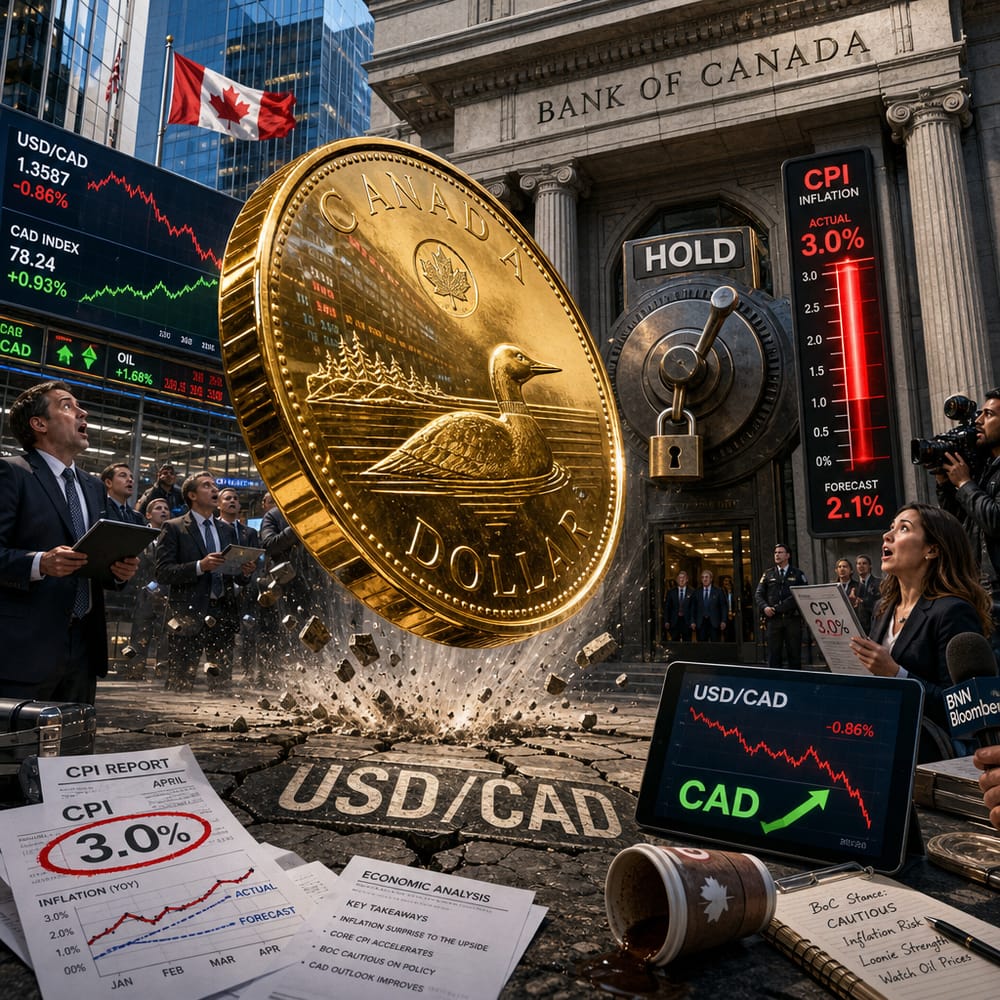
BANK OF CANADA HOLDS RATES DESPITE CPI SURPRISE, LOONIE STRENGTH REBOUNDS
Inflation is like that unwelcome houseguest who just won’t leave. Just when you thought you had it under control, it surprises you with a suitcase full of new complications. So when Canada’s Consumer Price Index (CPI) decided to pull a fast one, shooting up to 3.0% in July, it seemed like a prime candidate to force the Bank of Canada's hand into hiking interest rates. But surprise, surprise—the bank held its ground and rates steady, leaving the financial world scratching its head.
For those who skipped Econ 101: when inflation rises, central banks usually jack up interest rates to cool things down. Inflation is like that overenthusiastic DJ at your cousin's wedding: things get too heated, and chaos (read: economic instability) might ensue. But this time, the Bank of Canada (BoC) chose to play a different track, despite that unexpected tempo change in inflation.
The CPI report was like an unexpected plot twist in a Netflix drama, and financial markets reacted with their usual blend of excitement and confusion. Analysts had to quickly recalibrate their expectations, and the USD/CAD exchange rate felt the ripple effects. The Canadian dollar, affectionately known as the Loonie, saw a little boost, bouncing back stronger than anticipated.
But why did the BoC hit the pause button on a rate hike when inflation data practically screamed for it? It all comes down to the bank’s cautious approach. The BoC seems to be in no rush to stomp on the brakes, opting for a strategy that resembles tiptoeing through a minefield. They’re wary of throwing the economy into reverse by hiking rates too aggressively, a move that could strangle growth and send Canada’s economy into a skid.
This cautious stance is like telling your overly anxious friend to take a deep breath before they make a hasty decision. Sure, the inflated numbers were a shocker, but the BoC likely sees them as a temporary blip rather than a harbinger of runaway inflation.
So what’s next for the Loonie? Well, in the short term, it’s basking in its newfound strength, relishing the attention like a fresh-faced influencer who's just gone viral. The currency’s rebound against the U.S. dollar (USD) is a testament to the BoC’s steady hand in uncertain times. But let’s not pop the champagne just yet—currencies are fickle creatures, and this dance between the USD and CAD could take another unexpected turn if economic data continues to surprise us all.
Looking forward, the market is keeping its ears to the ground, listening for any hints of the BoC’s next steps. Will they buckle and raise rates if inflation persists, or can they keep calm and carry on? Investors are like detectives piecing together clues from every speech and every report, trying to anticipate the next move on this financial chessboard.
In the meantime, retail investors might want to think twice before making any impulsive moves in the forex market. The USD/CAD rate is a delicate balancing act, a tightrope walk that requires a keen eye for detail. Today’s landscape is all about navigating between that higher-than-expected inflation and the BoC’s cautious game plan.
For the everyday investor scrolling through their phone, here’s the takeaway: the Canadian economy is walking a tightrope, and the BoC is holding the balance pole. Keep an eye on inflation reports, central bank announcements, and global economic trends. They’re all puzzle pieces in this intricate game of economic Jenga. It’s a waiting game, but those who can keep their wits about them and their eyes on the prize might just find some opportunities amidst the uncertainty.
So while the Loonie flies high and the CPI keeps everyone guessing, remember you're in the audience of an economic drama that’s just getting started. Grab the popcorn, stay informed, and be ready for the next twist in this international thriller.
This article is for informational purposes only and is not investment advice. Always do your own research or consult a licensed financial professional before making investment decisions.
© Copyright 2024. All Rights Reserved.
© Copyright 2024. All Rights Reserved.