

Bank of America Faces Investor Scrutiny After $1.2 Billion Fine
Wednesday, October 14, 2026
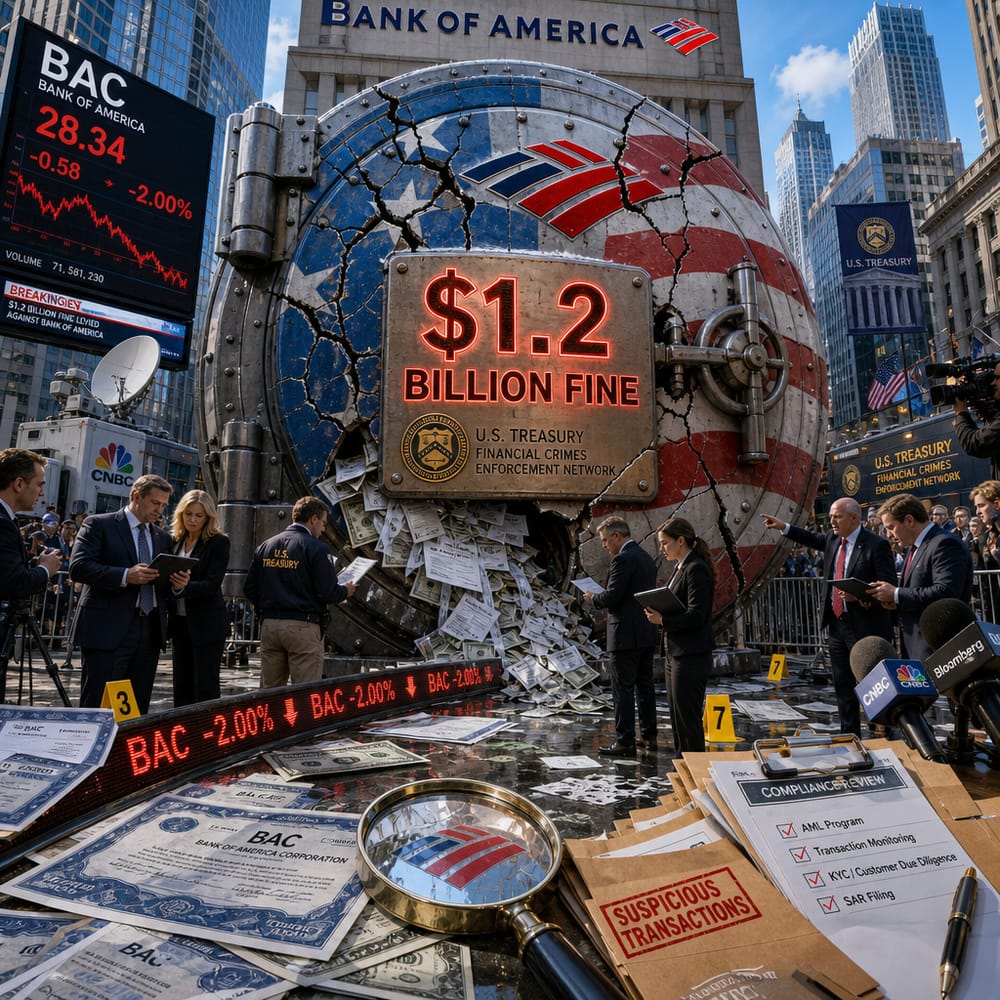
BANK OF AMERICA FACES INVESTOR SCRUTINY AFTER $1.2 BILLION FINE
If you ever wanted to see a bank flinch, just tell them they owe the U.S. Treasury $1.2 billion. Bank of America is feeling the heat after regulators slammed them with a hefty fine for failing to report suspicious transactions, sending their stock tumbling over 2%. It's like watching a heavyweight champ get knocked out in the first round – unexpected, and not pretty.
So, what happened? Imagine a high-stakes game of "I Spy," but Bank of America forgot to play. Regulators accused them of neglecting to report over $5 billion in transactions that smelled fishier than last week's leftovers. The penalty is a stark reminder that even the titans of Wall Street can trip on regulatory red tape, especially when it involves anti-money laundering laws and sanctions.
Now, let's break down what this means for investors who have their cash tied up with America's second-largest bank. Will this fine hurt their earnings and stock performance? Well, it doesn't take a finance degree to know that a $1.2 billion hit is going to sting. The fine will put a dent in their quarterly earnings, possibly spooking investors and causing them to question just how tight Bank of America's compliance ship really is.
But more than just a bruised ego and a lighter wallet, this fine could hit the bank where it really hurts – investor confidence. You see, trust is the glue that holds the financial world together, and when that trust is shaken, it can lead to a domino effect of investor flight. We've seen it before: bad news causes stock prices to dip, and suddenly everyone’s looking for the nearest exit.
So, what are the broader implications for the financial sector? Well, when a behemoth like Bank of America gets slapped on the wrist, other banks start double-checking their compliance procedures like students before a surprise exam. Expect to see a surge of 'compliance workshops' and 'risk management seminars' popping up in boardrooms across the country. Because if this fine teaches us anything, it's that regulatory bodies are watching closely, and they're not afraid to dole out penalties like Santa doling out coal.
And what about the future? Could this lead to more stringent regulatory actions? Absolutely. This fine sets a precedent that even the big players can be brought to heel, making it clear that regulatory compliance is not just a checkbox to be ticked, but a critical part of bank operations. We might see regulators tightening the screws, making it harder for banks to skirt around the rules without facing significant consequences.
So, where does Bank of America go from here? In their official statement, the bank maintained they're working closely with regulators to resolve the issues and have invested billions in technology to prevent future mishaps. It's a bit like saying, "Hey, we're fixing the hole in our boat, but thanks for pointing it out." They know they need to regain trust and show shareholders they’re still a solid investment despite this regulatory hiccup.
For the everyday investor, the lesson here is to keep your ear to the ground. Regulatory actions like these can impact stock prices and company reputation faster than you can say "portfolio rebalancing." If you're holding Bank of America stock, or any bank stock for that matter, it's wise to keep an eye on regulatory developments and how companies respond to them.
In the grand scheme of things, this fine won't sink Bank of America, but it's a clear signal to investors: nothing, not even a massive financial institution, is too big to face the music. As the dust settles, investors will be watching closely to see if Bank of America can steer their ship back on course and whether the broader banking sector can navigate these increasingly choppy regulatory waters.
This article is for informational purposes only and is not investment advice. Always do your own research or consult a licensed financial professional before making investment decisions.
© Copyright 2024. All Rights Reserved.
© Copyright 2024. All Rights Reserved.