

Balancing Act: Fed's Dilemma Between Weak Jobs Data and Persistent Inflation
Wednesday, August 19, 2026
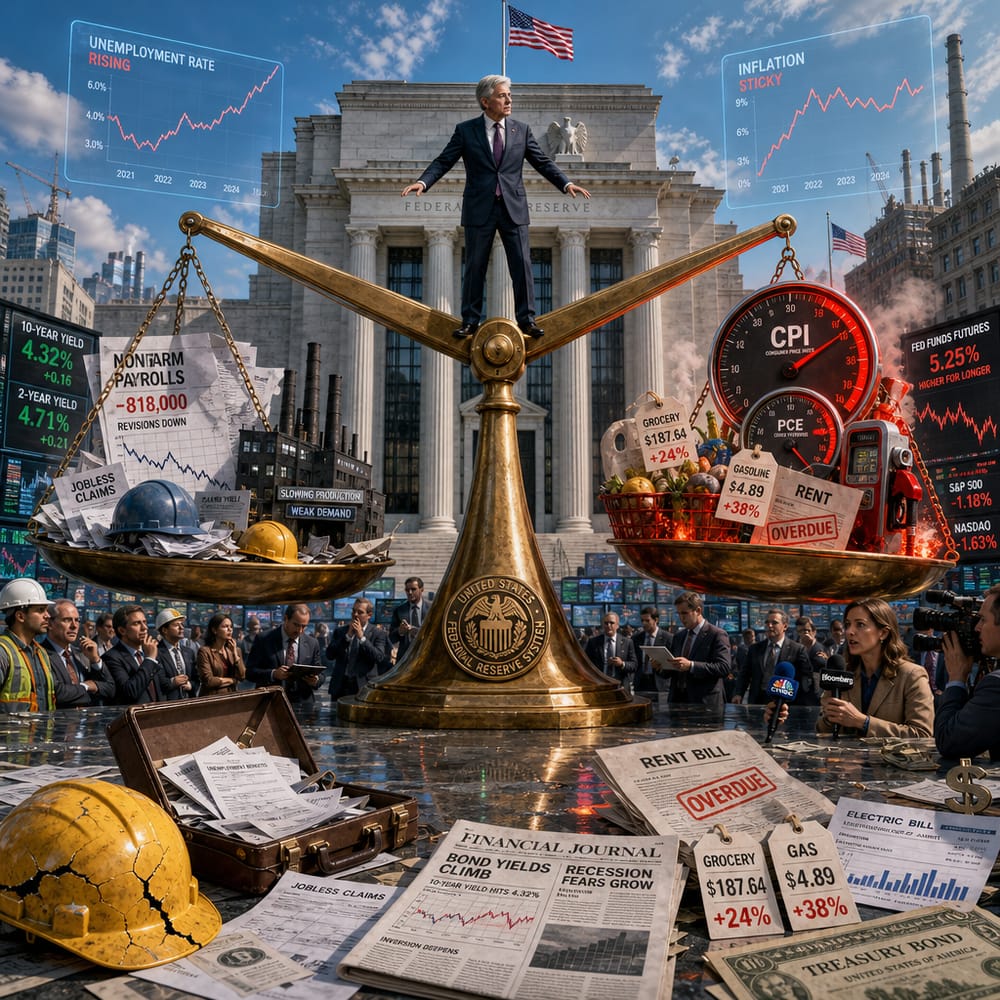
BALANCING ACT: FED'S DILEMMA BETWEEN WEAK JOBS DATA AND PERSISTENT INFLATION
Just when you thought navigating the markets in 2026 was wild enough, here comes the Federal Reserve with a new plot twist: the ultimate economic balancing act. Imagine trying to juggle flaming torches while riding a unicycle—blindfolded. That’s the Fed's current predicament as it tries to balance a cooling labor market with stubbornly persistent inflation.
The sizzling question burning in everyone's mind: What will the Fed do next? The answer could shake up markets, impact everything from your mortgage rate to the price of eggs, and redefine the economic narrative as we know it.
THE LATEST INFLATION TRENDS
Let's start with inflation, a term that might as well be the modern boogeyman. The latest Consumer Price Index (CPI) data isn’t exactly a relief. Prices are climbing faster than a cat up a tree during a dog parade. While the Fed’s preferred inflation gauge, the Personal Consumption Expenditures (PCE), shows that inflation is not rising as violently as in past months, it's still lingering like an unwanted house guest.
Prices remain high because of sticky factors like rising rent and services costs, and while the Fed’s interest rate hikes have tried to tame this inflation beast, its efforts seem akin to bringing a squirt gun to a forest fire. With inflation not backing down, the question of how the Fed responds is crucial.
THE COOLING LABOR MARKET
On the other hand, the labor market, once hotter than a summer sidewalk, is showing signs of cooling. Recent data suggest job growth is slowing, unemployment claims are creeping up, and hiring is losing some of its earlier vigor. This isn’t exactly the kind of job market that screams, “Let’s keep hiking rates!” but with inflation still a concern, the Fed is caught between a rock and a hard place.
The big question is how to manage this Goldilocks scenario—not too hot, not too cold—without tipping the economy into a recession or letting inflation run wild.
HOW MIGHT THE FED BALANCE THESE CONFLICTING SIGNALS?
The Fed, led by chair Jerome Powell, is assembling for a policy meeting where they’ll attempt this high-wire balancing act. They’ve got two main tools at their disposal: interest rates and open market operations—fancy speak for buying and selling government securities.
One possibility is that the Fed takes a pause. With the labor market cooling, further rate hikes could risk tipping the economy into a downturn that even the hardiest among us wouldn't relish. But playing it too safe might let inflation fester longer, like leaving milk out of the fridge overnight.
Another strategy is a cautious rate hike, a signal to markets that the Fed means business in taming inflation, but with a light touch, acknowledging the softening employment landscape. It's like trying to gently remove a band-aid without tearing the skin—it’s delicate work.
THE POTENTIAL POLICY OUTCOMES
What are the potential outcomes here? Let’s break it down:
1. Rate Hike: This would signal the Fed’s commitment to battling inflation, but it risks further cooling an already chilly labor market. Mortgage rates could climb higher, and your dreams of a house with a white picket fence might feel like they’re slipping further into the future.
2. Pause on Rate Hikes: This could offer relief for folks worried about borrowing costs, potentially giving a nudge to housing and consumer spending. But if inflation doesn’t abate, it might feel like the Fed is playing with fire while hoping not to get burned.
3. Mixed Bag Approach: A careful balance—perhaps a slight tweak in other financial levers without touching rates—combined with powerful Fed statements to soothe market jitters. This would be akin to whispering sweet nothings to an anxious market beast.
WHY IT MATTERS
All eyes are on the Fed because its decisions flow through the economy like caffeine through a Monday morning coffee. The outcome will affect economic stability and investor confidence, sending ripple effects through stocks, bonds, and beyond.
So, dear reader, as you sip your morning brew and scroll through the latest market news, keep an eye on the Fed’s next move. It won’t just be a page-turner for economists and investors; it will reverberate in your wallet, on Wall Street, and across the global economy.
This balancing act is not just a spectacle; it’s the main event, with real-world consequences for anyone with a dollar in the game.
This article is for informational purposes only and is not investment advice. Always do your own research or consult a licensed financial professional before making investment decisions.
© Copyright 2024. All Rights Reserved.
© Copyright 2024. All Rights Reserved.