

August Jobs Surge and Its Implications for Inflation and Fed Path
Tuesday, September 22, 2026
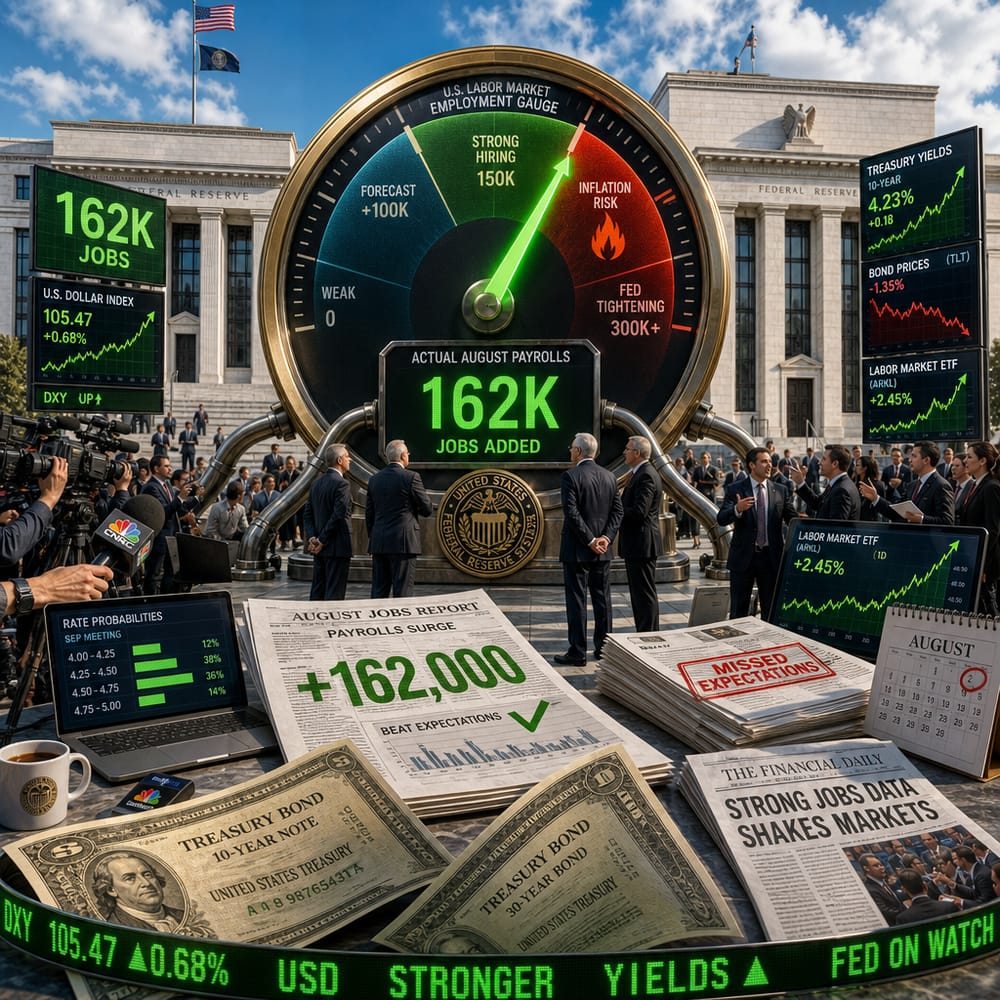
If the U.S. job market were a movie, August would be one of those surprise plot twists that leaves you questioning everything you thought you knew. Just when economists were expecting a modest gain, BAM! — the economy added 162,000 jobs, catching everybody off guard like a surprise Jack-in-the-box. But this isn't just about numbers on a page; it's a plot thick with implications, especially for the Federal Reserve, whose members are now likely reaching for their calculators and stress balls in equal measure.
Now, why should you care about this jobs report while you're sipping your morning coffee? Because this surge is like adding a generous splash of hot sauce to the inflation soup — it could intensify the heat. More jobs often lead to higher wages as companies compete for workers, and when people have more money to spend, demand for goods and services can rise. This demand can stoke inflation, which the Fed has been trying to keep in check like a hyperactive puppy on a leash.
THE FED'S DILEMMA
The Federal Reserve, that ever-watchful sentinel of economic stability, must now decide if it needs to hike interest rates to pour some cold water on potential inflation. Imagine trying to adjust the thermostat on a furnace that's deciding between a toasty warmth and a full-fledged inferno. If the Fed raises rates, borrowing money becomes more expensive. That's bad news for anyone eyeing a new house or a hefty loan, but it might be necessary to cool down the spending spree that could drive prices up.
The choice the Fed makes could ripple across the economy like a wave crashing on a beach. Higher interest rates often mean a stronger U.S. dollar — good news if you're planning a European vacation, bad news if you're a U.S. exporter trying to sell your wares overseas. Treasury bonds might start looking more attractive as safer investments, which could impact stocks like those in the labor-intensive sectors that thrive on cheap borrowing.
THE BIGGER PICTURE
But let's zoom out a bit. While the job growth numbers are impressive, they're not a promise of endless sunny skies. Inflation is like that party guest who just won’t leave, and the Fed is determined to show it the door. Yet, they face a conundrum: Raise rates too high, and you risk slowing the economy too much, potentially leading to a recession. Leave them too low, and inflation could spiral out of control like a toddler in a candy store.
So, what stocks or sectors should you keep an eye on in this unfolding saga? Labor market ETFs could see a boost as job growth paints a rosy picture of economic health. Conversely, sectors that are sensitive to interest rates, like real estate and consumer finance, might feel the pinch if the Fed opts for more aggressive rate hikes. And let's not forget about the U.S. dollar and Treasury bonds; as potential interest rate changes loom, they’re the classic canaries in the coal mine, signaling shifts in investor sentiment.
A BUMPY ROAD AHEAD?
As we navigate these choppy waters, it's crucial to remember that economic indicators are pieces of a puzzle, not crystal balls. This surprising job growth is a plot twist, not the end of the story. The Fed’s path forward isn't just about reacting to this moment; it's about anticipating the next chapters. They’ll be weighing other economic data, international tensions, and, of course, the unpredictable political landscape, all of which can influence their decisions.
In short, the August jobs report has thrown a curveball that could change the game. Whether the Fed swings for the fences with a rate hike or takes a more cautious approach remains to be seen. But you, dear reader, now have a ringside seat to this economic drama. Keep your eyes peeled, your ears open, and maybe, just maybe, your investment portfolio ready for action. Who knows what the next plot twist will bring?
This article is for informational purposes only and is not investment advice. Always do your own research or consult a licensed financial professional before making investment decisions.
© Copyright 2024. All Rights Reserved.
© Copyright 2024. All Rights Reserved.