

August Inflation Nowcasts Show Sticky Prices
Saturday, August 22, 2026
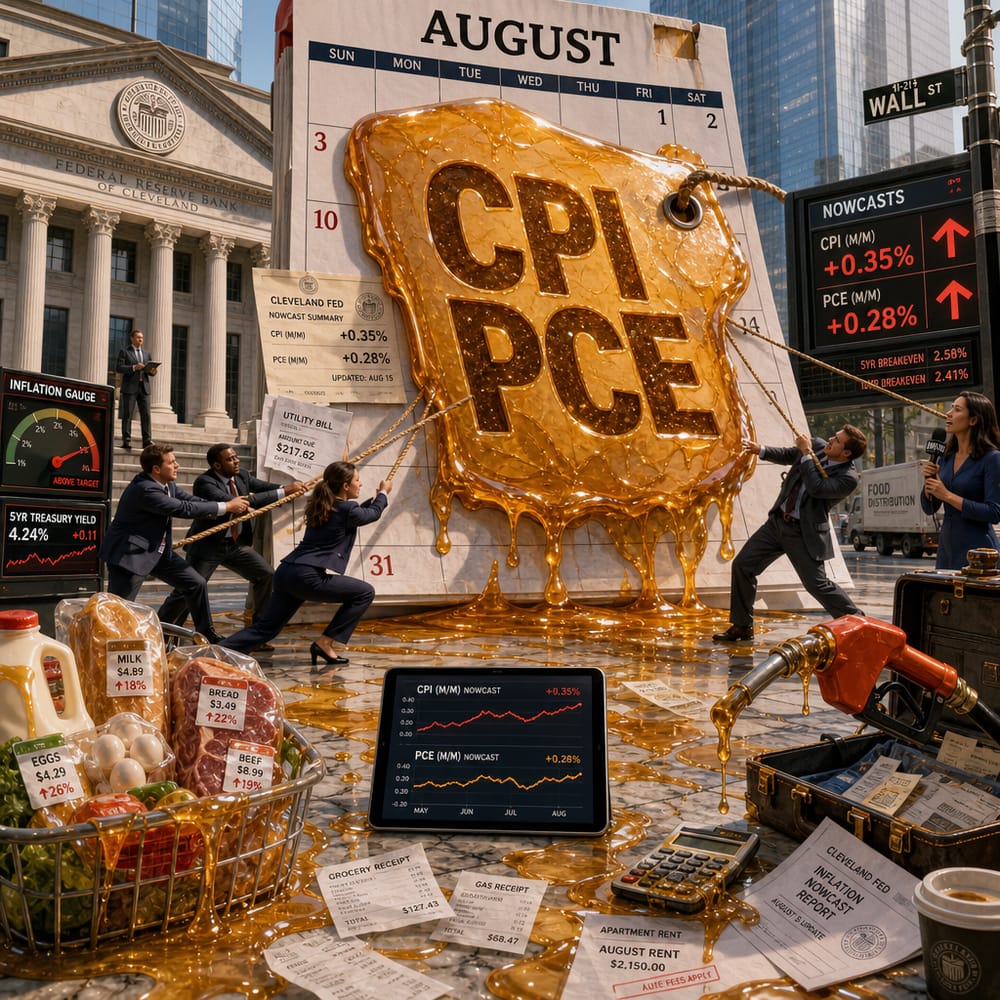
TITLE: August Inflation Nowcasts Show Sticky Prices
Meet the Cleveland Fed, the unassuming psychic of the financial world. Every month, it peeks into its crystal ball – a.k.a. a bunch of complicated economic models – to dish out nowcasts, or near-term forecasts, about inflation. This time, it’s sounding the alarm: prices aren’t just sticking, they’re superglued to the ceiling.
Here's the lowdown. The Cleveland Fed has nowcasted that August is likely to see a rise in both the Consumer Price Index (CPI) and the Personal Consumption Expenditures (PCE). In plain English, everything from groceries to gadgets might get pricier. And with the PCE being the Federal Reserve's favorite inflation barometer, it's a projection that’s hard to ignore, especially if you're one of the folks in charge of setting interest rates.
So, what's hot and what's not in this inflation stew? While the usual suspects like housing and healthcare have been perennial inflation drivers, there's a surprise contender lurking in the wings: energy. With global events throwing the oil market into a whirlwind, energy costs are adding more heat to the inflationary pressure cooker. And let’s not forget about the trade war vibes emanating from the collapsed U.S.-Canada talks. Tariffs on Canadian goods could sneakily drive prices higher as industries scramble for supply chain workarounds.
Now, you might be wondering what this all means for the Federal Reserve's September meeting. Picture the Fed as the captain of a ship caught in a storm, trying to decide whether to tighten or loosen the sails. With inflation being more stubborn than a cat refusing a bath, the Fed could be nudging towards another rate hike. The goal? Tame the inflation beast before it morphs into something more ferocious.
But wait, there's more! The market has its own take on things. Investors have been jittery, with rising bond yields adding to the unease. The bond market, often a harbinger of things to come, is frazzled by the prospect of further interest rate hikes, which could dampen economic growth. Meanwhile, sectors like tech and retail are holding their breath, waiting to see how this shakes up the playing field.
For retail investors, this could spell both challenge and opportunity. A rate hike could weigh on growth stocks as borrowing costs rise, but it could also open doors for sectors like energy and materials, which thrive when inflation runs rampant. It’s a classic case of one investor’s poison being another’s potion.
To spice things up, there are also new geopolitical tremors. The trade spat with Canada could throw a wrench into the works for industries dependent on cross-border goods. Import tariffs mean higher costs, which often trickle down to consumers – and let’s face it, no one appreciates a surprise price hike.
But don’t sound the alarms just yet. While the Cleveland Fed’s nowcasts are crucial for navigating the inflation maze, they’re one piece of a larger, more complicated puzzle. The Fed's decisions are also influenced by a slew of other factors – employment numbers, wage trends, and even international economic dynamics. It’s like juggling flaming torches: tricky, risky, and not for the faint-hearted.
So what’s the strategy here? Keep your ear to the ground and your eye on sectors that could weather this inflationary storm. Energy and commodities are gaining traction, while traditional safe havens like gold are making a comeback. Diversification is your best friend in these turbulent times.
As we countdown to the Fed’s next move, the stakes couldn’t be higher. Getting ahead of inflation is like taming a monkey on a sugar high – unpredictable and a little terrifying. But with the right strategy and a dose of market savvy, this too shall pass. So, buckle up for the bumpy ride ahead, and remember: in the world of investing, fortune often favors the bold.
This article is for informational purposes only and is not investment advice. Always do your own research or consult a licensed financial professional before making investment decisions.
© Copyright 2024. All Rights Reserved.
© Copyright 2024. All Rights Reserved.