

Atlanta Fed Nowcast Downgrade: Implications for Q3 GDP
Saturday, October 03, 2026
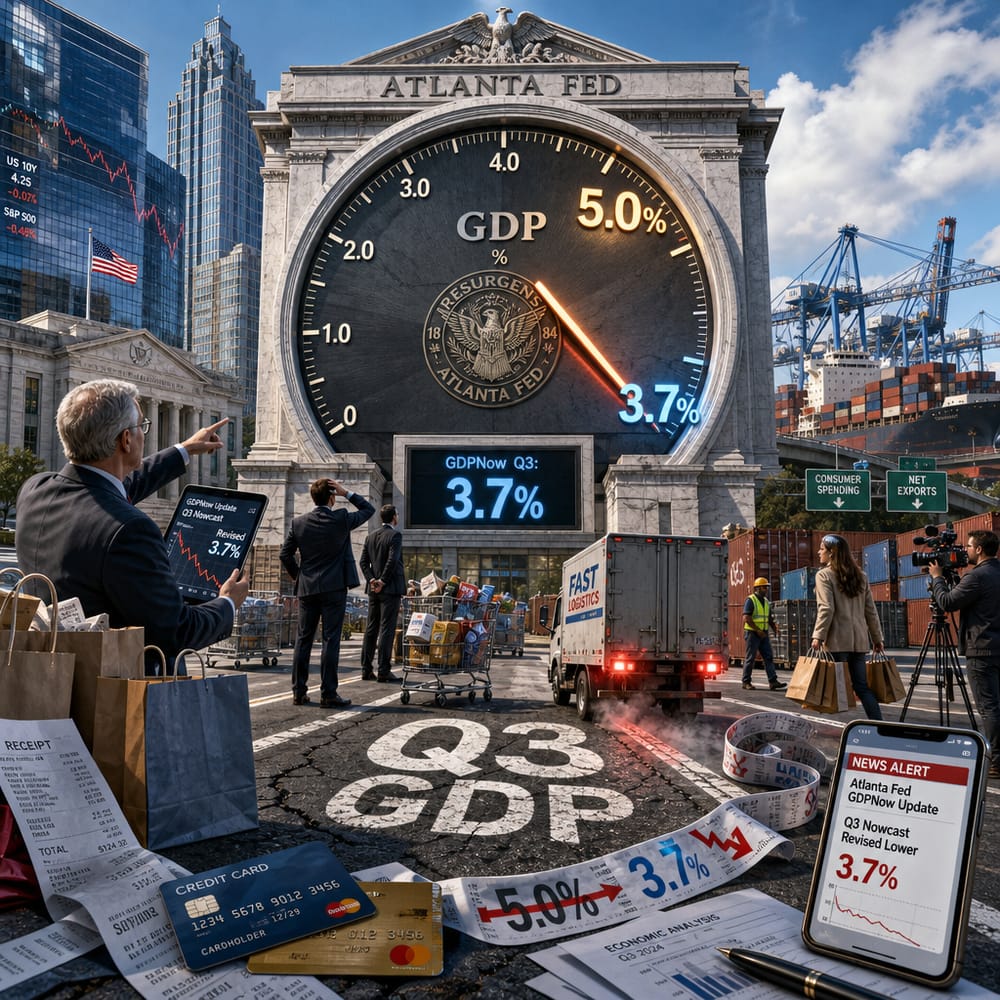
THE ATLANTA FED JUST SAID “SLOW DOWN!” HERE’S WHY IT MATTERS
So, you know how everyone was getting jazzed about the U.S. economy potentially sprinting through the third quarter? Well, it turns out we might be seeing more of a leisurely jog instead. The Atlanta Fed’s GDPNow model just dropped a bombshell: their Q3 growth estimate has been slashed from a lively 5.0% to a more muted 3.7%. Cue the record scratch!
Now, before you start imagining economic tumbleweeds, let’s unpack why this matters. When the Atlanta Fed tweaks its GDP expectations, investors (and the Fed folks) sit up and take notice. It’s like the canary in the coal mine for economic momentum—or the lack thereof. So, what’s behind this downgrade, and what’s the ripple effect on market sentiments and our good ol' Federal Reserve? Let’s dive in.
THE ROOT OF THE SLOWDOWN
First off, why the sudden revision, you ask? Well, there’s a bit of a cocktail party happening, and not the fun kind. Sluggish consumer spending, a dip in net exports, and a job market that’s caught a case of the yawns are all playing their part.
Consumer spending, the mighty engine of the U.S. economy, seems to be catching its breath. With inflation still biting, Americans are clutching their wallets a little tighter. And who can blame them? Meanwhile, net exports aren’t exactly winning any medals either; global economic jitters and a strong dollar aren’t helping the situation. And don’t even get us started on the jobs report: a measly 29,000 jobs added last month with unemployment ticking up to 4.2%. Ouch!
FEDERAL RESERVE: TO HIKE OR NOT TO HIKE?
Now, let’s chat about the Federal Reserve. With the economy showing signs of cooling, the central bank might be tempted to rethink its interest rate strategy. The Fed’s been on a rate-hiking spree to curb inflation, but this slowdown might just give them pause. Imagine being at a party where the music suddenly gets turned down—everyone stops to see what's going on. That's kind of what's happening with the Fed now. They’ll need to decide if it’s time to keep the beats going or if it's time for a breather.
A softer economy could mean the Fed might ease up on rate hikes, a move that could provide some relief to interest rate-sensitive sectors like housing. Speaking of which, did you hear about Berkshire Hathaway's $6.8 billion plunge into homebuilders? Greg Abel must be hoping there’s a silver lining on the horizon, mortgage rates notwithstanding.
MARKET REACTIONS: ANTICIPATION STATION
So, what will this GDPNow revision mean for the upcoming GDP release from the Bureau of Economic Analysis (BEA)? Well, the markets are likely to be on pins and needles waiting for the official numbers. If the BEA's report echoes the Atlanta Fed’s sentiment, we could see some market tremors, especially in sectors that are more economically sensitive.
Investors might start re-evaluating their positions, with a close eye on sectors like tech and consumer goods. With earnings season upon us, companies like Nvidia and Micron could see added pressure to perform, especially after last week's market actions. And let’s not forget the fixed-income darlings, like those tempting 10-year Treasury notes. If the GDP figures truly indicate a slowdown, they might start looking a tad more attractive compared to those swanky dividend stocks.
THE WAITING GAME
In the grand scheme of things, this GDPNow revision isn’t sounding the alarm bells just yet, but it’s definitely a signal to stay alert. It’s a bit like being told the weather might turn—we’re not in full storm mode, but it’s wise to keep an umbrella handy.
As the BEA prepares to roll out its official GDP numbers, hold onto your hats, folks. Whether it’s a sign of impending storm clouds or just a passing breeze, only time will tell. Meanwhile, keep an eye on how the Fed reacts to all these economic tea leaves. Will they pivot, or will they stay the course? Stay tuned. The economy, much like the stock market, is never boring.
This article is for informational purposes only and is not investment advice. Always do your own research or consult a licensed financial professional before making investment decisions.
© Copyright 2024. All Rights Reserved.
© Copyright 2024. All Rights Reserved.