

ASML Q3 Results Boost Semiconductor Stocks Globally
Wednesday, October 14, 2026
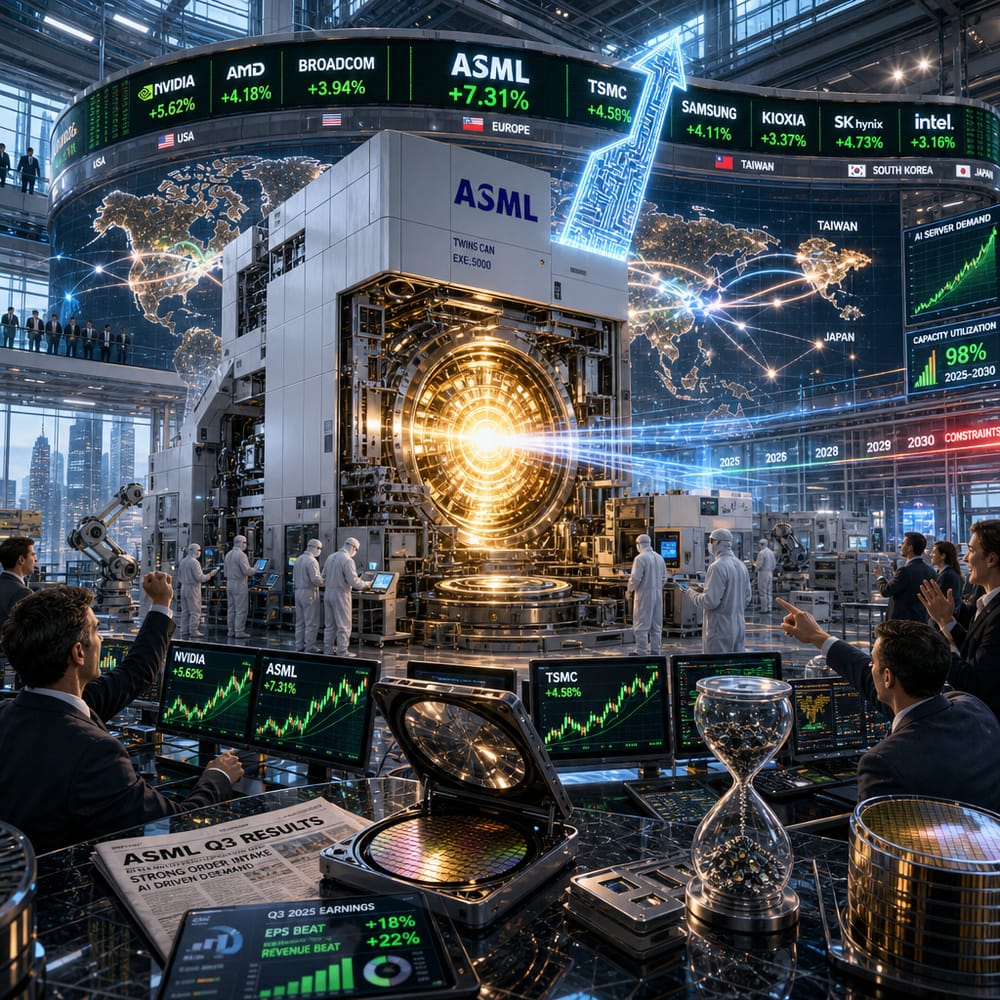
ASML'S EARNING SURGE: THE AI CHIP RACE AND SUPPLY CHAIN RIPPLE EFFECTS
Hold onto your semiconductor hats because ASML just dropped some earnings news that's got the tech world buzzing louder than a Bitcoin mining rig. The Dutch titan in semiconductor machinery just rolled out third-quarter profits that soared past Wall Street's sky-high expectations, thanks to a red-hot demand for chips fueling our AI obsessions. But there’s a plot twist: ASML might not have enough firepower to meet demand, projecting supply constraints could stretch into the next decade.
That’s right, the semiconductor industry's powerhouse has a backlog that could make your local DMV blush, with orders lined up through 2030. Imagine having reservations at a restaurant that doesn’t have an open table for another four years. That’s the vibe here. But before we start preparing for the techpocalypse, let’s break down what this means for everyone from investors to the average smartphone scroller.
SEMICONDUCTOR PRICING: THE SQUEEZE IS ON
ASML’s inability to churn out enough extreme ultraviolet lithography machines—the secret sauce for the most advanced chips—could mean a semiconductor shortage that leaves manufacturers scrambling like shoppers on Black Friday. When supply can't catch up to demand, prices might skyrocket. This isn’t just about a few extra bucks on your next gadget; it could impact broader tech and economic landscapes.
For semiconductor companies, supply constraints mean bidding wars and possibly higher prices for their products. Stock up on popcorn, because this drama could get intense. While that's good for those with the chips already in hand, companies further down the tech food chain might feel the pinch. Expect to see costs trickling down to end-users unless something shakes up the supply chain quickly.
AI-RELATED CHIPS: THE GOLD RUSH CONTINUES
Let's talk AI chips—the crown jewels of this semiconductor saga. With ASML's machines being the only game in town for manufacturing cutting-edge AI chips, demand isn't cooling off anytime soon. As industries from healthcare to automotive tech continue to embrace AI, these chips are hotter than a viral TikTok.
AI-related chipmakers, basking in this glory, are seeing a surge in interest and potentially in their stock prices, too. But it's a double-edged sword. While demand is great, how long can they keep up with production bottlenecks? Companies relying on these chips to power the next big thing in tech may need to put innovation on ice until supply catches up.
INVESTMENT CYCLES: TIME TO RETHINK STRATEGIES
ASML’s supply constraints could lead to ripple effects across investment portfolios. Investors looking to capitalize on the AI boom might now think twice. Do you invest heavily in chipmakers hoping they solve their supply woes, or do you diversify into other tech sectors less prone to these hiccups?
Moreover, the industry might see a rise in investments aimed at breaking this bottleneck. Think new semiconductor manufacturing plants or alternative technologies that cut reliance on ASML's machines. While the initial cost is steep, the pay-off could be game-changing, potentially reshaping the entire semiconductor landscape.
OEM PLANNING: A LONG WAIT FOR THE FUTURE
Original Equipment Manufacturers (OEMs), who design and sell products made from off-the-shelf components, might now need to adapt to these extended timelines. Planning cycles could stretch as they foresee longer wait times for chip deliveries. This means tech companies might have to hold off on those latest and greatest gadget launches, or at least think creatively about meeting their own deadlines.
BOTTOM LINE: A DECADE OF CHANGE?
ASML’s earnings and supply forecast isn’t just a footnote in an investor’s playbook; it’s a headline for the tech world at large. The semiconductor supply chain is about as flexible right now as a brick, and that rigidity could force changes across the board—from the way industries operate to how we, as consumers, interact with technology.
So, what should investors and tech enthusiasts do? Keep a close watch on ASML, but also look upstream and downstream in the supply chain. Consider the potential winners in a constrained environment and prepare for a world where semiconductor manufacturing might become a battleground of innovation.
In the grand scheme of things, ASML's update is more than just a quarterly blip; it's a signal of seismic shifts. Whether those shifts lead to tech nirvana or a rough ride remains to be seen, but one thing’s for sure: the semiconductor story is far from over. Stay tuned, because this chip tale is going to keep us all guessing.
This article is for informational purposes only and is not investment advice. Always do your own research or consult a licensed financial professional before making investment decisions.
© Copyright 2024. All Rights Reserved.
© Copyright 2024. All Rights Reserved.