

Asia Stocks Mixed as Ceasefire Calms Oil, Fed Talks Steady Rates
Wednesday, June 25, 2025
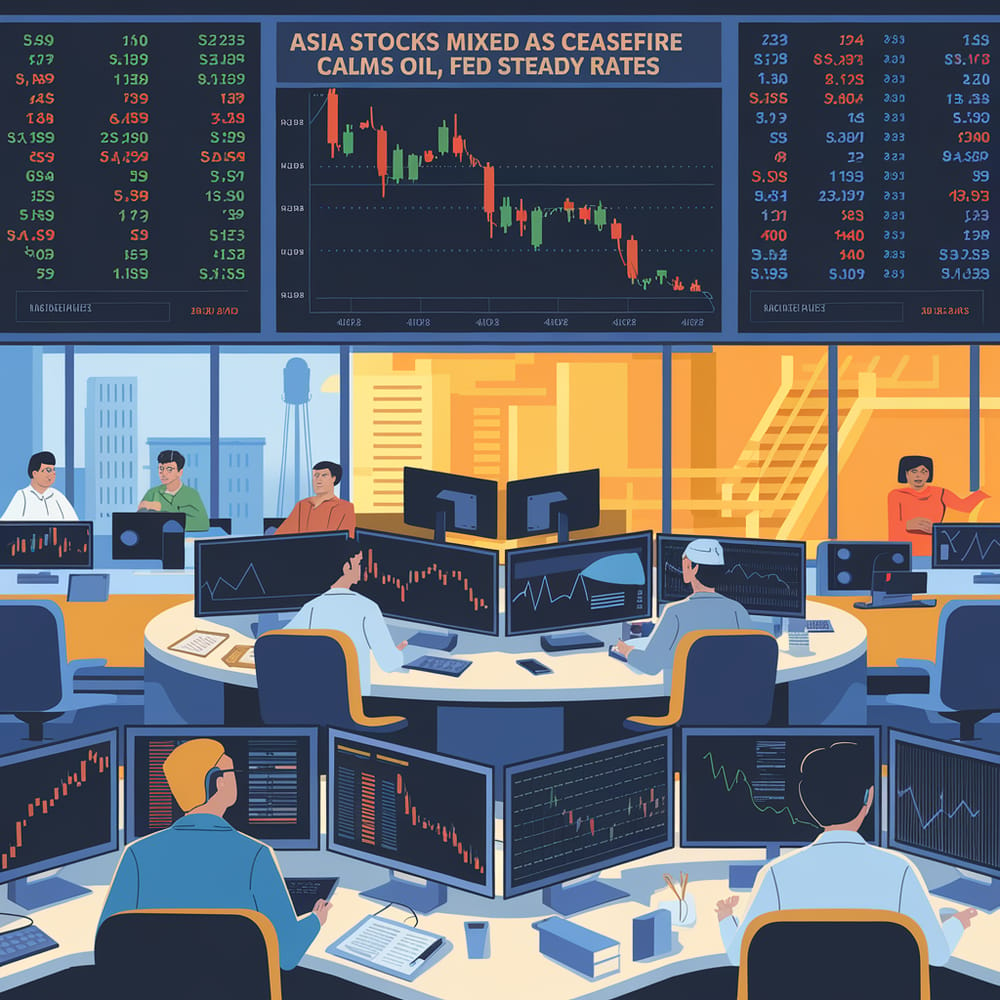
Asian markets delivered a mixed bag on Wednesday as investors processed the latest ceasefire between Israel and Iran and fresh comments from the U.S. Federal Reserve.
In Sydney, the S&P/ASX 200 closed flat at 8,559.2, while South Korea’s Kospi rose 0.15%, and Japan’s Nikkei 225 advanced 0.39% to 38,942.07. The Hang Seng Index in Hong Kong rallied 1.22%, and China’s CSI 300 posted a healthy 1.44% gain, riding optimism around tech stocks after Beijing approved its highest number of new game licenses this year.
Meanwhile, U.S. stock futures were flat, with Dow, S&P 500, and Nasdaq 100 futures all nudging slightly lower.
Powell Stays Cautious
Fed Chair Jerome Powell reiterated the central bank's patient stance, saying it’s too soon to cut interest rates. Powell emphasized the Fed is “well positioned to wait” for more clarity—especially regarding how Trump’s tariffs may impact inflation.
Stateside, markets finished strong:
-Dow Jones gained 507 points (+1.19%)
-S&P 500 climbed 1.11% to 6,092.18
-Nasdaq Composite rose 1.43%
-Nasdaq 100 hit a record high at 22,190.52
Australia’s Cooling Inflation Hints at Rate Cuts
The Reserve Bank of Australia is expected to cut rates at its July meeting. May inflation dropped to 2.1%, beating expectations. Economists now see a 25 bps cut in July, with another possible in August, citing soft food and housing inflation and a stable labor market.
Oil Seesaws, China Pushes Yuan
Oil prices rebounded over 1% after two days of steep losses, as markets reassessed the reduced risk of disruption following the Middle East ceasefire. Still, analysts warn if prices breach the $64–$65 support zone, crude could drop below $60.
Elsewhere, China is accelerating its push to internationalize the yuan, giving more access to foreign institutions and drawing interest as confidence in the U.S. dollar weakens.
Bottom line: The Middle East truce and Powell’s steady hand brought a dose of calm to markets. With Australia signaling rate cuts and China making currency moves, the Asia-Pacific trading narrative is shifting—less chaos, more cautious recalibration.
© Copyright 2024. All Rights Reserved.
© Copyright 2024. All Rights Reserved.