

Argentina Peso Under Pressure Despite Central Bank Intervention
Thursday, August 27, 2026
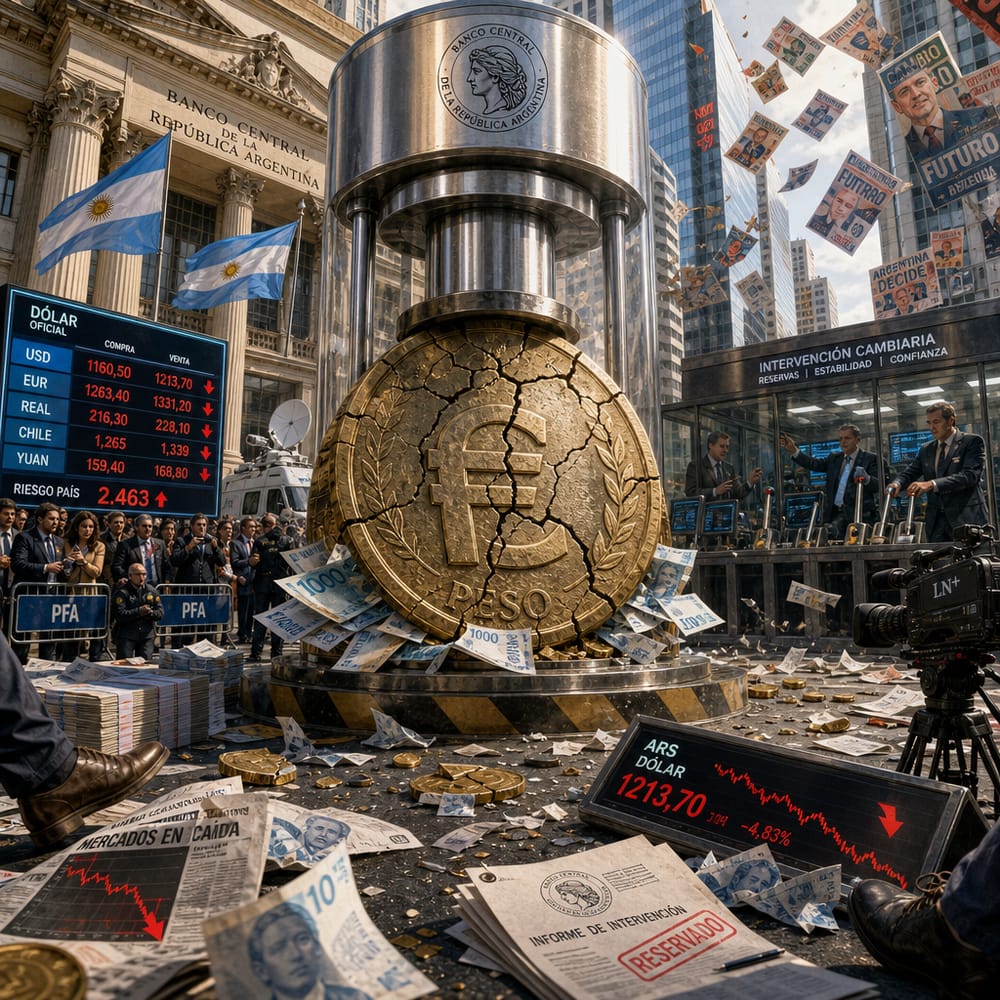
When it comes to the tango of economic policy, Argentina knows a few steps. But even seasoned dancers can trip, and right now, the Argentine peso is stumbling harder than a first-timer on a crowded dance floor. Despite some serious intervention routines by Argentina’s central bank, the peso remains under the hammer, courted by political uncertainty and a market playing hard to get.
Imagine the peso as a soap bubble, and the central bank is furiously using a straw to stop it from popping. They’ve thrown billions at the problem, trying to prop up the currency. Yet, the bubble keeps wavering, threatening to burst at any moment. Why does it seem like all the effort is just hot air?
THE CHALLENGE OF CENTRAL BANK INTERVENTION
Here's the crux of the challenge: central banks, like Argentina's, can deploy a whole arsenal of tricks to stabilize a currency. They can sell off foreign reserves, change interest rates, or even print more money – though the latter often does more harm than good, like trying to put out a fire with gasoline. But there's a limit to these interventions, especially when the root of the problem is political volatility rather than economic fundamentals.
Political instability is like termites in a wooden house. You might fix the paint outside, but the structure remains weak, with potential for collapse. For the peso, the political chaos is those pesky termites. Argentina is no stranger to political drama, with a history of economic policies swinging as wildly as a soap opera plot. Investors see this, and they're cautious. They won’t park their money where they smell uncertainty — no matter how many pesos the central bank throws at them.
THE POLITICAL SLIP AND SLIDE
This brings us to the nerve-wracking dance between politics and currency valuation. Political turmoil shakes investor confidence, and currencies are incredibly sensitive creatures, reacting to the slightest whiff of uncertainty. In Argentina's case, looming elections, policy uncertainty, and a revolving door of economic ministers have left the currency camped in the danger zone.
When a country’s political landscape is as stable as a stack of Jenga blocks in an earthquake, foreign investors tend to bolt. This exodus applies downward pressure on the national currency because who's buying pesos when every headline spells trouble? Without demand, the currency sinks, no matter how often the central bank steps in to buy, prop, or pray it stays afloat.
LESSONS FROM THE EMERGING MARKET PLAYBOOK
The situation in Argentina isn’t unique. It’s a familiar story from the emerging markets playbook: political instability leads to economic uncertainty, which in turn causes a currency crisis. But what can other emerging markets pick from Argentina’s salad of woes?
First, the crucial role of clear, stable governance can’t be overstated. Transparency and consistent economic policy are the unsung heroes of a healthy currency. If the actors on the political stage are constantly changing costumes mid-scene, the audience (i.e., investors) won’t stick around to see the ending.
Moreover, diversifying the economy can help cushion against the whims of political change. An economy heavily reliant on a single sector, like Argentina’s on agriculture, feels the blow of political unrest more acutely. Diversification is like a financial security blanket, spreading risk and softening the blow when one sector falters.
LOOKING AHEAD
The Argentine central bank’s intervention efforts are heroic, but they’re fighting a Sisyphean battle against a boulder of instability. Until the political dust settles, the peso is likely to continue its bumpy ride. So what’s a retail investor to do amid the chaos?
The lesson here is about risk management and diversification. Keeping an eye on political developments in your portfolio’s countries of interest can be as crucial as watching market trends. And remember, while emerging markets promise high returns, they often come with a side of political risk. Balancing these risks against more stable investments is key to a well-rounded portfolio.
In the end, the Argentine tango is a dance rich with passion, rhythm, and complexity. Much like the tango, navigating currency markets requires keen awareness, skill, and a willingness to adapt to the tempo of political and economic shifts. So, as the world watches Argentina’s currency drama unfold, let it be a reminder of the delicate dance every emerging market must perform.
This article is for informational purposes only and is not investment advice. Always do your own research or consult a licensed financial professional before making investment decisions.
© Copyright 2024. All Rights Reserved.
© Copyright 2024. All Rights Reserved.