

Archer Aviation's Strategic Leap with Boeing Subsidiaries Acquisition
Monday, August 10, 2026
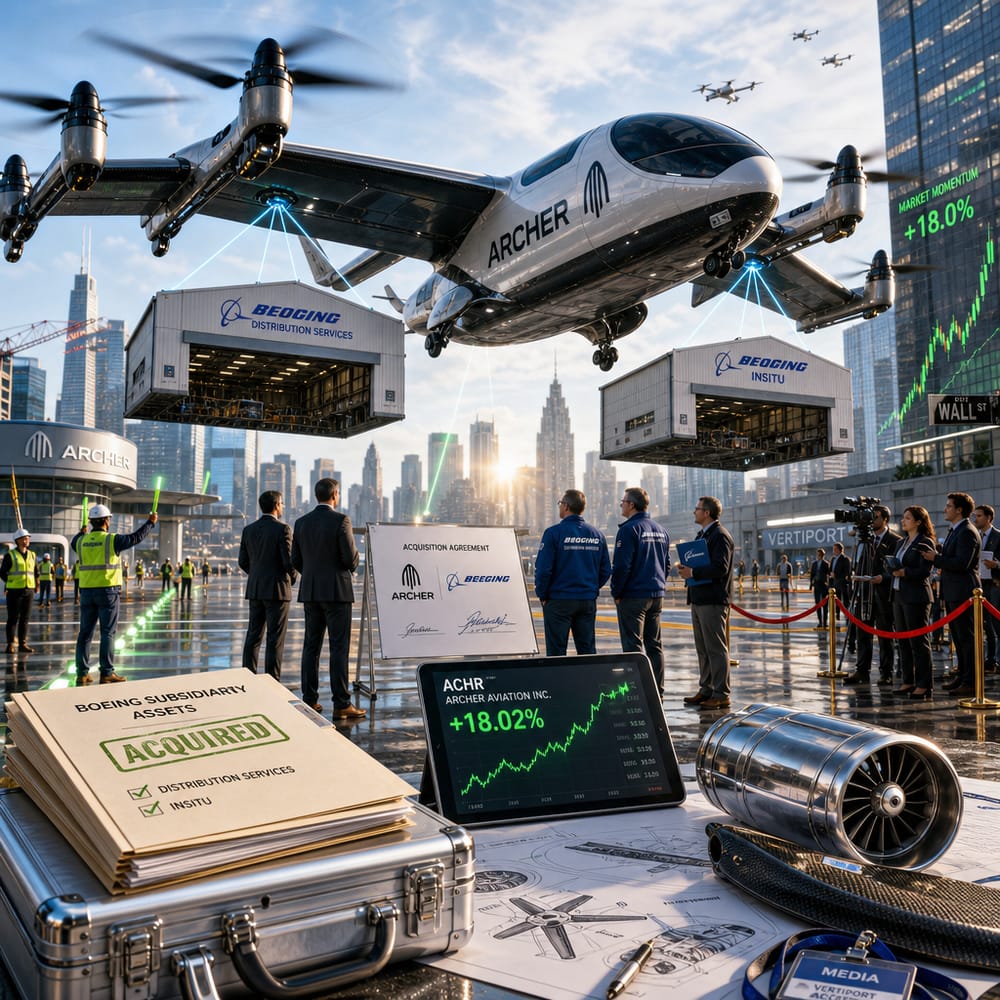
ARCHER AVIATION'S SKY-HIGH AMBITION: BOEING DEAL PROPELS eVTOL DREAMS
In the high-stakes world of electric vertical take-off and landing aircraft (eVTOL for short), Archer Aviation just made a move that’s causing turbulence — in a good way. Like a stealthy falcon snatching its prey, Archer has acquired three subsidiaries from aerospace giant Boeing, sending its stock rocketing up by 18%. But what’s the big deal, and what does it mean for you, the retail investor?
Archer's acquisition includes Wisk Aero, which has been quietly building the future of autonomous flying taxis; SkyGrid, handling air traffic for these aerial Ubers; and Insitu, a mastermind in high-altitude drones. It's like Archer just grabbed the golden trifecta of sky-tech — each piece adding a vital cog to its grand aviation ambitions.
Now, let’s break down why this matters. For Archer, this isn't just a power play; it’s a strategic leap into the big leagues. The eVTOL market is still embryonic, but it's poised for takeoff, and Archer is now positioned as a frontrunner. With Wisk Aero under its wings, Archer gets a serious boost in autonomous flight tech — the secret sauce that might just perfect autonomous air travel. Meanwhile, SkyGrid’s air traffic systems are essential for managing the complex ballet of flying taxis in crowded skies. Add Insitu’s drone expertise, and you've got a recipe for an eVTOL breakthrough.
The long-term benefits? Archer isn't just aiming for the clouds; they’re eyeing the stratosphere. Access to these tech powerhouses could slash development timelines and ramp up Archer’s production capabilities. They'll be able to meet surging demand faster, and that means more aircraft in the sky and revenue in their pockets. Meanwhile, investors get a front-row seat to the unfolding drama of an up-and-coming industry that might redefine urban mobility.
But every silver lining has its cloud. The acquisition could come with integration headaches. Merging different corporate cultures and tech systems isn’t exactly a walk in the park. Competitors, not to mention regulators, will be watching closely. Archer needs to ensure it can unify these diverse technologies without losing focus on its ultimate goal — making eVTOLs as common as regular taxis.
What’s in it for Boeing, you ask? The juggernaut of aviation is taking a step back to focus on its core pursuits — traditional aircraft and space ventures — while still holding a stake in Archer’s future. It’s like a strategic game of chess; Boeing’s divestment suggests they're not ready to bet the farm on eVTOL yet, but they want in on the action should it succeed. This allows Boeing to capitalize on its past investments in these subsidiaries while steering clear of the operational grind of emerging tech.
For Boeing, it’s about sharpening focus. This deal allows them to trim the corporate fat and zero in on what they do best: building big planes and exploring the cosmos. The stake in Archer keeps an ear to the ground in the eVTOL sector, offering potential rewards without the upfront risk.
The eVTOL market may seem like something out of a sci-fi novel, but real investments are pouring into this futuristic vision. The global urban air mobility market size was valued at around a few billion dollars and is expected to witness exponential growth over the next decade. It’s not just a question of developing the technology but also addressing issues like airspace management, safety standards, and public perception. Throw in a maze of regulatory approval processes, and the path to success isn’t exactly clear skies.
So, what does this mean for you, the retail investor? Archer’s wild stock surge is a testament to its sky-high potential but remember, even the best rockets face gravity. The eVTOL market is packed with both opportunity and risk. If you're ready to ride the wave of innovation and patience is your virtue, Archer might just offer the thrill ride you're looking for. But keep your parachute handy — the market can be as unpredictable as the weather.
In the end, Archer's acquisition of Boeing's subsidiaries marks a significant chapter in its quest to dominate the skies. Whether it succeeds or not, one thing is certain: the future of flight is here, and it's electrifying.
This article is for informational purposes only and is not investment advice. Always do your own research or consult a licensed financial professional before making investment decisions.
© Copyright 2024. All Rights Reserved.
© Copyright 2024. All Rights Reserved.